


What Is Directory Submission?
First, what is a directory? A directory is a curated website that organizes and lists products, tools, or services within a specific category - think of it as a modern Yellow Pages for software. Product Hunt is a directory for new tech products. G2 is a directory for B2B software. There's an AI for That is a directory for AI tools. Each one has its own audience of people actively searching for solutions, which makes them valuable both as discovery channels and as sources of SEO backlinks.
Directory submission is the process of listing your website, startup, or SaaS product on these platforms. You provide your product name, URL, description, category, and screenshots. The directory reviews your submission and, if approved, creates a listing page that links back to your site.
That backlink is the critical piece. Every directory listing creates a link from an established, indexed website pointing to yours. When that directory has strong domain authority - platforms like Product Hunt, G2, and AlternativeTo - that link carries real SEO weight. It tells Google that a trusted source considers your product worth referencing. Multiply that across 50, 80, or 140 directories and you're building a backlink profile that most SaaS founders spend years trying to accumulate through guest posts and outreach.
Modern directory submission looks nothing like the old-school web directory submission of the 2000s. Those directories were glorified link farms. Today's directories are specialized platforms with real audiences - startup founders evaluating new tools on Product Hunt, B2B buyers comparing CRM options on G2, developers hunting for open-source alternatives on AlternativeTo. These are places where real purchasing decisions happen, which means directory traffic converts at a higher rate than most organic traffic.
The SEO value alone makes directory submission one of the highest-ROI marketing activities for early-stage SaaS. But the benefits go beyond backlinks. Each listing is also a touchpoint where potential customers can discover your product, read about what it does, and click through to your site. Directories with active communities - Product Hunt, Indie Hackers, BetaList - generate immediate referral traffic. And increasingly, AI search engines like ChatGPT and Perplexity pull recommendations from directory listings, so your presence across these platforms directly influences whether AI recommends your product to users.
Directory submission is also the cheapest and fastest way to build a portfolio of valuable backlinks. Compare it to the alternative: hiring an SEO agency. A typical link building agency charges $1,000-$5,000 per month on retainer and delivers 5-15 backlinks through guest posts, blogger outreach, and content placements. That's $100-$500 per link, and many of those links come from generic blogs with low traffic that nobody actually reads. With directory submission, you can get 100+ backlinks from real platforms with real audiences for a fraction of that cost - or for free if you do it yourself. Each link comes from a site that people actually visit, not a blog post written purely for link placement. And unlike agency retainers that stop the moment you stop paying, directory links are permanent. You submit once and the backlink keeps working for you for years. For early-stage startups watching every dollar, there is simply no faster or more cost-effective way to build the kind of backlink profile that moves your rankings.
The biggest misconception about directory submission is that it's spam. It's not - when done right. Google's own Search Advocate John Mueller has confirmed that links from quality, relevant directories are fine. The distinction is between submitting thoughtful, unique listings to platforms with real audiences versus blasting identical descriptions to hundreds of no-name link farms. The former builds lasting SEO authority. The latter gets you nowhere.
Types of Directories
Not all directories work the same way, and understanding the landscape helps you decide where to invest your submission effort. Each type attracts a different audience, offers different SEO value, and requires a different approach to get the most out of your listing.
Startup Launch Directories
Platforms like Product Hunt, BetaList, Launching Next, and StartupBase are built for one thing: helping people discover new products. They attract early adopters, tech enthusiasts, and investors who actively browse for the next interesting tool to try. The traffic spikes can be dramatic - a strong Product Hunt launch can drive 2,000-10,000+ visitors in a single day, and the backlink from a DR 91 site stays indexed permanently.
The value of startup directories goes beyond the launch day spike. Your listing page continues to rank in Google for branded searches and long-tail queries. Months after you submit, someone searching "[your product] reviews" or "best [category] tools" may land on your Product Hunt or BetaList page instead of a competitor's. That's free, compounding visibility that costs nothing after the initial submission. Browse our full list of free startup directories ranked by domain rating.
SaaS Review Directories
G2, Capterra, GetApp, SaaSHub, and Toolfio serve buyers who are actively comparing software before making a purchase decision. These platforms rank for incredibly valuable keywords - G2 pages routinely show up for searches like "best project management software" or "HubSpot alternatives." Getting listed on SaaS directories puts your product in front of people at the bottom of the funnel, ready to sign up or buy.
SaaS directories also carry enormous domain authority. G2 has a DR of 92. Capterra sits at 91. Even if some of these use nofollow links, the brand credibility and referral traffic they provide is worth the submission effort. A G2 profile with 10+ positive reviews becomes a trust signal that influences every demo call and sales conversation your team has. Buyers check G2 before they check your marketing page.
AI Tool Directories
The explosion of AI products created an entirely new category of directories. There's an AI for That, Futurepedia, TopAI.tools, and dozens of others have grown rapidly since 2023, building strong domain authority in a short time. If your product uses AI in any meaningful way, these directories are low-hanging fruit - they're hungry for listings and their audiences are specifically looking for AI-powered solutions.
What makes AI directories especially valuable for SEO is that many of them grew so fast they built DR 50-70+ profiles in just a couple of years. A dofollow backlink from a DR 65 AI directory is worth more than most guest post links you could chase. And because these platforms are what AI search engines like ChatGPT and Perplexity reference when recommending tools, being listed directly increases your chances of appearing in AI-generated answers. Browse our full list of AI tool directories with live DR and dofollow data for each one.
General and Niche Directories
AlternativeTo, Crunchbase, F6S, and Indie Hackers serve broader or more specific audiences. AlternativeTo is a powerhouse for competitive discovery - users come specifically to find alternatives to popular tools, which means the traffic is extremely high-intent. Crunchbase builds investor credibility. F6S connects you to the startup funding ecosystem. Indie Hackers reaches bootstrapped founders who might become customers or partners.
Then there are niche directories focused on specific verticals - fintech, healthtech, edtech, developer tools, design tools. These may have lower domain authority, but their audiences are laser-targeted. A listing on a developer tool directory with DR 40 can drive more signups than a generic DR 80 platform where your SaaS product gets buried among thousands of unrelated listings. The most effective submission strategy covers a mix of all four types. Browse our full directory database to filter by category and find the best fit for your product. If you also want the classic general-purpose directories and business listing sites (Yelp, BBB, Jasmine, DirJournal), those live on our separate free web directories list.
with 100+ Directory Listings
Skip the grind. We'll submit your product to top directories so you get real users, feedback, and lifetime backlinks without lifting a finger.
How to Submit to Directories (Step-by-Step)
After submitting products to 140+ directories for dozens of SaaS startups, we've refined this process down to five steps. Following them in order helps you avoid common mistakes that lead to rejections and wasted effort.
Step 1: Prepare Your Assets Before You Start
Most directories ask for the same core information, so preparing everything upfront saves hours of scrambling mid-submission. You'll need your product name and URL, a short description (50-80 words), a longer description (150-300 words), your logo in at least 256x256 and 512x512 PNG, 3-5 product screenshots at 1280x800 or higher, relevant categories and tags, pricing info, and your founder name with social profiles.
The quality of these assets directly affects your approval rate. Directories with editorial review teams reject submissions with blurry screenshots, generic descriptions, or placeholder logos. Investing an hour in polishing your assets before you start pays off across every single submission.
Step 2: Prioritize Your Directory List
Don't try to submit everywhere on day one. Start with 10-20 high-priority directories based on three factors: domain authority (higher DR = stronger backlink), audience relevance (who browses this directory?), and link type (dofollow passes SEO value directly).
Use our directories ranked by Domain Rating to find the highest-authority options. If building SEO backlinks is your primary goal, start with our dofollow directories list since those are the ones that pass link equity to your domain. Then expand to niche directories where your specific audience hangs out.
Step 3: Write Unique Descriptions for Each Directory
This is where most founders cut corners, and it costs them the most. Copying and pasting the same description across 100 directories is tempting, but it undermines the entire effort. Duplicate content provides less SEO value because Google de-prioritizes identical text across sites. It looks lazy to editorial reviewers who see the same blurb submitted to dozens of platforms. And it misses the opportunity to speak directly to each directory's audience.
A developer-focused directory needs messaging about your API, integrations, and technical architecture. A SaaS review site needs benefit-driven copy about ROI, time savings, and comparison to alternatives. A startup launch directory needs the origin story - why you built it, what problem you solved, what makes your approach different. Writing unique descriptions takes more time upfront but dramatically increases both approval rates and the SEO value of each listing.
Step 4: Submit and Track Everything
Create a simple spreadsheet to track each submission: directory name, submission date, status (pending, approved, rejected), and the URL of your listing once live. Without tracking, you lose visibility into which submissions are stuck in review, which directories actually went live, and which ones you still need to follow up on.
Approval timelines vary widely. Some directories approve within hours. Others take 2-4 weeks with editorial review. If you haven't heard back after 3 weeks, a short, polite follow-up email usually helps. Don't spam them - editorial teams are often just one or two people. Be respectful and patient.
Step 5: Optimize After You're Listed
Getting listed is the starting point, not the finish line. The founders who get the most from directory submission treat their listings as living assets. Ask early users to leave reviews on directories that support them - a G2 or Capterra listing with 15 five-star reviews sends a completely different signal than an empty profile. Update your descriptions when you ship major features or change pricing. Monitor referral traffic in Google Analytics to see which directories actually drive visits and signups.
On community-driven directories like Product Hunt or Indie Hackers, engagement matters. Respond to comments, answer questions, and participate in discussions. This keeps your listing visible in feeds and signals to both the platform and its users that there's a real team behind the product.
Doing all of this properly across 100+ directories takes 40-80 hours. If that's time you'd rather spend building your product, our submission service handles the entire process - unique descriptions, asset optimization, tracking, and follow-ups - so you can stay focused on what matters.
Best Free & High-DA Directory Submission Sites
We track 140+ directories in our database with live metrics including Domain Rating, monthly traffic, dofollow status, and submission fees. After analyzing which directories consistently deliver the best combination of backlink value, referral traffic, and brand visibility, here's how we'd prioritize them.
Top 10 Directories Every SaaS Should Submit To First
These are the directories that consistently deliver the best results across backlink value, referral traffic, and brand credibility. Submit to these before anything else.
| Directory | Type | Cost | Why It Matters |
|---|---|---|---|
| Product Hunt | Startup | Free | Massive launch-day traffic, dofollow backlink, permanent listing |
| G2 | SaaS Review | Free | Buyers check G2 before purchasing - trust signal for sales |
| AlternativeTo | General | Free | Captures competitor search traffic, dofollow backlink |
| Capterra | SaaS Review | Free | High-intent B2B buyers comparing software |
| Crunchbase | Startup | Free | Investor credibility, shows up in branded searches |
| BetaList | Startup | Freemium | Early adopter signups, dofollow backlink |
| SaaSHub | SaaS | Free | Ranks for "[product] alternatives" queries, dofollow |
| There's an AI for That | AI | Freemium | Largest AI directory, dofollow, feeds AI search results |
| Toolfio | Software | Freemium | Solid 50+ DR backlink, growing software discovery platform |
| Futurepedia | AI | Free | Fast-growing AI audience, dofollow backlink |
This is just the starting point. After covering these top-tier platforms, expand to niche directories that serve your specific audience. A developer tool directory might send fewer total visitors than Product Hunt, but every single one is a potential customer. Niche directories also diversify your backlink profile, which matters because Google rewards natural link distribution - a mix of high-authority and niche-relevant links looks like what a genuinely popular product accumulates organically.
For the complete list with live DR scores, traffic data, and dofollow status, explore our full directory database. You can also check the top 50 directories by Domain Rating for a ranked breakdown with live metrics.
Free Directory Submission Sites List (105 High-DA Sites)
Every free directory submission site below accepts a free listing today. The list is pulled live from our database and sorted by Ahrefs Domain Rating, so the strongest backlinks are at the top. Right now that is 105 directories with an average DR of 56, and 85 of them give you a dofollow link. "Free + paid" means the basic listing is free and a faster review or featured spot costs extra.
| # | Directory | DR | Link type | Cost | Moz DA | Traffic/mo | Details |
|---|---|---|---|---|---|---|---|
| 1 |  Reddit reddit.com | 95 | Nofollow | Free | 92 | 999.9M | Details → |
| 2 |  Sourceforge sourceforge.net | 93 | Dofollow | Free + paid | 93 | 1.7M | Details → |
| 3 |  G2 g2.com | 91 | Dofollow | Free + paid | 77 | 788.6K | Details → |
| 4 |  Product Hunt producthunt.com | 91 | Nofollow | Free | 90 | 237.4K | Details → |
| 5 |  Capterra capterra.com | 91 | Dofollow | Free + paid | 80 | 430.5K | Details → |
| 6 |  Hacker News news.ycombinator.com | 91 | Nofollow | Free | 89 | 539.1K | Details → |
| 7 |  Fazier fazier.com· badge required | 83 | Dofollow | Free + paid | 27 | 253 | Details → |
| 8 |  Dang AI dang.ai· badge required | 82 | Dofollow | Free | 35 | 2.5K | Details → |
| 9 |  Twelve Tools twelve.tools· badge required | 82 | Dofollow | Free + paid | 12 | - | Details → |
| 10 |  Indie Hackers indiehackers.com | 81 | Dofollow | Free | 55 | 17.4K | Details → |
| 11 |  findly.tools findly.tools | 81 | Dofollow | Free + paid | 19 | 78 | Details → |
| 12 |  SaaSHub saashub.com | 81 | Dofollow | Free | 41 | 4K | Details → |
| 13 |  AlternativeTo alternativeto.net | 80 | Nofollow | Free | 87 | 148.7K | Details → |
| 14 |  BetaList betalist.com | 77 | Dofollow | Free | 61 | 11.4K | Details → |
| 15 |  Peerlist peerlist.io | 77 | Nofollow | Free | 38 | 115.6K | Details → |
Ready to build high-quality backlinks?We'll submit your product to 100+ directories and build valuable backlinks for your SEO. Save hours of manual work so you can focus on what's important — selling and building, not submitting boring forms. | |||||||
| 16 |  PeerPush peerpush.com | 75 | Dofollow | Free + paid | 35 | 5 | Details → |
| 17 |  Alternative.me alternative.me | 75 | Dofollow | Free | 55 | 68.3K | Details → |
| 18 |  LaunchIgniter launchigniter.com· badge required | 75 | Nofollow | Free + paid | 16 | 9 | Details → |
| 19 |  Smol Launch smollaunch.com | 74 | Dofollow | Free + paid | - | - | Details → |
| 20 |  Aura++ auraplusplus.com | 73 | Dofollow | Free + paid | 17 | 15 | Details → |
| 21 |  startupfa.st startupfa.st· badge required | 73 | Nofollow | Free + paid | 18 | 139 | Details → |
| 22 |  StartupBase startupbase.io· badge required | 73 | Dofollow | Free + paid | 22 | 220 | Details → |
| 23 |  TinyLaunch tinylaunch.com | 73 | Dofollow | Free + paid | 19 | 236 | Details → |
| 24 |  SoftwareWorld softwareworld.co | 73 | Dofollow | Free + paid | 41 | 8.5K | Details → |
| 25 |  Open Launch open-launch.com | 72 | Dofollow | Free | 19 | 9 | Details → |
| 26 |  FoundrList foundrlist.com· badge required | 72 | Dofollow | Free | 14 | - | Details → |
| 27 |  Launch Llama Tools tools.launchllama.co | 72 | Dofollow | Free | - | - | Details → |
| 28 |  TrustMRR trustmrr.com | 71 | Dofollow | Free | 18 | 144 | Details → |
| 29 |  Tiny Startups tinystartups.com | 71 | Dofollow | Free | 21 | 31 | Details → |
| 30 |  SideProjectors sideprojectors.com | 71 | Dofollow | Free + paid | 48 | 902 | Details → |
| 31 |  Openhunts openhunts.com | 71 | Dofollow | Free + paid | 16 | 545 | Details → |
| 32 |  NextGen Tools nxgntools.com | 70 | Dofollow | Free + paid | 15 | 15 | Details → |
| 33 |  Future Tools futuretools.io | 69 | Dofollow | Free | 36 | 56.9K | Details → |
| 34 |  Pitchwall pitchwall.co | 68 | Nofollow | Free + paid | 49 | 3.8K | Details → |
| 35 |  acidtools.com acidtools.com· badge required | 68 | Dofollow | Free | 23 | - | Details → |
| 36 |  magicbox.tools magicbox.tools | 68 | Dofollow | Free + paid | 16 | 136 | Details → |
| 37 |  Versily versily.com | 68 | Dofollow | Free | 14 | - | Details → |
| 38 |  AiTools aitools.inc | 68 | Nofollow | Free + paid | 1 | 10.6K | Details → |
| 39 |  Startup Stash startupstash.com | 65 | Nofollow | Free | 45 | 11.4K | Details → |
| 40 |  EarlyHunt earlyhunt.com· badge required | 64 | Dofollow | Free + paid | - | - | Details → |
| 41 |  MicroLaunch microlaunch.net | 64 | Dofollow | Free | 17 | 1.2K | Details → |
| 42 |  Huzzler huzzler.so | 64 | Dofollow | Free + paid | 10 | - | Details → |
| 43 |  DevHunt devhunt.org | 64 | Dofollow | Free + paid | 32 | 2.2K | Details → |
| 44 |  toolsfine toolsfine.com | 63 | Dofollow | Free | 17 | - | Details → |
| 45 |  Indiehunt indiehunt.io· badge required | 63 | Dofollow | Free + paid | 11 | - | Details → |
| 46 |  Toolfio toolfio.com· badge required | 62 | Dofollow | Free + paid | 12 | - | Details → |
| 47 |  Super Launch superlaun.ch | 62 | Dofollow | Free + paid | 11 | - | Details → |
| 48 |  FridayHunt fridayhunt.com | 60 | Dofollow | Free + paid | - | - | Details → |
| 49 |  Open Alternative openalternative.co· badge required | 60 | Dofollow | Free | 31 | 661 | Details → |
| 50 |  SaasHunt saashunt.best | 60 | Dofollow | Free + paid | 15 | 11 | Details → |
| 51 |  Daily Pings dailypings.com | 59 | Dofollow | Free + paid | 10 | - | Details → |
| 52 |  Unite List unitelist.com· badge required | 58 | Dofollow | Free | 19 | - | Details → |
| 53 |  StartupTrusted startuptrusted.com· badge required | 57 | Dofollow | Free + paid | 13 | - | Details → |
| 54 |  Firsto firsto.co· badge required | 56 | Nofollow | Free | 19 | 32.3K | Details → |
| 55 |  Launch trylaunch.ai | 56 | Dofollow | Free + paid | 18 | 14 | Details → |
| 56 |  Startups Lab startupslab.site | 54 | Dofollow | Free + paid | 14 | 2 | Details → |
| 57 | A AppaList appalist.com | 54 | Dofollow | Free + paid | 19 | - | Details → |
| 58 |  Launching Next launchingnext.com | 54 | Dofollow | Free | 39 | 471 | Details → |
| 59 |  SaaSBison saasbison.com | 54 | Dofollow | Free + paid | 9 | - | Details → |
| 60 |  AI Tech Viral aitechviral.com | 54 | Nofollow | Free | 16 | - | Details → |
| 61 |  DodoDirectory dododirectory.com· badge required | 53 | Dofollow | Free + paid | 13 | - | Details → |
| 62 |  Shipybara shipybara.com | 53 | Dofollow | Free + paid | 12 | - | Details → |
| 63 |  Sumodir sumodir.com· badge required | 52 | Dofollow | Free + paid | 15 | - | Details → |
| 64 |  IdeaKiln ideakiln.com· badge required | 52 | Dofollow | Free | 13 | 34 | Details → |
| 65 |  We Like Tools weliketools.com· badge required | 52 | Nofollow | Free + paid | 18 | - | Details → |
| 66 |  Proofstories proofstories.io | 51 | Dofollow | Free + paid | 12 | 33 | Details → |
| 67 |  Promote Project promoteproject.com | 50 | Dofollow | Free | 35 | 1K | Details → |
| 68 | R rankinpublic.xyz rankinpublic.xyz | 49 | Nofollow | Free + paid | 15 | - | Details → |
| 69 |  Micro SaaS Examples microsaasexamples.com | 49 | Nofollow | Free + paid | 12 | 408 | Details → |
| 70 | N NoonLaunch noonlaunch.com· badge required | 49 | Dofollow | Free + paid | - | - | Details → |
| 71 |  ConfettiSaaS confettisaas.com | 45 | Dofollow | Free + paid | 16 | - | Details → |
| 72 |  TinyLaunchpad tinylaunchpad.com | 45 | Dofollow | Free + paid | 10 | - | Details → |
| 73 |  FindYourSaaS findyoursaas.com | 45 | Dofollow | Free + paid | 7 | - | Details → |
| 74 |  BuildVoyage buildvoyage.com | 43 | Dofollow | Free + paid | 9 | - | Details → |
| 75 |  Web Review web-review.com· badge required | 42 | Dofollow | Free + paid | - | - | Details → |
| 76 |  Awesome Tools awesome.tools | 42 | Nofollow | Free + paid | 15 | 8 | Details → |
| 77 |  ProductBurst productburst.com | 41 | Dofollow | Free | 16 | - | Details → |
| 78 |  Saaspa.ge saaspa.ge | 41 | Dofollow | Free | 12 | 1.6K | Details → |
| 79 | M MakerHunt makerhunt.io | 39 | Dofollow | Free + paid | - | 500 | Details → |
| 80 | S Sidehunt sidehunt.io | 39 | Dofollow | Free + paid | - | 500 | Details → |
| 81 |  toolfolio toolfolio.io | 39 | Nofollow | Free + paid | 18 | 13.5K | Details → |
| 82 |  AwesomeIndie awesomeindie.com | 38 | Nofollow | Free | 18 | 79 | Details → |
| 83 |  LLM Relevance llmrelevance.com | 37 | Dofollow | Free | 17 | 131 | Details → |
| 84 |  TechTrendin techtrendin.com | 37 | Dofollow | Free | - | - | Details → |
| 85 |  ShipYard HQ shipyardhq.dev | 35 | Dofollow | Free + paid | 9 | 5 | Details → |
| 86 | R RankYourAI rankyourai.com | 35 | Dofollow | Free | 13 | - | Details → |
| 87 |  Best of Web bestofweb.site | 34 | Dofollow | Free | 12 | - | Details → |
| 88 |  Made with Lovable madewithlovable.com | 34 | Dofollow | Free | 13 | 55 | Details → |
| 89 |  Builtbyindies builtbyindies.com | 34 | Dofollow | Free + paid | - | - | Details → |
| 90 |  Stellar Launch stellarlaunch.org | 32 | Nofollow | Free + paid | 10 | - | Details → |
| 91 |  HUNT0 hunt0.com | 31 | Dofollow | Free + paid | 16 | - | Details → |
| 92 |  Resource.fyi resource.fyi | 31 | Dofollow | Free | 10 | 64 | Details → |
| 93 | T Tulimoa tulimoa.com | 30 | Dofollow | Free | - | - | Details → |
| 94 |  hot100 hot100.ai | 28 | Dofollow | Free | 17 | - | Details → |
| 95 |  startuups startuups.com | 28 | Dofollow | Free + paid | 10 | - | Details → |
| 96 |  Alternative.tools
alternative.tools· badge required | 27 | Dofollow | Free + paid | - | - | Details → |
| 97 |  SaaSGrow saasgrow.app· badge required | 26 | Dofollow | Free + paid | 10 | - | Details → |
| 98 | I IndieHackerStacks indiehackerstacks.com | 26 | Dofollow | Free | 13 | 61 | Details → |
| 99 |  ProductLaunchpad productlaunchpad.app | 25 | Dofollow | Free | 3 | - | Details → |
| 100 | J Justgotfound justgotfound.com | 22 | Dofollow | Free | 11 | - | Details → |
| 101 |  madewithbolt madewithbolt.com | 21 | Nofollow | Free | 6 | 4 | Details → |
| 102 |  EuroAlternative euroalternative.co | 21 | Dofollow | Free | 15 | - | Details → |
| 103 |  Launch Vibe launchvibe.app | 16 | Dofollow | Free | 8 | - | Details → |
| 104 |  Launchy.tools launchy.tools | 12 | Dofollow | Free + paid | 5 | - | Details → |
| 105 | T Toolcurio toolcurio.com· badge required | 12 | Dofollow | Free + paid | - | - | Details → |
Want only the free ones with no strings attached? See directories with no backlink or badge required, or browse the full startup directories catalogue with filters.
Directory List for SEO: Dofollow Sites with DR 50+
If backlinks are the goal, this is the SEO directory list to work from. It is filtered to directories that pass link equity with a dofollow link and have a Domain Rating of 50 or higher, which is the threshold where a single directory link starts to move a young domain. That leaves 63 directories. Submit to these first, then widen to the full free list above.
| # | Directory | DR | Link type | Cost | Moz DA | Traffic/mo | Details |
|---|---|---|---|---|---|---|---|
| 1 | Sourceforge sourceforge.net | 93 | Dofollow | Free + paid | 93 | 1.7M | Details → |
| 2 | G2 g2.com | 91 | Dofollow | Free + paid | 77 | 788.6K | Details → |
| 3 | Capterra capterra.com | 91 | Dofollow | Free + paid | 80 | 430.5K | Details → |
| 4 |  StartupFA.me startupfa.me· badge required | 84 | Dofollow | Paid | 20 | 127 | Details → |
| 5 | Fazier fazier.com· badge required | 83 | Dofollow | Free + paid | 27 | 253 | Details → |
| 6 | Dang AI dang.ai· badge required | 82 | Dofollow | Free | 35 | 2.5K | Details → |
| 7 | Twelve Tools twelve.tools· badge required | 82 | Dofollow | Free + paid | 12 | - | Details → |
| 8 | Indie Hackers indiehackers.com | 81 | Dofollow | Free | 55 | 17.4K | Details → |
| 9 | findly.tools findly.tools | 81 | Dofollow | Free + paid | 19 | 78 | Details → |
| 10 | SaaSHub saashub.com | 81 | Dofollow | Free | 41 | 4K | Details → |
| 11 |  Turbo0 turbo0.com· badge required | 80 | Dofollow | From $16.9 | 15 | 1 | Details → |
| 12 |  Toolpilot toolpilot.ai· badge required | 78 | Dofollow | Paid | 28 | 2.1K | Details → |
| 13 | BetaList betalist.com | 77 | Dofollow | Free | 61 | 11.4K | Details → |
| 14 |  There's An AI For That theresanaiforthat.com | 77 | Dofollow | From $49 | 48 | 545.5K | Details → |
| 15 |  Uneed uneed.best | 76 | Dofollow | From $29 | 23 | 3K | Details → |
| 16 | PeerPush peerpush.com | 75 | Dofollow | Free + paid | 35 | 5 | Details → |
| 17 | Alternative.me alternative.me | 75 | Dofollow | Free | 55 | 68.3K | Details → |
| 18 | Smol Launch smollaunch.com | 74 | Dofollow | Free + paid | - | - | Details → |
| 19 | Aura++ auraplusplus.com | 73 | Dofollow | Free + paid | 17 | 15 | Details → |
| 20 |  neeed.directory neeed.directory | 73 | Dofollow | Paid | 37 | - | Details → |
| 21 | StartupBase startupbase.io· badge required | 73 | Dofollow | Free + paid | 22 | 220 | Details → |
| 22 | TinyLaunch tinylaunch.com | 73 | Dofollow | Free + paid | 19 | 236 | Details → |
| 23 | SoftwareWorld softwareworld.co | 73 | Dofollow | Free + paid | 41 | 8.5K | Details → |
| 24 | Open Launch open-launch.com | 72 | Dofollow | Free | 19 | 9 | Details → |
| 25 | FoundrList foundrlist.com· badge required | 72 | Dofollow | Free | 14 | - | Details → |
| 26 | Launch Llama Tools tools.launchllama.co | 72 | Dofollow | Free | - | - | Details → |
| 27 | TrustMRR trustmrr.com | 71 | Dofollow | Free | 18 | 144 | Details → |
| 28 | Tiny Startups tinystartups.com | 71 | Dofollow | Free | 21 | 31 | Details → |
| 29 | SideProjectors sideprojectors.com | 71 | Dofollow | Free + paid | 48 | 902 | Details → |
| 30 | Openhunts openhunts.com | 71 | Dofollow | Free + paid | 16 | 545 | Details → |
| 31 | NextGen Tools nxgntools.com | 70 | Dofollow | Free + paid | 15 | 15 | Details → |
| 32 | Future Tools futuretools.io | 69 | Dofollow | Free | 36 | 56.9K | Details → |
| 33 | acidtools.com acidtools.com· badge required | 68 | Dofollow | Free | 23 | - | Details → |
| 34 | magicbox.tools magicbox.tools | 68 | Dofollow | Free + paid | 16 | 136 | Details → |
| 35 | Versily versily.com | 68 | Dofollow | Free | 14 | - | Details → |
| 36 | EarlyHunt earlyhunt.com· badge required | 64 | Dofollow | Free + paid | - | - | Details → |
| 37 | MicroLaunch microlaunch.net | 64 | Dofollow | Free | 17 | 1.2K | Details → |
| 38 | Huzzler huzzler.so | 64 | Dofollow | Free + paid | 10 | - | Details → |
| 39 | DevHunt devhunt.org | 64 | Dofollow | Free + paid | 32 | 2.2K | Details → |
| 40 | toolsfine toolsfine.com | 63 | Dofollow | Free | 17 | - | Details → |
| 41 | Indiehunt indiehunt.io· badge required | 63 | Dofollow | Free + paid | 11 | - | Details → |
| 42 | UD Uno Directory uno.directory· badge required | 63 | Dofollow | From $5 | - | 2K | Details → |
| 43 | Toolfio toolfio.com· badge required | 62 | Dofollow | Free + paid | 12 | - | Details → |
| 44 |  Indie Deals indie.deals· badge required | 62 | Dofollow | From $49 | 15 | - | Details → |
| 45 | Super Launch superlaun.ch | 62 | Dofollow | Free + paid | 11 | - | Details → |
| 46 | FridayHunt fridayhunt.com | 60 | Dofollow | Free + paid | - | - | Details → |
| 47 | Open Alternative openalternative.co· badge required | 60 | Dofollow | Free | 31 | 661 | Details → |
| 48 | SaasHunt saashunt.best | 60 | Dofollow | Free + paid | 15 | 11 | Details → |
| 49 | Daily Pings dailypings.com | 59 | Dofollow | Free + paid | 10 | - | Details → |
| 50 | Unite List unitelist.com· badge required | 58 | Dofollow | Free | 19 | - | Details → |
| 51 |  aiwith.me aiwith.me | 58 | Dofollow | From $19.89 | 18 | 25 | Details → |
| 52 | StartupTrusted startuptrusted.com· badge required | 57 | Dofollow | Free + paid | 13 | - | Details → |
| 53 | Launch trylaunch.ai | 56 | Dofollow | Free + paid | 18 | 14 | Details → |
| 54 | Startups Lab startupslab.site | 54 | Dofollow | Free + paid | 14 | 2 | Details → |
| 55 | A AppaList appalist.com | 54 | Dofollow | Free + paid | 19 | - | Details → |
| 56 | Launching Next launchingnext.com | 54 | Dofollow | Free | 39 | 471 | Details → |
| 57 | SaaSBison saasbison.com | 54 | Dofollow | Free + paid | 9 | - | Details → |
| 58 | DodoDirectory dododirectory.com· badge required | 53 | Dofollow | Free + paid | 13 | - | Details → |
| 59 | Shipybara shipybara.com | 53 | Dofollow | Free + paid | 12 | - | Details → |
| 60 | Sumodir sumodir.com· badge required | 52 | Dofollow | Free + paid | 15 | - | Details → |
| 61 | IdeaKiln ideakiln.com· badge required | 52 | Dofollow | Free | 13 | 34 | Details → |
| 62 | Proofstories proofstories.io | 51 | Dofollow | Free + paid | 12 | 33 | Details → |
| 63 | Promote Project promoteproject.com | 50 | Dofollow | Free | 35 | 1K | Details → |
The complete dofollow set, including sites under DR 50, is on our dofollow directories page. To check the authority of any site before you submit, use the free domain rating checker.
Directory Submission by Niche
Every product type has a different set of directories that work best. We've created detailed niche guides that cover the best directories, submission tips, and strategies specific to your product category.
Directory Submission for SaaS Products
Directory submission for SaaS products. Get listed on 100+ directories to boost SEO, build backlinks, and attract customers. Done-for-you service saves 70+ hours.
Directory Submission for Job Boards
Directory submission for job boards. Get listed on 100+ directories to boost domain authority, improve rankings, and attract employers and job seekers.
Directory Submission for AI Tools
Directory submission for AI tools. Get listed on 100+ directories to boost SEO, build backlinks, and increase visibility in AI assistant recommendations.
Directory Submission for Startups
Directory submission for startups. Get listed on 100+ directories to boost SEO, build backlinks, and attract early adopters and customers.
Directory Submission for Marketing Tools
Directory submission for marketing tools. Get listed on 100+ directories to boost SEO, build backlinks, and attract marketers and agencies.
Directory Submission for Web Applications
Directory submission for web applications. Get listed on 100+ directories to boost SEO, build backlinks, and attract early adopters and users.
Directory Submission for Mobile Apps
Directory submission for mobile apps. Get listed on 100+ directories to boost SEO, build backlinks, and increase visibility for your app store listings.
Directory Submission for Chrome Extensions
Directory submission for Chrome extensions. Get listed on 100+ directories to boost SEO, build backlinks, and increase visibility for your Chrome Web Store listing.
Directory Submission Sites by Country
The startup directories above are global. If you sell to customers in one country, or you need local citations for Google Maps, add the national business directories for that market. The referring-domain counts below come from the DataForSEO backlink index (September 2026) and show how well established each site is. Basic listings on every one of these are free.
Free Directory Submission Sites in the United States
The big US business listing sites. All accept a free basic listing and most are nofollow, so treat them as citations and brand signals rather than link equity.
| Directory | Referring domains | Cost |
|---|---|---|
| Yelp | 736,197 | Free |
| Better Business Bureau | 291,250 | Free listing, paid accreditation |
| Foursquare | 102,230 | Free |
| Google Business Profile | 92,266 | Free |
| MerchantCircle | 48,241 | Free |
| Manta | 43,597 | Free |
| Yellow Pages | 43,526 | Free |
| Hotfrog | 23,045 | Free |
Free Directory Submission Sites in the United Kingdom
UK directories that still accept free submissions. Yell and Cylex are the strongest; Aviva is the one general web directory on the list that gives a dofollow link.
| Directory | Referring domains | Cost |
|---|---|---|
| Yell | 49,542 | Free |
| Cylex UK | 10,966 | Free |
| FreeIndex | 9,210 | Free |
| Aviva Directory | 8,971 | Free + paid |
| Scoot | 5,795 | Free |
| 192.com | 5,470 | Free |
| Thomson Local | 4,766 | Free |
| Hotfrog UK | 3,051 | Free |
Free Directory Submission Sites in the India
Indian B2B and local directories. IndiaMART, TradeIndia and ExportersIndia are built for suppliers; JustDial and Sulekha are consumer-facing local listings.
| Directory | Referring domains | Cost |
|---|---|---|
| IndiaMART | 84,219 | Free |
| ExportersIndia | 40,140 | Free |
| Sulekha | 24,894 | Free |
| TradeIndia | 23,468 | Free |
| JustDial | 21,487 | Free |
| AskLaila | 2,514 | Free |
| Grotal | 1,968 | Free |
Free Directory Submission Sites in the Australia
Australian local directories. Yellow Pages AU and TrueLocal carry the most authority; the rest are cheap citations worth ten minutes each.
| Directory | Referring domains | Cost |
|---|---|---|
| Yellow Pages Australia | 17,098 | Free |
| TrueLocal | 12,871 | Free |
| Localsearch | 9,035 | Free |
| Hotfrog Australia | 5,453 | Free |
| Yelp Australia | 3,525 | Free |
| dLook | 2,454 | Free |
| AussieWeb | 1,978 | Free |
| StartLocal | 1,776 | Free |
Free Directory Submission Sites in the Canada
Canadian listings. Yelp and Yellow Pages Canada are separate properties from their US sites, so a listing on each counts as a separate citation.
| Directory | Referring domains | Cost |
|---|---|---|
| Yelp Canada | 24,619 | Free |
| Yellow Pages Canada | 19,707 | Free |
| Cylex Canada | 2,821 | Free |
| Canpages | 2,789 | Free |
The complete US list with 45+ sites is on the US business listing sites page. For the full walkthrough on citations, NAP consistency and Google Business Profile, read the local directory submission guide. For the classic general-purpose web directories (Jasmine, DirJournal, Best of the Web), see the free web directories list.
Where to Submit Directories for Your Startup
Ready to submit directories but not sure where to start? Here's a quick-start checklist to get your startup listed on the right platforms fast.
Quick-Start Submission Checklist
Prepare your assets first: Logo (512x512 PNG), 3-5 screenshots, short description (80 words), long description (200 words), pricing info
Start with high-DR directories: Product Hunt, G2, AlternativeTo, Capterra, Crunchbase - these give the strongest backlinks
Add niche directories: Check our startup submission sites and SaaS directories lists for platforms specific to your product type
Don't forget local and general directories: If you serve local customers, local directory submission can drive targeted traffic from Google Maps and local search, and the free web directories list covers the classic general-purpose sites
Submit to search engines directly: Make sure Google, Bing, and other search engine submission sites have indexed your site
Write unique descriptions: Tailor each listing to the directory's audience - don't copy-paste the same text everywhere
Track everything: Use a spreadsheet or our directory submission tools to monitor submissions and approvals
Want someone to handle all of this for you? Our directory submission service covers 100+ directories with unique descriptions for each one. Compare us against other options in our directory submission services comparison.
with 100+ Directory Listings
Skip the grind. We'll submit your product to top directories so you get real users, feedback, and lifetime backlinks without lifting a finger.
Directory Submission Services Compared
The core question every founder faces: should you submit to directories yourself or pay someone to do it? Both paths work, but they demand very different things from you.
Doing it yourself costs nothing but time. The problem is how much time. Each directory has its own submission flow, account creation, description format, image requirements, and category system. Writing a unique, tailored description for each one takes 15-30 minutes per directory. Multiply by 100+ directories, add account creation and asset uploading, and you're looking at 40-80 hours of repetitive work. For a solo founder or small team, that's 1-2 weeks of full-time effort that could be spent building features or talking to customers.
Using a submission service trades money for time. But the quality gap between services is enormous. Some use automated bots that blast the same generic description to every directory - which can actually hurt your brand when a reviewer sees the same copy they've already rejected from your submission on another platform. Others charge premium prices but only cover 20-30 directories, barely scratching the surface.
At LaunchDirectories, every submission is done manually by a real person. What sets us apart is how we select directories - we match them to your specific niche. An AI tool gets submitted to different directories than a B2B SaaS or a developer platform. We have 250+ directories in our database and we pick the ones that actually fit your product, which is why our acceptance rates are high and our clients are happy with the results. The whole process takes about 15 minutes of your time - you fill out one form, and we handle everything else.
| Feature | DIY (Manual) | LaunchDirectories | SEO Agency |
|---|---|---|---|
| Backlinks You Get | Depends on your effort | 100-140+ from real directories | 5-15 links/month (guest posts, outreach) |
| Niche Matching | You figure it out | Matched to your product | Generic outreach targets |
| Your Time | 40-80+ hours | ~15 minutes | Meetings, approvals, feedback loops |
| Link Quality | Depends on your submissions | Real sites with real traffic | Varies - some use PBNs or low-quality blogs |
| Referral Traffic | Yes, from active directories | Yes, directories have real users | Minimal - guest posts rarely drive traffic |
| Price | Free (your time) | From $99 one-time | $1,000-$5,000+/month retainer |
Check our pricing page for current plans and what's included in each tier.
Results You Can Expect from Directory Submission
Theory is one thing. Actual numbers are another. Here's a realistic breakdown of what directory submission delivers based on what we've seen across dozens of SaaS startups we've submitted for, and the specific results from a real client case study.
| Metric | Typical Range | Timeline | What Drives It |
|---|---|---|---|
| New Referring Domains | 50-200+ new domains | 1-2 months | Each approved listing = 1 new referring domain |
| Domain Rating Increase | +3 to +10 DR points | 1-3 months | High-DR dofollow backlinks compound over time |
| Referral Traffic | 100-5,000+ visits/month | First few days | Directories with active audiences (Product Hunt, BetaList) |
| Keyword Ranking Improvements | 5-30+ positions up | 3-6 months | Backlink authority flowing to your target pages |
| Organic Traffic Growth | 20-100%+ increase | 3-6 months | Higher rankings for existing keywords + new long-tail visibility |
| Brand Mentions | 50-140+ new mentions | 1-2 months | Each listing is a branded page on an indexed site |
| AI Search Visibility | Increased recommendations | 3-12 months | More authoritative sources mentioning your product |
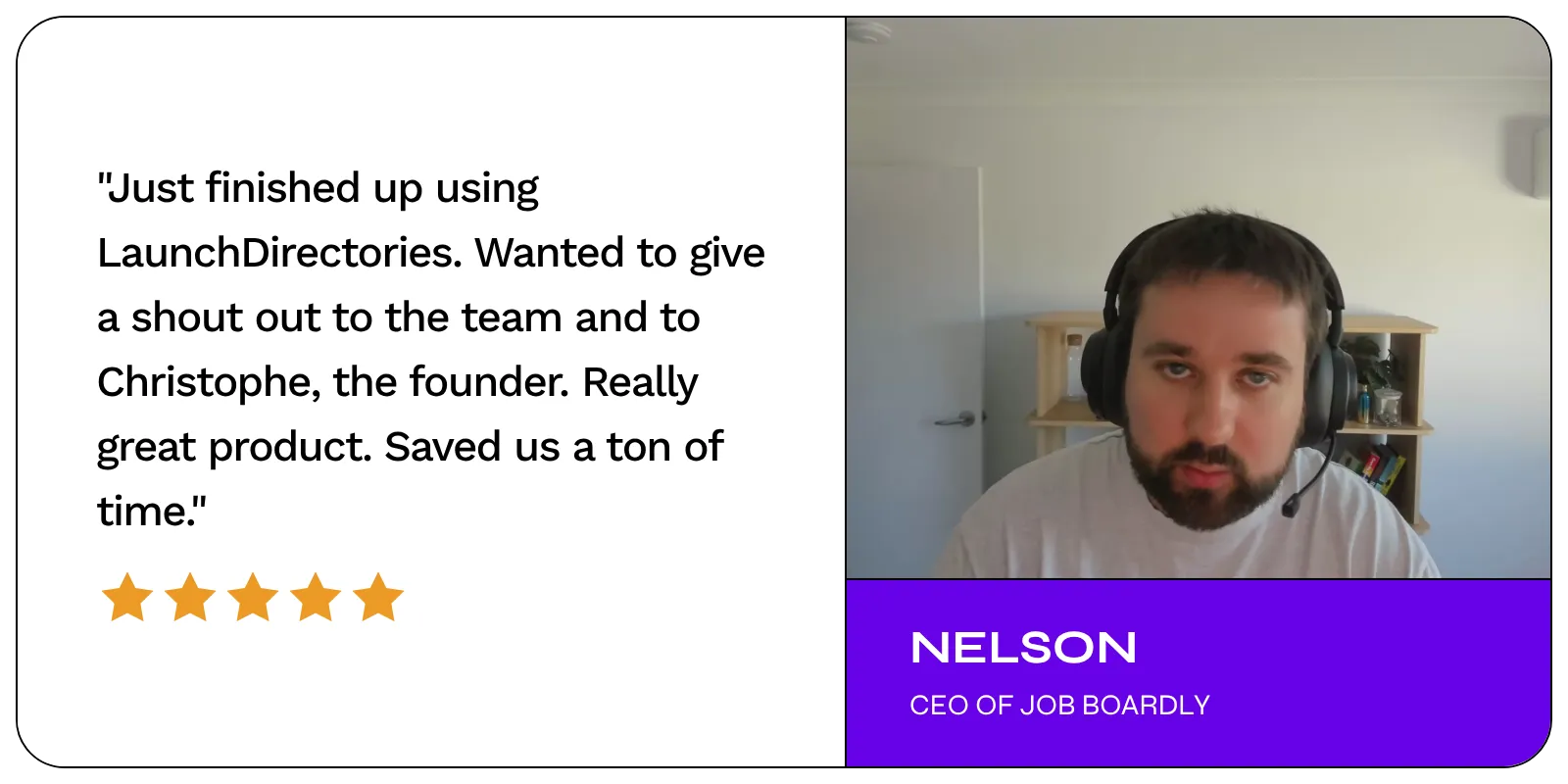
These aren't hypothetical numbers. To give you a concrete example: when JobBoardly used LaunchDirectories, they saw their Domain Rating climb from 64 to 68 and their referring domains jump from 556 to 735 - that's 179 new referring domains - after we submitted them to 60+ directories. That's the kind of backlink profile growth that would take months of outreach and guest posting to achieve manually, if you could achieve it at all.
The DR increase matters because it compounds. Going from DR 64 to 68 doesn't just mean a number went up - it means every page on JobBoardly's site now ranks slightly better for every keyword they target. Their existing content gets a lift. New pages they publish start from a stronger baseline. And because Domain Rating is logarithmic, each point gets harder to earn, which means the early investment in directory submissions gives you a head start that competitors can't easily replicate.
Your specific results will depend on where you're starting from. A brand-new site with DR 0-10 will typically see a larger percentage jump because each new high-authority backlink has an outsized impact. An established site like JobBoardly (starting at DR 64) sees more incremental gains, but those gains are harder-earned and more valuable because they're moving the needle at a level where competition is fierce.
The one thing that stays consistent across every startup we've worked with: the referring domain count jumps significantly and permanently. Every directory listing is a new website linking to you, and those links don't expire. Unlike paid ads or social posts that disappear, directory backlinks continue passing authority and driving traffic for years after submission.
Dofollow vs Nofollow Directory Links
This is the single most important technical concept in directory submission for SEO. When a directory links to your website, that link is either "dofollow" or "nofollow," and the difference determines whether you get direct ranking power from it.
Dofollow links pass SEO authority - what SEOs call "link equity" or "link juice" - from the directory to your website. When Product Hunt (DR 91) gives you a dofollow backlink, some of that authority flows to your domain. Over time, as you accumulate dofollow links from multiple high-DR directories, your own domain authority climbs. This directly translates to higher rankings for your target keywords. A dofollow link from a DR 80 directory is worth more for your SEO than a dozen links from DR 20 sites.
Nofollow links include a rel="nofollow" attribute that tells search engines not to pass authority. G2, Capterra, and Crunchbase all use nofollow links. Does that mean they're worthless for SEO? Not quite. In 2019, Google changed how it treats nofollow - it's now a "hint" rather than a directive, meaning Google may still choose to pass some value through nofollow links when it considers the source authoritative. More importantly, nofollow links from high-traffic directories still drive real referral traffic, build brand credibility, and create mentions that AI search engines use to learn about your product.
The ideal strategy is a natural mix of both. An all-dofollow backlink profile actually looks suspicious to Google because real brands naturally accumulate both types of links. Focus your proactive effort on securing dofollow links from high-DR directories, but don't skip the nofollow platforms that drive real business value. A G2 listing with 20 reviews influences more buying decisions than any dofollow link ever could.
We maintain a curated list of dofollow directories with live DR scores if you want to prioritize the directories that pass direct SEO authority.
with 100+ Directory Listings
Skip the grind. We'll submit your product to top directories so you get real users, feedback, and lifetime backlinks without lifting a finger.
How Long Does It Take to See Results?
The honest answer is that different types of results happen on very different timelines. Understanding this prevents the most common mistake founders make: giving up after two weeks because they don't see a DR increase yet, while ignoring the referral traffic that's already flowing in.
The first week is when referral traffic appears. High-activity directories like Product Hunt can send hundreds or thousands of visitors on launch day alone. BetaList, Hacker News, and active subreddits can deliver traffic spikes within days. This is the fastest, most visible win from directory submission. Even directories without community features start sending trickle traffic as soon as your listing goes live and gets indexed.
Weeks two through eight are about listings going live across the board. Directories with editorial review typically approve within 1-4 weeks. As each listing gets approved and Google crawls it, your backlink profile grows. You can track this in Ahrefs or Google Search Console - the number of referring domains to your site should climb steadily during this phase. This is also when long-tail traffic starts: your directory listings begin ranking for searches like "best [category] tool" or "[your product] vs [competitor]."
Months two through six are when SEO compounds. Backlinks from high-DR directories take time to influence your own rankings. Google needs to crawl the linking pages, assess their authority, and recalculate your domain's ranking signals. Most founders see their first measurable keyword position improvements around month 3, with clearer gains by month 6. Your Domain Rating in Ahrefs will start climbing as referring domains accumulate, and you'll notice organic traffic increasing for keywords you were previously stuck on page 3-4 for.
The long game (6-12+ months) is where directory submission really proves its value. AI search engines like ChatGPT and Perplexity periodically re-index web content. As your product appears across dozens of authoritative directories, AI models become increasingly likely to recommend it when users ask relevant questions. Your directory pages continue ranking for long-tail keywords, sending steady organic traffic without any ongoing effort. And the backlinks are permanent - unlike paid ads that stop the moment you stop paying, a backlink from Product Hunt or G2 continues passing authority for years.
The bottom line: directory submission is a compounding investment, not a quick hack. The startups that see the best results are the ones that submit early, submit broadly to quality directories, and then let time do its work. The sooner you start building that backlink profile, the sooner the compound effect kicks in.
Directory Submission FAQ
Ready to build high-quality backlinks?
We'll submit your product to 100+ directories and build valuable backlinks for your SEO. Save hours of manual work so you can focus on what's important — selling and building, not submitting boring forms.