To consistently rank high and attract organic users for your product, you must master indie hacker SEO fundamentals, leveraging robust technical foundations and high-E-E-A-T content. This systematic approach demands dedicated weekly effort (around 5 hours) and requires patience for compounding results. SEO is widely cited as a high-ROI B2B marketing channel, often referred to as the 'lowest risk, highest ROI'.
Prerequisites:
A clear product or service idea
A domain name (ideally with existing history)
Basic web development understanding, especially Server-Side Rendering (SSR)
A limited marketing budget
Commitment to consistent, small time allocation (e.g., 5 hours/week)
Many solo founders get lost in generic SEO advice, leading to wasted time on efforts that rarely move the needle. You're likely trying to scale with limited resources, making focused, effective solo founder marketing absolutely critical. This guide provides a direct path.
By the end, you'll possess a tailored, ethical seo for indie hackers 2026 playbook. This enables you to build a durable organic growth engine where consistent effort truly compounds over time.
Prerequisites for Your Indie SEO Journey
Before you even think about keywords or backlinks, let's lay the groundwork. You need a few essential building blocks in place for any SEO effort to stick.
Here's what you absolutely need:
A Clear Product or Idea: This sounds obvious, but you must have a well-defined offering that solves a real problem. SEO is about bringing the right people to the right solution, not about making something out of nothing.
A Domain Name: While '.com' domains are slightly preferred, the overall domain extension isn't critical; domain reputation and existing backlinks hold more weight. If you have an existing domain with some history, that's a bonus. A new domain means starting from scratch.
Basic Web Development Familiarity: You don't need to be a full-stack engineer, but understanding how your site is built or being willing to learn modern frameworks (like those supporting Server-Side Rendering) is key. This means grasping concepts like how your site loads and renders for search engines.
A Limited, Predictable Marketing Budget: SEO isn't free, even if many tools are. You'll need resources for potential tools, content creation, or even outsourcing specific tasks. Setting aside a small, consistent amount is far better than sporadic spending.
Commitment to Consistent Effort: This is non-negotiable. Treat SEO like a garden, not a one-time build. Allocating around 5 hours per week consistently will yield far better results than cramming 20 hours in one month and then doing nothing for three.

Your technical SEO foundation is the bedrock upon which all your visibility efforts will stand. This means getting three core elements right from the start: your domain's reputation, implementing server-side rendering, and setting up essential tracking tools.
Choosing the right domain name matters, but not in the way many think. While '.com' domains are slightly preferred, the overall domain extension isn't critical; domain reputation and existing backlinks hold more weight. An older domain with a clean history and quality links is often more valuable than a brand-new one.
Server-Side Rendering (SSR) is crucial for SEO as Google generally struggles to effectively parse JavaScript for indexing. Implementing SSR ensures your content is immediately accessible to search engine crawlers. Modern frameworks like Astro.build simplify this process and include built-in image optimization tools that contribute to faster load times, directly impacting user experience and rankings.
Here are the key technical foundations you need in place:
Domain Reputation & Selection: Focus on domains with a positive history and established backlinks rather than chasing a specific extension.
Server-Side Rendering (SSR): Implement SSR to ensure Google can easily crawl and index your site's content. Frameworks like Astro.build offer excellent support for this.
Essential Free SEO Tools: Setting up Google Search Console and Bing Webmaster Tools is non-negotiable. These free platforms provide direct insights into how search engines view your site.
And that’s it for the foundational technical setup. Getting these elements right now will save you significant headaches down the road as you focus on building out your content and strategy.
Optimizing Domain, Architecture, and Performance
Choosing a strong seo-friendly domain is your first performance lever. While a .com is preferred, existing domain reputation and backlinks matter far more than the extension itself. Think of it as inheriting a good neighborhood—the history of the address counts.
Server-Side Rendering (SSR) is crucial for SEO as Google generally struggles to effectively parse JavaScript for indexing. Modern frameworks like Astro.build excel here, offering configurations that prioritize speed and search engine visibility. Astro's built-in image optimization tools, for example, mean you don't have to manually compress images, directly impacting page load times.
Here's how to approach it:
Prioritize SSR: Implement SSR from the start. This ensures that your content is rendered on the server and sent to the browser as fully formed HTML, making it easily crawlable and indexable. Frameworks like Astro.build offer excellent support for this.
Optimize Site Performance: Use Google PageSpeed Insights and Lighthouse to audit your site's speed. Aim for a "Good" score. Slow sites lose visitors and rankings.
Mobile-First Indexing: Ensure your site is perfectly responsive. Google indexes the mobile version of your content first, so a poor mobile experience means poor SEO.
I found that neglecting SSR early on meant significant refactoring later. When building with Astro.build, pay close attention to its island architecture and how it hydrates components – getting this configuration right is key to its performance benefits.
with 100+ Directory Listings
Skip the grind. We'll submit your product to top directories so you get real users, feedback, and lifetime backlinks without lifting a finger.
Essential Tools for Technical Audits
To properly assess your website's health and identify growth blockers, you need a foundational toolkit. Setting up Google Search Console and Bing Webmaster Tools provides direct insights into how search engines see your site.
These free platforms report crawl errors, indexing issues, and valuable performance data directly from Google and Bing. They are your first line of defense.
For deeper technical analysis, Screaming Frog's SEO Spider is indispensable. Its free version crawls up to 500 URLs, perfect for smaller sites. You can identify broken links, duplicate content, and missing meta descriptions quickly.
Over 73% of SEO professionals rely on website crawling tools for technical audits, and Screaming Frog is a consistent favorite.
While the free version is powerful, its paid iteration unlocks advanced features like custom extraction and API integrations. Understanding its value and pricing for solo founders means looking at options like the yearly license, which offers access to all updates. You can find details on the screaming frog pricing tiers at https://wise.com/us/blog/screaming-frog-pricing.
This combination of search engine provided data and a robust crawler gives you the necessary visibility to find and fix critical technical SEO problems.
Mastering Low-Competition Keyword Research
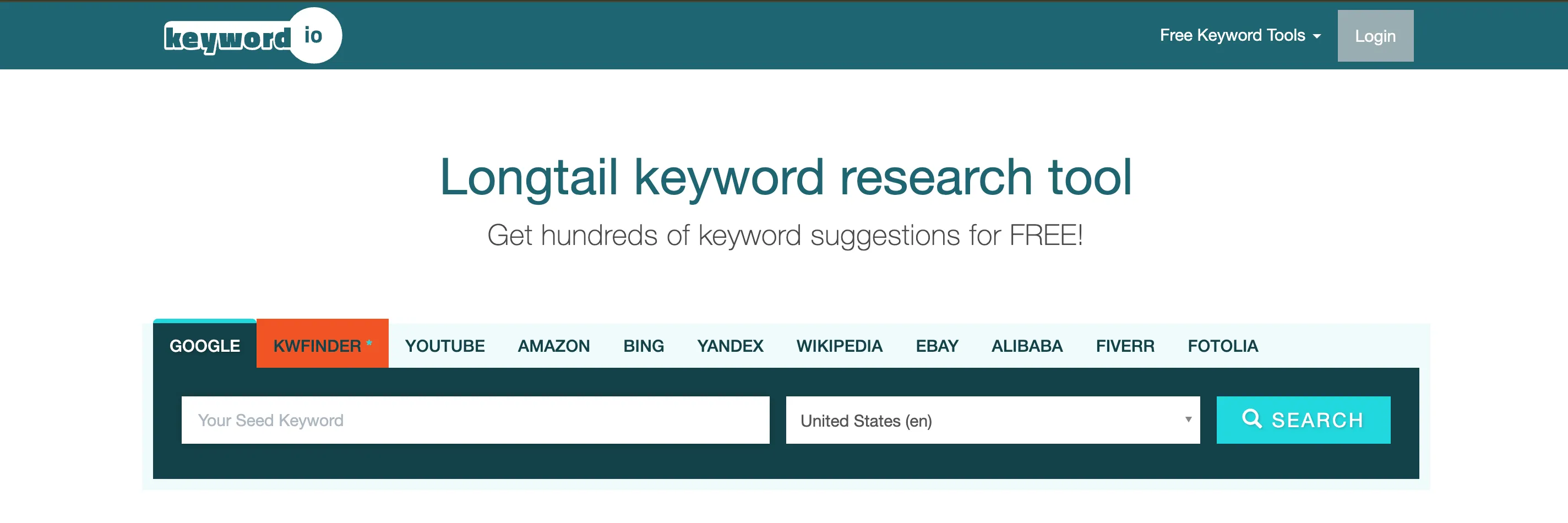
Finding keywords that aren't already swamped with competition is key for indie hackers to drive organic traffic. Focusing on hyper-specific niches increases the likelihood of your content being definitive and 'chunkable' for AI answers.
This means indie hacker keyword research should prioritize finding low-competition keywords suitable for blog posts.
Here's a look at some popular tools for this:
Tool Name | Type | Pros | Cons | Best For |
|---|---|---|---|---|
Google Keyword Planner | Free | High volume data, Google Ads integration | Requires an active Google Ads account, often broad ranges | Initial broad topic exploration and ad campaign planning. |
Reddit Keyword Tools | Free | Identifies niche discussions, user pain points | Less structured data, requires manual interpretation | Discovering specific, unmet needs and long-tail questions from communities. |
Moz Keyword Explorer | Paid | Strong difficulty scores, SERP analysis | Limited free queries, can be pricey for solo founders | Analyzing competition and finding attainable ranking opportunities. |
Keywordtool.io | Freemium | Suggests long-tail variations, YouTube/Bing | Free version lacks volume data, paid tier needed for depth | Generating a broad list of keyword ideas and identifying related terms. |
Leveraging tools like Reddit, even the free versions, offers direct insight into what your target audience is actually searching for and struggling with.
Identifying a keyword's true "difficulty" for an indie hacker isn't just about the number; it's about whether your specific content can genuinely outrank existing results.
This means you're not just looking for low volume, but rather for questions that are asked frequently but answered poorly, or not answered at all by authoritative sources.
Understanding these tools helps you find keywords that have a real chance of ranking, even with a smaller content footprint.
Step-by-Step Keyword Identification and Content Mapping
Identifying keywords that your target audience actually searches for, and that you can realistically rank for, is the bedrock of effective content for indie hackers. This process involves more than just plugging terms into a tool; it's about understanding intent and uncovering opportunities.
Here’s a precise, step-by-step approach:
Brainstorm Seed Keywords: Start broad. Think about the core problems your product or service solves. What terms would someone use if they didn't know your solution existed? For a SaaS founder building a project management tool, seeds might be "team collaboration," "task management," "project workflow," or "startup productivity."
Leverage Google Keyword Planner (Free):
Enter your seed keywords.
Filter results by location (your target market) and language.
Look for keywords with low to medium search volume and low competition scores.
Pay close attention to the "Top of page bid (low range)" – a lower bid often indicates less advertiser competition, which can correlate with easier organic ranking.
Focus: Seek out long-tail keywords – phrases of three or more words (e.g., "best project management tool for remote startups"). These are more specific and often have higher conversion intent.
Utilize Free Reddit Keyword Tools:
Platforms like Reddit are goldmines for understanding user language. Tools (often found via simple Google searches) can analyze popular subreddits for frequently discussed terms and questions.
UI Path Example: Many free tools allow you to input a subreddit name (e.g., r/SaaS, r/IndieHackers) and will return a list of common phrases, questions, and even sentiment.
Low Competition Criteria: Look for questions that appear frequently but have short, unhelpful, or missing answers on the top search results. This signifies an opportunity gap.
Analyze "People Also Ask" & Related Searches:
When you search for your seed keywords on Google, scroll down. The "People Also Ask" box and "Related Searches" at the bottom offer direct insights into user curiosity.
These often reveal top questions SEO opportunities – direct questions your content can answer definitively.
Content Mapping Strategy:
Create a simple spreadsheet. Columns: "Keyword," "Search Intent," "Target Audience," "Content Format" (Blog Post, FAQ, Tutorial, Feature Page), "Potential Title," and "Priority."
Map directly: If users are asking "how to onboard new remote team members without losing productivity," your content map should point to a blog post titled "5 Proven Strategies for Onboarding Remote Team Members Effectively." This is the core of content mapping.
Prioritize: Assign priority based on keyword volume, competition, and how closely it aligns with your product's core value proposition.
Identifying a keyword's true "difficulty" for an indie hacker isn't just about the number; it's about whether your specific content can genuinely outrank existing results.
This systematic process of keyword research methods helps you find precisely what your audience needs and where the low competition criteria truly lie.
Crafting E-E-A-T Content for AI Search Dominance
7. THE CODE OF AUTHENTICITY (NON-NEGOTIABLE)
AI search, powered by Gemini, aggressively filters generic content. Your E-E-A-T (Experience, Expertise, Authoritativeness, Trustworthiness) is your shield. The Google January 2026 core update and the December 2025 update prioritized 'Human-Proof' E-E-A-T.
The goal in the era of AI search is 'Citation-First Content,' aiming to be the trusted source that AI overviews cite directly.
The Google February 2026 Discover Core Update signals a fundamental shift towards content that resonates authentically.
Here's how to build that content:
Experience: Direct, hands-on knowledge.
Expertise: Deep understanding and skill.
Authoritativeness: Recognized leadership in a field.
Trustworthiness: Reliability and integrity.
Focus on crafting E-E-A-T content that demonstrably proves these pillars. This isn't about keyword stuffing; it's about providing genuine, verifiable value.
Google's AI favors real human experience. Generic, AI-generated content gets sidelined. Your unique journey as an indie hacker is your superpower here, enabling AI search optimization.
To establish citation-first content, infuse your writing with specifics:
Show, don't just tell: Share build logs, user testing feedback, or personal founder challenges.
Admit limitations: Highlight what your product doesn't do, or where competitors excel. This builds massive E-E-A-T.
First-party data: Reference your own tool's performance or user data when relevant.
This approach turns your content into the bedrock that AI assistants rely on, making your indie hacker venture a go-to resource.
Authenticity, Authority, and AI-Friendly Structure
Indie hackers possess a distinct advantage in building authentic authority online, especially with AI search’s demand for genuine human experience. You have an edge because you're often building in public, sharing raw insights, cultivating a personal brand, and possess direct, hands-on experience. This translates into powerful content examples like detailed build logs, firsthand founder journey narratives, and tangible case studies that AI simply cannot fabricate.
To leverage this, embed your unique experiences directly into your content. Instead of saying "our tool is fast," share a specific build log snippet: "When we deployed the new API caching layer for LaunchDirectories, we saw query times drop from an average of 250ms to under 40ms during peak load tests. This involved rewriting our data ingestion pipeline using Go routines, a process that took two weeks of focused development." This level of detail is gold for AI.
Further boost your AI content structure by implementing schema markup. For product pages, use Product schema to detail features, pricing ($19/mo to $99/mo), and reviews. For tutorials, employ HowTo schema to break down steps clearly. For FAQs, use FAQPage schema. These structured data elements help search engines and AI assistants understand your content’s context and extract key information with precision.
Use
Schema.org/Productfor feature lists and pricing.Implement
Schema.org/HowTofor step-by-step guides, ensuring each step is clearly defined.Add
Schema.org/FAQPageto clearly delineate questions and answers.
This meticulous structuring, combined with your authentic founder journey SEO, makes your content an indispensable resource for both human readers and AI. It establishes you not just as a provider, but as a verifiable authority that AI assistants will naturally cite.
Ethical Link Building on a Budget for Indie Hackers
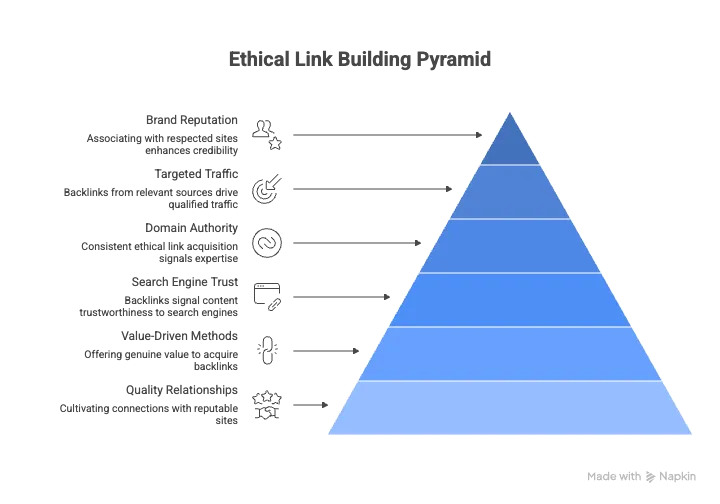
Ethical link building is the practice of acquiring backlinks from reputable websites through legitimate, value-driven methods, rather than manipulation or spam. This approach is crucial because search engines use backlinks as a significant signal of trust, directly impacting your website's authority and visibility. Data shows that more than half of websites have zero backlinks, whereas pages dominating search results typically possess nearly four times as many. Given this, it's no surprise that nearly 30% of marketing budgets are currently allocated to link building efforts. For indie hackers focused on sustainable growth, mastering ethical link building on a budget is non-negotiable.
Focusing on quality over quantity means cultivating relationships and offering genuine value. This isn't about chasing vanity metrics; it's about building a strong, reliable citation network that signals authority to both users and AI search systems.
Why Ethical Link Building Matters for Indie Hackers:
Boosts Search Rankings: High-quality backlinks from relevant sites act as "votes of confidence," telling search engines your content is trustworthy and valuable.
Enhances Domain Authority: Consistent ethical link acquisition signals authority and expertise, making your site more attractive to both users and search algorithms.
Drives Targeted Traffic: Backlinks from relevant sources can send direct, qualified traffic to your indie product.
Builds Brand Reputation: Associating with respected sites within your niche enhances your brand's credibility.
Building these connections strategically, especially when resources are tight, can yield substantial long-term benefits. The key is to integrate link-building activities into your overall product development and marketing rhythm, ensuring each effort provides mutual value.
For indie product launch campaigns, leveraging platforms that naturally generate authoritative links can be a smart move. This approach ensures your efforts contribute to sustained SEO health, rather than temporary gains followed by penalties.
Key Takeaway: Prioritize backlinks that genuinely represent trust and relevance; avoid any tactic that feels like it could be misinterpreted as manipulation.
Proven Strategies & Avoiding Pitfalls for Solo Founders
Launching your indie product means building buzz, and smart founders know that early validation often comes with valuable backlinks. Platforms like Product Hunt or Hacker News are goldmines for this. Think about it: a feature on Product Hunt can land you a DA 90 backlink from their main page, a huge signal of trust to Google, even if the direct traffic isn't the long-term driver.
The real danger for solo founders is falling into black hat SEO traps. Google's AI, SpamBrain, is incredibly adept at sniffing out artificial link building. Services promising thousands of links for a few bucks on platforms like Fiverr, or the murky world of Private Blog Networks (PBNs), are not just ineffective – they're a fast track to Google penalties. This kind of manipulation actively damages your site's reputation and search visibility.
Instead, focus on organic growth. When your product hits a nerve, users and publications will link to you naturally. For those needing an initial push, understand that acquiring these authoritative links takes time and a deliberate approach. Learn more about acquiring valuable backlinks effectively.
Critical Warning: Buying backlinks or engaging in manipulative schemes is a direct violation of Google's guidelines and will backfire.
Your focus should be on genuine product-market fit, which naturally generates organic mentions and links. If your product is compelling, the links will follow. Remember, sustainable growth hinges on quality over quantity, especially when it comes to your online authority.
with 100+ Directory Listings
Skip the grind. We'll submit your product to top directories so you get real users, feedback, and lifetime backlinks without lifting a finger.
Streamlining Directory Submissions with LaunchDirectories
Directory submissions feel like a chore, but they’re a consistent way to snag quality backlinks. Our managed backlink service at LaunchDirectories takes this tedious process off your plate. You provide us with your product details and launch goals, and we handle the rest.
We pinpoint and target the most relevant, high-authority directories and launch platforms for your specific niche. Think beyond the obvious; we identify the right spots, not just any spot. This is key to building a genuinely valuable backlink profile.
Next, we craft a unique, optimized submission package. This isn't a copy-paste job. Each description is tailored, highlighting your product's unique selling points for every listing. This customized approach maximizes your chances of approval and ensures the backlink passes the most value.
LaunchDirectories manages the entire submission process. We handle account creation, navigate platform-specific requirements, and ensure everything is submitted correctly and on time. This frees you up to focus on your product and your users. Explore more ethical link building strategies for 2026 and see how this approach fits.
Our system tracks every submission, and we follow up to ensure approvals and indexing. The result? Earned backlinks, improved Domain Rating, enhanced online visibility, and a predictable stream of organic traffic.
This managed approach provides a consistent flow of quality backlinks without you lifting a finger. It’s a predictable strategy for boosting your startup's online authority.
Sustaining Growth: Monitoring, Troubleshooting, and Time Management
Monitoring your SEO performance is non-negotiable for sustainable growth. Without consistent oversight, your efforts can falter without you knowing why. It's about tracking the right metrics, understanding what they mean for your product, and knowing what tools to use.
Here's a breakdown of essential metrics and how to track them:
Metric | What it Signifies for Indie Hackers | Tracking Tools |
|---|---|---|
Organic Traffic | Direct indicator of search visibility and content effectiveness. | Google Analytics, Google Search Console |
Keyword Rankings | Shows where your content stands for target searches. | Google Search Console, Semrush (paid), Ahrefs (paid) |
Bounce Rate | Highlights user engagement; high rates may signal poor UX/relevance. | Google Analytics, PostHog |
Conversion Rate | Measures how well traffic turns into desired actions (e.g., sign-ups, sales). | Google Analytics, PostHog |
Backlink Profile | Assesses website authority and trustworthiness. | Google Search Console, Semrush (paid), Ahrefs (paid) |
Troubleshooting common SEO issues prevents stagnation. The most frequent culprits for indie founders often stem from overlooked technical details or content misalignments.
For instance, a sudden drop in rankings might point to:
Technical Glitches: Crawl errors (like 404s or robots.txt blocks) prevent search engines from accessing your pages. Use Google Search Console's coverage report to identify these.
Mobile-First Indexing Problems: If your mobile site is slow or doesn't display content well, Google will penalize it. Test your mobile speed with Google's PageSpeed Insights.
Content Gaps: Generic or thin content fails to establish E-E-A-T (Experience, Expertise, Authoritativeness, Trustworthiness). Review your content against competitor offerings and user intent.
When troubleshooting, always start with the data from Google Search Console. It's a direct line from Google to your site's performance and potential issues.
For example, if you see a spike in 404 errors after a site update, that's your immediate fix. You then prioritize correcting those broken links.
This proactive seo performance tracking is key to anticipating problems before they impact your growth trajectory. It means less time reacting to crises and more time building.
Diagnosing Common SEO Issues and Optimizing Workflow
Common technical SEO errors can silently cripple your visibility. 404 errors are a prime example; they tell search engines a page is gone, wasting crawl budget and frustrating users.
You can spot these using Google Search Console's Coverage report. Any page flagged as "Not found (404)" needs immediate attention. Fix them by redirecting to a relevant existing page or creating new content.
Another frequent pitfall is robots.txt blocking. If this file accidentally disallows search engines from crawling critical sections of your site, they simply won't see your content. Check its directives carefully.
Mobile-first indexing issues also loom large. Unoptimized mobile content, slow mobile load times, or hidden text on mobile can tank your rankings. Use Google's Mobile-Friendly Test to diagnose these.
E-E-A-T assessment failures are subtler. This means Google doesn't trust your content's authoritativeness or expertise. Generic content with no clear author bio, lack of cited sources, or insufficient expertise signals can trigger this.
Beyond automated tools, alternative audit methods are essential. Manually reviewing content for depth and unique angles is crucial. Browser developer tools, like Chrome's Lighthouse, offer deep dives into page performance on both desktop and mobile.
To understand user behavior and pinpoint where they get stuck, leverage PostHog analytics. This tool helps identify drop-off points in user journeys, informing content and UX improvements.
Issue Type | Common Cause | Diagnostic Tool(s) | Recommended Action |
|---|---|---|---|
Crawl Errors (404s) | Deleted pages, broken internal links | Google Search Console (Coverage Report) | Implement 301 redirects to relevant pages; fix broken internal links. |
Robots.txt Blocking | Incorrect directives | Manual review of robots.txt; Google Search Console | Correct syntax errors; ensure important pages are not disallowed. |
Mobile-First Indexing | Poor mobile design, slow mobile load times | Google Mobile-Friendly Test, PageSpeed Insights | Optimize images, leverage browser caching, ensure responsive design. |
E-E-A-T Failures | Generic content, lack of author expertise, no sources | Manual content review, competitor analysis | Showcase author credentials, cite sources, create in-depth, original content. |
This layered approach ensures you're not just fixing errors but building a fundamentally trustworthy and accessible site.
Managing Your SEO Efforts on a Limited Schedule
You're an indie hacker. Your time is gold. Fitting SEO into a packed schedule feels impossible, but it's the engine for sustainable growth. A realistic 5 hours a week seo plan makes it doable.
Prioritize ruthlessly. Here’s how to break down that seo schedule for maximum impact:
Keyword Review & Strategy (1 Hour): Dedicate this time to spotting new keyword opportunities and refining existing ones. Use tools like Google Keyword Planner or Ahrefs to identify long-tail keywords with less competition. Don't aim for broad terms; focus on specific user intent.
Content Creation & Optimization (2 Hours): This is where your core value sits. Write new blog posts, optimize existing pages for target keywords, or update outdated content. Focus on quality and E-E-A-T. A single, well-researched piece can outperform five mediocre ones.
Link Building Outreach (1 Hour): Focus on quality over quantity. Identify 2-3 potential outreach targets – relevant blogs, directories, or partners. Craft personalized pitches. Instead of mass emailing, aim for genuine connections that could lead to valuable backlinks.
Monitoring & Adjustments (1 Hour): Check your key metrics in Google Search Console and Google Analytics. Are rankings dropping? Is traffic dipping? Address any urgent issues and make small, data-driven tweaks to your strategy for the following week.
Fitting SEO into your routine is an indie hacker marketing strategy that pays dividends. It's about smart allocation, not just more hours.
Think of your SEO effort like this: you wouldn't pour water into a leaky bucket. First, you need to plug the holes. That means consistently checking your crawl errors, ensuring your mobile-first indexing is solid, and that your content passes the E-E-A-T assessment.
This focused approach ensures your precious 5 hours a week aren't wasted on tasks that don't move the needle. It’s about building a predictable growth engine, one hour at a time.
Final Thoughts for Continuous Indie SEO Growth
Consistently applying solid SEO isn't a one-off project; it's the engine for your long-term growth as an indie founder. The strategies we've covered aim to build a predictable pipeline of organic traffic by focusing on what truly matters: quality, expertise, and user experience.
This means making E-E-A-T assessment a non-negotiable part of your content workflow. Your audience needs to trust your insights, and search engines are increasingly rewarding that trust.
Keep your audits lean and focused. Regularly checking for crawl errors and ensuring mobile-first indexing is flawless prevents your hard work from being invisible. Remember, effective time management is your superpower when juggling multiple hats.
The SEO landscape in 2026 demands authenticity and value. Avoid shortcuts; they rarely pay off long-term. Instead, commit to these core principles. For those building specifically for smaller SaaS products, deepening your understanding of seo for micro saas a beginners guide can offer a clear roadmap to focused success.
As you move forward, continue to experiment and learn. The best future seo strategies are often born from consistent application and smart iteration.
Ready to build high-quality backlinks?
We'll submit your product to 100+ directories and build valuable backlinks for your SEO. Save hours of manual work so you can focus on what's important — selling and building, not submitting boring forms.