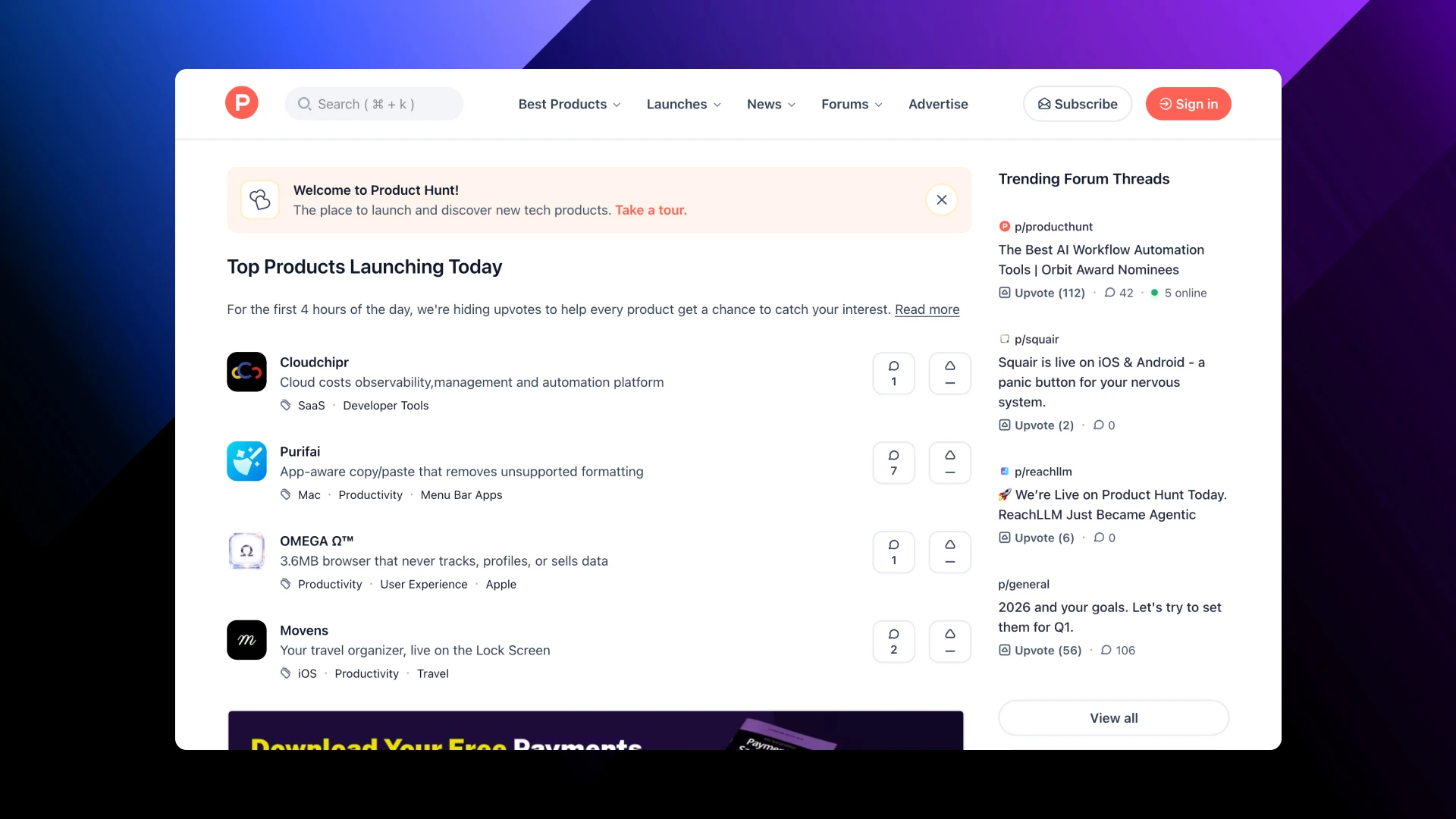
Product Hunt is still the loudest launch day megaphone, but it is not the only place where early users discover new products. If you rely on one spike, you are betting your whole launch on a single leaderboard, a single timezone, and a single audience. The founders who win consistently do the opposite: they stack multiple product hunt alternatives that each deliver one thing well - feedback, targeted traffic, credible backlinks, reviews, or long-tail discovery.
Build your launch stack in three layers: launch feeds for short spikes, directories for slow compounding discovery, and communities for real conversations. Pick 4-6 channels across those layers and you stop gambling your whole launch on one leaderboard.
What is a Product Hunt alternative?
A Product Hunt alternative is any platform where people actively discover new products and where a launch can create measurable outcomes: users, feedback, social proof, and sometimes backlinks. The best alternatives have three traits: a clear discovery surface (feed, search, or category pages), an audience that matches your buyer, and moderation that keeps quality high.
Think of them as different distribution channels, not clones. A launch platform gives you a 24-48 hour burst. A directory can drive small, consistent visits for years. A community can produce the highest quality feedback because people ask questions you did not expect. Product Hunt itself began as a side project in 2013 and still runs on the same core mechanic: daily discovery plus discussion.
How to choose the right platforms (without wasting weeks)
Most founders fail here because they pick platforms based on popularity instead of fit. Use five filters and you will cut the list fast.
1) Audience match beats total traffic
A directory with 5,000 monthly visitors can outperform a bigger platform if those visitors are your buyer. Ask: are people here searching for solutions like yours, or browsing for novelty?
2) Discovery window: spike vs compounding
Platforms fall into two buckets:
- Spike platforms: you get a surge for a day or a week, then it fades.
- Compounding platforms: your page keeps ranking internally and in Google.
Your best stack includes both. The spike gets you early feedback. The compounding layer keeps sending small streams of users long after you stop posting.
3) Proof and intent: comments, reviews, or rankings
If you sell B2B SaaS, reviews and comparisons matter more than upvotes. If you sell a dev tool, discussion threads and technical credibility matter more than polished marketing. Pick platforms that match how your buyer decides.
4) Link type and authority (for SEO teams)
Not every listing helps SEO. Some platforms use nofollow, sponsored, or gated pages. Google describes rel="nofollow" as a way to link without signaling endorsement or passing ranking credit.
Also remember that authority metrics are proxies. For example, Ahrefs Domain Rating (DR) is a 0-100 score that estimates the strength of a site's backlink profile. Use it to compare opportunities, not to predict rankings.
5) Effort and repeatability
A good launch channel is one you can run more than once. If a platform only works with a big campaign, it is not a system. Favor channels where you can ship, post, reply, and move on.

Launch platforms: Product Hunt alternatives with launch-day energy
These are the closest substitutes if you like the launch day rhythm: a listing, a feed, and a chance to get in front of early adopters quickly.
1) DevHunt
Best for: Developer tools, open source, anything builders will try quickly.Watch out for: technical audiences have low patience for vague positioning.Submission tip: lead with what you built and how it works, not the market size.
2) BetaList
Best for: early-stage products that want waitlist signups.Watch out for: generic landing pages with no clear hook rarely convert.Submission tip: offer a tight niche angle and a tangible early access benefit.
3) Peerlist
Best for: indie founders, career-adjacent tools, maker products.Watch out for: low engagement if you do not already participate.Submission tip: publish a short build story, then link the product.
4) Fazier
Best for: SaaS and micro SaaS with simple value props.Watch out for: crowded categories if you look like a clone.Submission tip: use a clean one-liner and show a real screenshot, not a hero mock.
5) MicroLaunch
Best for: bootstrapped launches and small features.Watch out for: weak traction if you post and disappear.Submission tip: stay in the comments for 24 hours and answer every question.
6) ProductBurst
Best for: products with a clear target persona and fast onboarding.Watch out for: if your listing page is thin, you waste the click.Submission tip: write for one persona and one job-to-be-done.
7) Launching Next
Best for: broader SaaS, apps, and templates.Watch out for: traffic quality varies by category.Submission tip: treat it as a directory plus launch, then optimize the listing over time.
8) Bulletin
Best for: early products that want visibility without the upvote game.Watch out for: you still need a compelling narrative to get clicks.Submission tip: focus on the problem you solve and the stage you are in (beta, v1, v2).
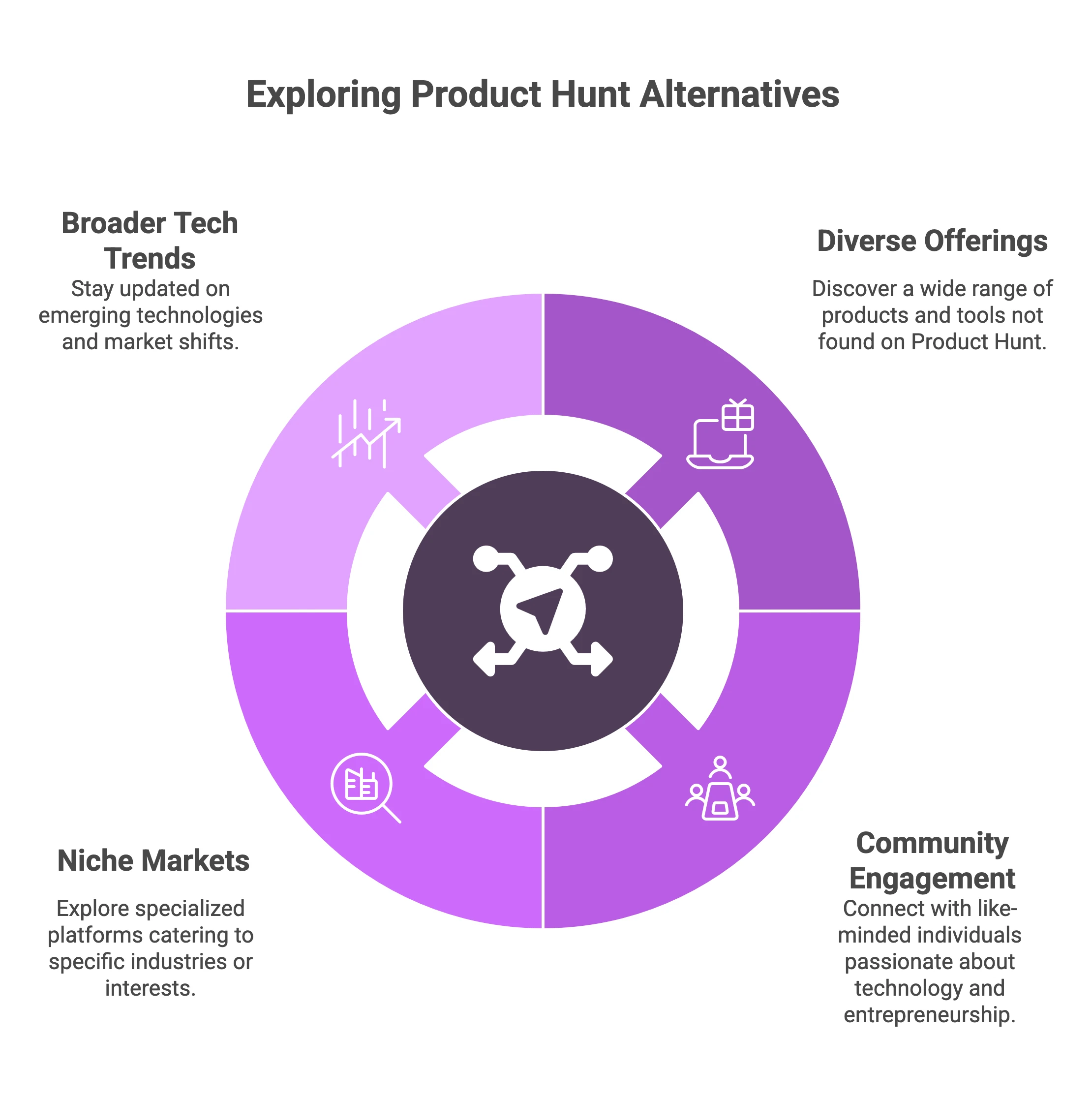
Product Hunt alternatives that compound SEO and discovery
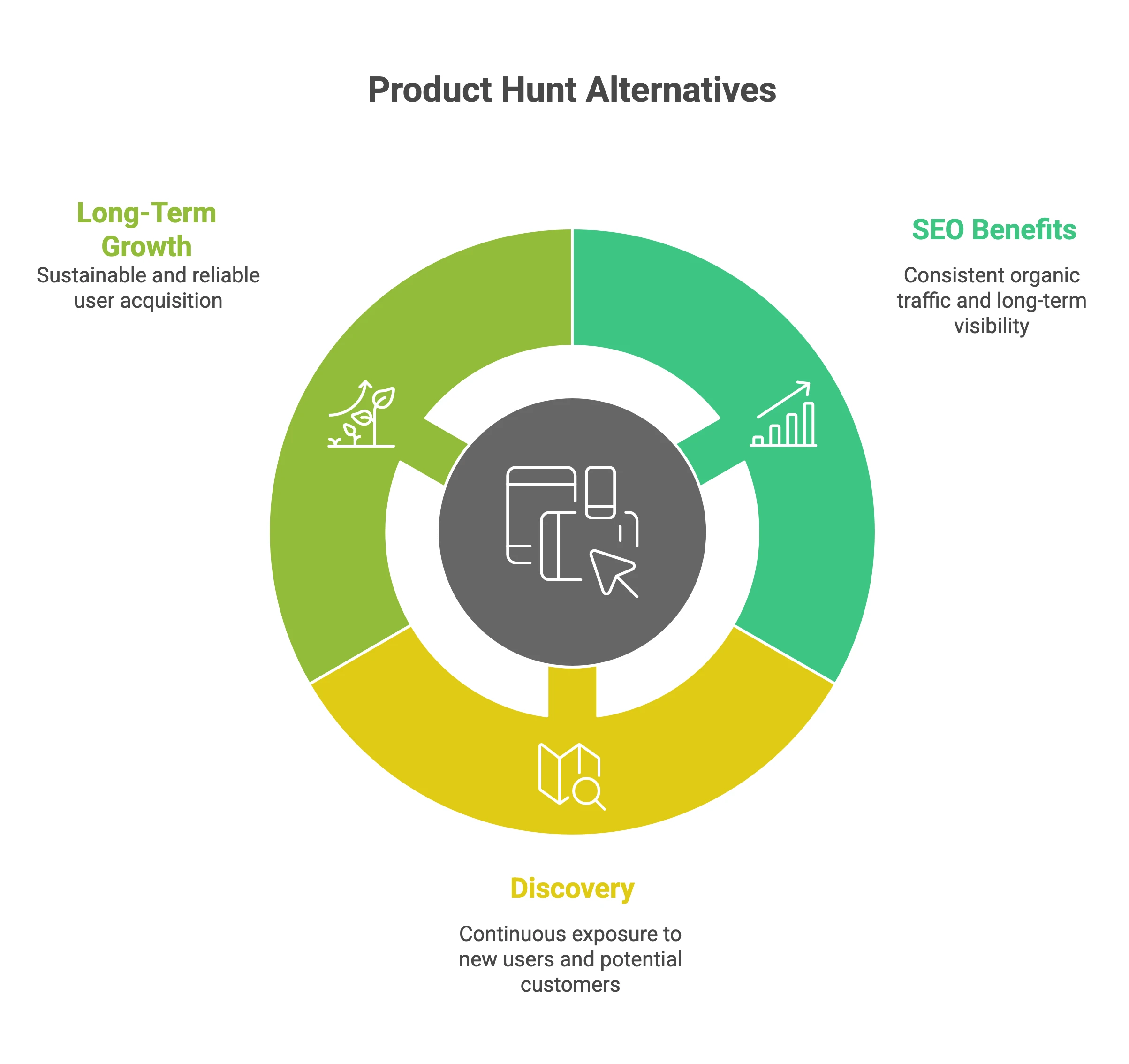
If you care about organic growth, directories are the boring lever that keeps paying. You trade a big one-day spike for a long tail of small, consistent discovery.
9) AlternativeTo
Best for: software with clear competitors and use cases.Watch out for: you will be compared directly, so weak positioning gets exposed fast.Submission tip: make sure your category and tags match real alternatives people search.
10) G2
Best for: B2B SaaS with real customers and a review plan.Watch out for: no reviews means no visibility.Submission tip: ask your happiest users for reviews in small batches, not all at once.
11) Capterra
Best for: established B2B SaaS that can handle high-intent evaluation traffic.Watch out for: you need strong pricing clarity or you will lose buyers to competitors.Submission tip: use crisp feature bullets and a specific ideal customer profile.
12) SourceForge
Best for: developer tools, utilities, and products with technical buyers.Watch out for: low trust if your listing looks abandoned.Submission tip: keep screenshots current and publish release notes.
13) Future Tools
Best for: AI tools and productivity software.Watch out for: hype categories where users bounce fast.Submission tip: show one concrete workflow and one clear outcome.
14) There's An AI For That
Best for: AI tools with tight category fit.Watch out for: low differentiation if your tool is a wrapper.Submission tip: add specific prompts or example outputs to stand out.

Community-driven Product Hunt alternatives: feedback beats upvotes
Communities are not passive discovery. They are conversations. That makes them higher effort, but the feedback and trust you earn can be worth more than any directory click.
15) Hacker News
Best for: developer-first products, technical writeups, and strong opinions backed by proof.Watch out for: weak claims get challenged immediately.Submission tip: post a story or technical lesson first, then link the product naturally.
16) Reddit
Best for: niche communities with real pain points and strong buying intent.Watch out for: getting banned for drive-by promotion.Submission tip: pick subreddits that match your product, follow the rules, and lead with value. Launch Directories maintains a curated list of Reddit marketing subreddits if you want a starting point.
17) Indie Hackers
Best for: bootstrapped SaaS, transparent build stories, and tactical growth lessons.Watch out for: low traction if you do not share real details.Submission tip: share a result (what changed, what you learned), then invite feedback.
18) Uneed
Best for: micro-SaaS, templates, AI tools, and early-stage products targeting makers and solo founders.Watch out for: it rewards clarity and “why this is different” - if your positioning sounds like a generic tool, you blend in.Submission tip: use a sharp one-liner + 1 standout differentiator, add clean visuals, and stay active in comments the day you post to turn views into clicks and feedback.
Comparison table: pick your stack by goal
You do not need 18 launches. You need 4-6 channels that match your stage and buyer.
| Your goal | Best channels | Why it works | Typical effort |
|---|---|---|---|
| Fast early feedback | Hacker News, Indie Hackers, Reddit | You get questions, objections, and language you can reuse on your homepage | Medium to high |
| Launch day visibility | DevHunt, BetaList, Fazier, Bulletin | Feed-based discovery creates a short burst that can kick-start word of mouth | Low to medium |
| Long-tail organic discovery | AlternativeTo, AI directories, other niche directories | Listings rank in category pages and sometimes in Google for "alternatives" searches | Low |
| B2B credibility and reviews | G2, Capterra | Buyers trust reviews during evaluation, especially for SaaS | Medium (reviews) |
| SEO foundation links | Curated directory submissions | A diversified set of reputable referring domains supports authority over time | Low if systemized |
Example launch stacks (copy and paste)
- Pre-launch MVP (you want feedback + waitlist): BetaList + Bulletin + Indie Hackers + 3-5 niche directories.
- Bootstrapped micro-SaaS (you want steady signups): Fazier + AlternativeTo + Reddit (one relevant subreddit) + X for build-in-public updates.
- AI tool (you want category discovery): Future Tools + There's An AI For That + X + one community thread where you can show real outputs.
- Developer tool (you want credibility): DevHunt + Hacker News + SourceForge + a technical post you can link back to later.
A simple rule that keeps you honest: pick two spike channels, two compounding channels, and one community where you will show up consistently.

Practical application: a 14-day launch sprint
Days 1-2: Build your launch kit.Write one crisp tagline, a 2-sentence elevator pitch, three screenshots, and one short demo video. Create two landing pages: a general homepage and a niche "alternatives" or "use case" page that matches how people search.
Days 3-4: Set up tracking and onboarding.Add UTM links for each platform, set a single conversion goal (waitlist, trial, demo), and make onboarding frictionless. If you need feedback, add one question after signup: "What made you try this?"
Days 5-7: Warm up communities.Comment on 10 posts in your target communities. Share a lesson learned from building the product. The goal is to be recognizable before you post your link.
Days 8-9: Run your spike launches.Launch on one feed platform (DevHunt or BetaList) and one community (Hacker News or Indie Hackers). Stay active for 24 hours. Screenshots and fast replies beat perfect branding.
Days 10-14: Add the compounding layer.Submit to a handful of high-fit directories (AlternativeTo if you have competitors, AI directories if you are an AI tool, review sites if you have customers). Then build a broader directory shortlist using metrics like DR, traffic estimates, and link type, so you are not guessing. LaunchDirectories positions its database around these filters, and its done-for-you service aims to cover 100+ submissions in 3-5 days if you want to scale the long tail.
Conclusion
Product Hunt is one launch channel, not a launch strategy. The fastest path to traction is stacking product hunt alternatives that match your stage: a couple of spike platforms for attention, a couple of directories for compounding discovery, and at least one community where you can earn trust through conversation. When you treat launches as a repeatable system, every feature release becomes a growth event.
If your bottleneck is time, keep the high-touch launches personal, then systemize directory submissions so you get consistent listings and a clean backlink foundation. Track which platforms produce signups (not just clicks), double down on the winners, and your launch stack gets stronger every month.
with 100+ Directory Listings
Skip the grind. We'll submit your product to top directories so you get real users, feedback, and lifetime backlinks without lifting a finger.
FAQ
What are the best product hunt alternatives for SaaS?
Pick one launch feed (Fazier or BetaList), one community (Indie Hackers or a relevant subreddit), and one discovery directory (AlternativeTo). If you already have customers, add G2 or Capterra and run a review plan so you show up during evaluation.
Is it worth launching outside Product Hunt?
Yes. Many products sell to buyers who never browse Product Hunt. Smaller platforms can deliver higher intent traffic and better feedback because people search inside categories, not leaderboards. The best approach is a stack: one big day plus several long-tail placements.
Do directory listings help SEO in 2026?
They can, if the sites are reputable and your listing pages get indexed. Link attributes matter: some directories use nofollow, some dofollow, and some gate pages. Google documents link attributes like nofollow as signals about endorsement and ranking credit, so verify link type and quality before you submit.
How many platforms should you launch on?
For most founders: 4-6. Two spike channels, two compounding channels, and one community you will actively engage in. More than that often leads to rushed copy, weak follow-up, and inconsistent listings you will not maintain. Review results after two weeks and refine.
What should you prepare before launching on any platform?
Have a one-line value prop, a short demo, two or three screenshots, and a landing page that matches the platform's audience. Also set up tracking with UTMs so you can see which channels actually produce signups and which ones only produce vanity traffic.
Ready to build high-quality backlinks?
We'll submit your product to 100+ directories and build valuable backlinks for your SEO. Save hours of manual work so you can focus on what's important — selling and building, not submitting boring forms.