In 2026, relying solely on Product Hunt for a successful product launch is a critical misstep for indie hackers. The platform, once a grassroots discovery site, is now undeniably saturated, its algorithm heavily skewed towards high-profile, PR-backed ventures.
Product Hunt began as a side project in 2013, fostering a community around emerging tech. Today, that community's feed is largely dominated by big startups and well-funded companies. We regularly see clients, especially those with micro-SaaS or niche dev tools, struggle to gain any real traction.
Reddit users, for instance, frequently express frustration. They report low engagement and disappointing results when launching indie projects there. Your carefully built product often gets lost. And Product Hunt drives short-term traffic spikes, but listings lose momentum quickly.
This isn't to say Product Hunt has no value, but it's not sufficient as a sole launch channel. A smarter launch strategy pairs Product Hunt with other platforms that cater to early adopters and niche audiences. We've analyzed the landscape to identify the top platforms. You need to know where founders should launch to get genuine user feedback and build lasting momentum.
What is Product Hunt?
Product Hunt is a daily leaderboard for new tech products. Visibility is determined by upvotes.
Founded in 2013 as a side project, Product Hunt has evolved into a global community for sharing and discussing the latest in tech. The core purpose is simple: each day, new products are showcased, and the community votes on their favorites. Those with the most upvotes get prime placement. But, that doesn't mean guaranteed success for everyone.
It is a place where you can discover the newest mobile apps or hardware.
However, the initial allure of a democratic platform has faded somewhat. Here's what to keep in mind:
- Early upvotes are critical.
- Posting time heavily influences visibility.
- Products from companies with bigger marketing budgets tend to dominate.
Because Product Hunt can be limiting, find other platforms to launch.
What does this all mean? Launching on Product Hunt is not a bad idea, but it is not sufficient.
Next, prepare for post-launch SEO by submitting your product to other platforms. For increased SEO visibility in 2026, check out these best free SaaS directories.
Why founders are moving away from Product Hunt in 2026
The hard truth? Product Hunt's launch algorithm favors established companies. Indie projects often struggle to gain traction, regardless of code quality.
The platform's initial promise of a level playing field has eroded over time. Big startups, with their extensive marketing budgets, dominate the feed. Smaller, independent projects simply get buried.
This creates a significant visibility problem.
Here's why founders are looking elsewhere:
- Product Hunt saturation: Too many products are being launched at once, making it difficult to stand out.
- Skewed algorithms: The algorithm favors products with existing traction and large marketing budgets.
- High prep costs: It costs a lot to prep a listing with custom landing pages, demo videos, and media kits.
The expectation on Product Hunt is also a barrier. Users expect a finished product. MVPs or early prototypes aren't as well-received, making it less ideal for testing initial concepts.
Then there's the feedback issue. Users criticize Product Hunt for the abundance of positive comments that lack genuine product evaluation. And after the launch hype fades, many top-ranking products generate little to no income, and some websites are no longer active a few years later.
This is where alternative platforms come in.
Don't pour all your resources into a single launch on Product Hunt. Instead, consider a diversified approach. For example, launching on multiple platforms increases SEO visibility in 2026.
To successfully launch on platforms like Product Hunt, it's important to know the best practices for a successful launch.
Next, focus on platforms where your product can truly shine.
How the algorithm changed to favor corporate launches
Product Hunt's algorithm today prioritizes established players. The shift favors companies with marketing muscle, not scrappy indie developers.
The biggest changes revolve around these factors:
- Early upvotes are paramount.
- "Hunter" status is influential.
- Expectation of polished products.
Here's how these shifts create barriers.
Early upvotes are crucial, and influence the product's visibility. The products need to gain traction fast to be seen, but that early traction is difficult without an existing network. It's a chicken-and-egg problem for many first-time founders.
The influence of the "hunter" (the person who lists the product) also matters. Products listed by well-known "hunters" with large followings get an immediate advantage. Indie founders often lack these connections, putting them at a disadvantage from the start.
Another factor is the unwritten rule: polished products only. The community expects a fully functional, beautifully designed product.
This contrasts sharply with the early days of Product Hunt when MVPs and rough prototypes were welcomed. Now, if you want to rank, you will be required to have a slick landing page, explainer video, and a fully fleshed-out marketing plan. This creates a barrier to entry for solo founders who need to test their ideas quickly and cheaply. These products are buried by more corporate-solution-based companies and are often not seen.
It's crucial to diversify your launch strategy, which is why we've compiled a list of Product Hunt alternatives where founders should launch.
What to do next? Find platforms that actually value early-stage innovation.
The hidden cost of a Product Hunt launch
The real cost of a Product Hunt launch isn't the listing fee. It's the hidden expenses in time and resources needed to make a splash.
Think you can just slap up a quick landing page and call it a day? Think again. Users now expect professional-grade presentations.
Here's the breakdown of launch prep costs:
- High-end demo video: Expect to spend anywhere from $400 to $5,000 for a professionally produced video.
- Complex media kits: These include logos, product screenshots, and detailed descriptions. Factor in graphic design costs, which can range from $300 to $2,000.
- Building a following: You can't just show up on launch day and expect the upvotes to roll in. You have to build momentum weeks in advance to get initial tractions.
For solo founders, these expenses can be crippling. They're forced to choose between building their product and hyping it up.
And here's the kicker: all that effort might yield very little return. Many products see a brief spike in traffic, only to fade into obscurity a few weeks later.
The time investment is also massive.
We're talking weeks, if not months, of preparation. That's time you could be spending on coding, talking to customers, or refining your product.
So, before you jump on the Product Hunt bandwagon, ask yourself: Is the potential exposure worth the cost?
Consider other platforms where you can get more bang for your buck. For increased visibility, check out these top Product Hunt alternatives for a successful launch in 2025.
Now, look for platforms that appreciate innovation at the early stages.
with 100+ Directory Listings
Skip the grind. We'll submit your product to top directories so you get real users, feedback, and lifetime backlinks without lifting a finger.
Best general alternatives for software startups
The best general alternatives to Product Hunt provide broader reach and aren't as algorithmically skewed. They offer founders a chance to connect with a wider audience, including early adopters eager to test new software.
Consider these platforms:
- Hacker News: Known for its tech-savvy community and merit-based ranking system.
- Reddit: Subreddits like r/SaaS or r/SideProject offer niche-specific exposure (though moderation is key).
- BetaList: Curated platform focused on early-stage startups seeking initial users and feedback.
The bigger issue is authenticity.
Don't just spam your product link. Engage in thoughtful discussions, provide value, and be genuinely helpful. If you are active in Reddit groups and can get early traction you can get valuable traffic to your site and generate more users.
These platforms often value genuine engagement over polished marketing materials.
Also, be prepared for tough love. These communities value honest feedback. Embrace the criticism, iterate on your product, and show that you're listening.
Remember, these alternatives offer more than just traffic. They're opportunities to build relationships, gather valuable insights, and cultivate a loyal user base. Also, ensure you have enough funds to test your product, as many projects don't see their vision come to life because 60% of the Saas start-ups fail.
As a founder, your goal is more than a temporary spike in traffic. Consider a diversified approach to gain more product exposure. Launching on multiple platforms can also increase SEO visibility in 2026. For increased SEO visibility in 2026, check out these best free SaaS directories.
Now, focus on building genuine user connections.
Indie Hackers for community-driven feedback
Indie Hackers is tailor-made for founders sharing their journey. It is better suited to "build in public" strategies compared to the polished facade often presented on Product Hunt.
Product Hunt wants a ready-to-go product, Indie Hackers wants the raw, behind-the-scenes story. Forget the highlight reel. Here, you get to share the struggles, the pivots, and the messy reality of building a business. It's about authentic feedback from peers.
Consider these points:
- Transparency is valued: Share your revenue numbers, your challenges, and your failures.
- Community support: Founders offer encouragement, advice, and practical solutions to problems.
- Long-term engagement: Indie Hackers fosters ongoing discussions and relationships, not just a one-day launch spike.
Platforms like Indie Hackers provide real stories from entrepreneurs to help founders learn from peers. Forget the pressure to present a perfect image. Indie Hackers wants genuine experiences.
In short, while Product Hunt is a launchpad, Indie Hackers is a support group.
Next, make sure you are launching on a platform that values your authenticity.
Hacker News for developer-centric virality
Hacker News offers a direct path to developer virality, but don't expect a free ride. The community, heavily influenced by Y Combinator's ethos, has a famously high bar for technical depth.
The "Show HN" format is your key. It's for presenting something you've built. Not just talking about an idea. (Think working code, not mockups.) If your project resonates – solves a real problem, displays technical ingenuity expect serious organic traffic.
But first, understand the unwritten rules.
- Be prepared for scrutiny.
- Explain the "why" behind your project.
- Answer every question.
The bigger issue? A half-baked project gets torn apart, fast. The upside, though, is massive. A well-received "Show HN" post can drive thousands of visitors and early adopters to your site within hours. That is why 47% of early-stage start-ups focus their launch on Hacker News.
Now, prepare for launching to this developer centric alternative.
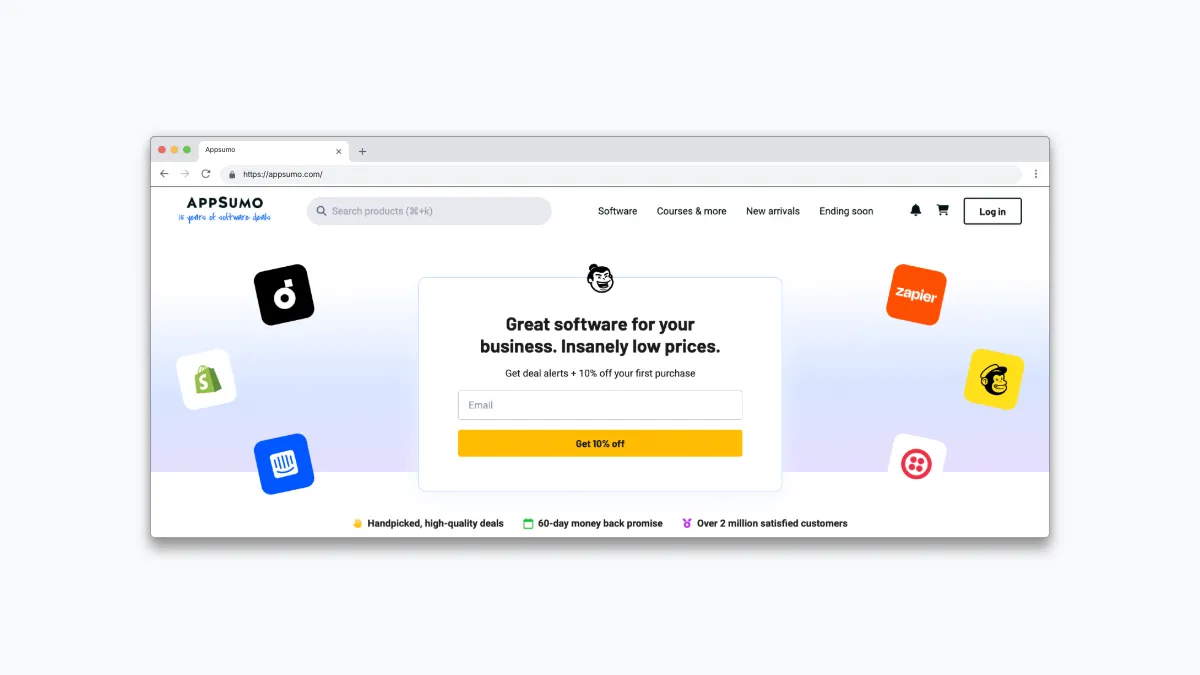
AppSumo for revenue-first launches
AppSumo is about sales, not just visibility. It can give early-stage SaaS companies immediate cash flow through lifetime deals (LTDs).
Forget the upvote chase of Product Hunt. AppSumo offers the potential for actual revenue generation. The premise? Offer a compelling lifetime deal on your software. Drive a surge of sales to early adopters.
But here's the catch: it's not a passive strategy.
You need to actively promote your deal and engage with the AppSumo community. Prepare to answer questions, provide support, and address concerns. Also, lifetime deals aren't for every product. Some of the common issues with the platform include questions from the users that can last for long periods of time and some founders have found that it can take a considerable amount of time to respond to users.
And what if your product is subscription based?
It's a quick cash injection for SaaS companies. AppSumo can create short-term revenue, but requires founders to think about how they can still generate revenue in the long-term. It's essential to figure out the best way to ensure that your customers still want to invest in future updates, and expansions once they have the lifetime deal.
What to do next?
Find other platforms to focus on generating long-term, scalable success.
Best niche platforms for specific industries
Niche platforms often generate higher conversion rates because you're preaching to the choir. The audience is already primed for what you're offering.
Consider this: a general tech platform will have a mix of users. A niche platform is laser-focused. You're not just another face in the crowd.
Here are some communities with high-intent users:
- Dribbble: For design-centric products.
- Stack Overflow: Ideal for developer tools.
- Inbound.org (RIP, but similar communities exist): Marketing-focused audiences.
But the real advantage is the content gap. These communities crave specific types of content. Design communities respond to visual case studies. Coding communities want technical deep dives. Marketing groups eat up growth hacks.
For example, if you're launching a new UI kit, Dribbble is a no-brainer. The community expects and appreciates high-quality design resources. Your conversion rates will be far higher than if you posted it on a general tech forum. Because you're targeting a design-focused audience, you will see traffic to your site from people who are invested in this space.
Next, speak directly to your ideal users on platforms best suited for them.
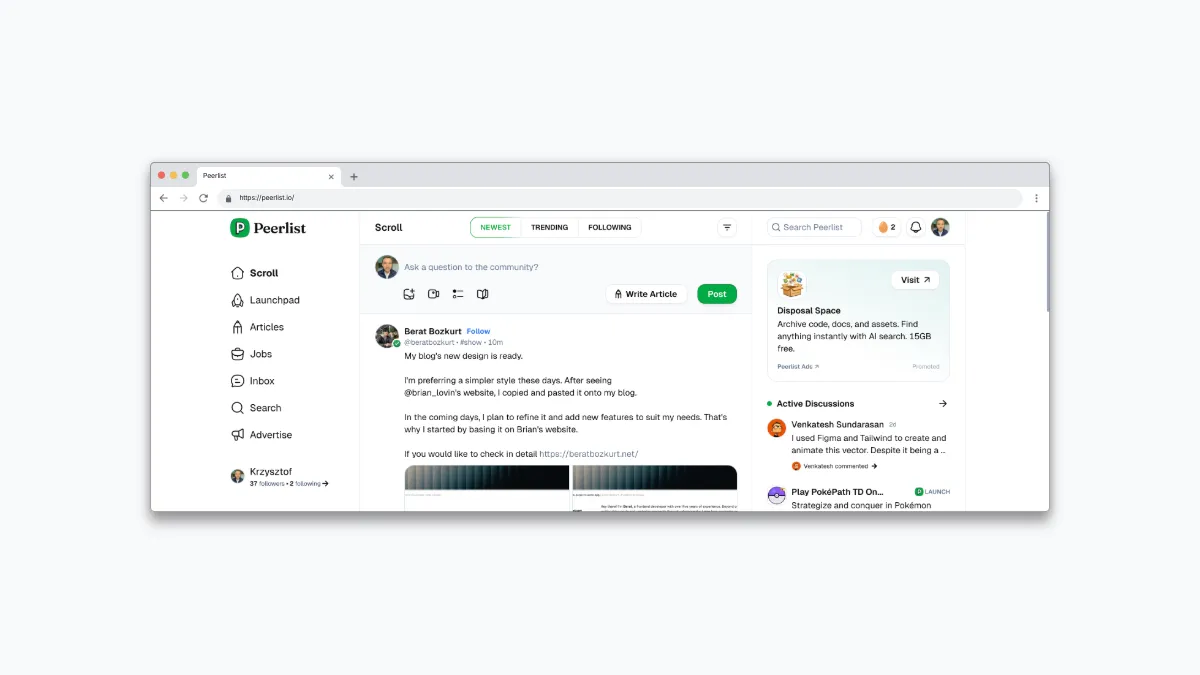
Showcases for developers and technical tools
Showcases for developers and technical tools demand a different playing field. General platforms often miss the mark when your audience is composed of engineers who value technical depth and utility above all else.
Instead, consider developer-centric platforms. These include:
Peerlist – A professional network for developers, often described as LinkedIn, but done the cool way. It allows you to discover and connect with people based on their skills, tools, expertise, and real work.
SourceForge – A platform for sharing and reviewing open-source and commercial software.
G2 – A platform for discovering and comparing software.
TinyLaunchpad – A small launchpad for tech products that is growing fast.
Uneed – A social launchpad for tech products that offers guaranteed homepage visibility, strong SEO value with a 72 DR backlink, and feedback from a community that actually cares.
These platforms resonate for specific reasons.
Peerlist is especially effective because it’s built around what developers do, not just where they work. It’s ideal for sharing projects, product launches, and technical insights while building a credible developer profile. Since your target user is an engineer, content shared on Peerlist should focus on explaining your work clearly—how the system was built, which tools were used, and why certain technical decisions were made.
If you’re showcasing an AI feature, explain the algorithm choice, trade-offs, and real-world implementation details. Engineers value depth, transparency, and practical reasoning.
Platforms like SourceForge and G2 work best when you already have a usable product. They help with distribution, reviews, and trust, making them strong channels for open-source and commercial software discovery.
Meanwhile, TinyLaunchpad and Uneed are ideal for early traction. They help new products get visibility quickly, gather feedback, and benefit from SEO and community exposure, especially valuable when launching something new.
Together, these platforms give you focused access to developers through skills-based networking, product discovery, and early-stage launch visibility.
Platforms for designers and creative software
Platforms for designers and creative software are where visually stunning products gain traction. These aren't just portfolios; they're vibrant communities craving fresh design ideas.
Think of them as curated galleries. Products with a strong visual identity get immediate attention. The advantage is targeted feedback. Designers can dissect your UI, critique your typography, and offer insights that general tech platforms often miss.
Consider these visual platforms:
- Behance: Part of the Adobe ecosystem, Behance is a hub for showcasing design work. If your product integrates with Adobe Creative Suite, this is a prime spot.
- Dribbble: Known for its tight-knit community and focus on visual appeal, Dribbble rewards polished presentations. It's the perfect spot for UI kits, icon sets, and design tools.
- Layers: A smaller, more curated platform focused on digital design resources. It's ideal for premium assets and exclusive content. (Note, you have to apply to be a seller.)
The issue is creating something that looks good. These platforms value aesthetics as much as functionality. If your software looks clunky, it won't get noticed. Visual appeal matters.
For instance, if you're launching a new icon set, Dribbble is a no-brainer. The community will appreciate your design resources. Your conversion rates will be far higher than if you just posted it on a general tech forum.
However, focus on your target user for the platform that works best for you.
How to launch without a single big day
Forget the all-or-nothing gamble. There's a smarter approach than pinning all your hopes on a single "big day."
Instead, think distributed launch and continuous visibility. This means consistently putting your product in front of potential users across multiple touchpoints over an extended period. The issue with Product Hunt is not that it is harmful, but many founders wait until the last day to think about their launch.
Here's how to make it work:
- Drip-feed content: Share valuable insights, tutorials, and behind-the-scenes updates related to your product.
- Engage on social media: Participate in relevant conversations, answer questions, and build relationships with potential users.
- Contribute to communities: Offer your expertise, provide helpful feedback, and establish yourself as a thought leader in your niche.
This strategy works because it builds momentum gradually. It's a marathon, not a sprint. Think of it as a "slow burn" approach that keeps your product top-of-mind for potential users.
Here's how we approach it with our clients:
- Identify key platforms: Where does your target audience spend their time online?
- Create valuable content: What problems can you solve for your audience?
- Engage authentically: How can you build genuine relationships with potential users?
Don't just blindly promote your product. Be helpful. Be valuable. And be consistent. This generates sustainable traction over time.
By distributing your launch efforts across multiple channels and focusing on continuous visibility, you can build a loyal user base and drive long-term success. To further refine your strategy, consider exploring how to launch successfully on platforms like Product Hunt to apply those principles across all your launch efforts.
Now, create a consistent flow and cadence for your launch strategy.
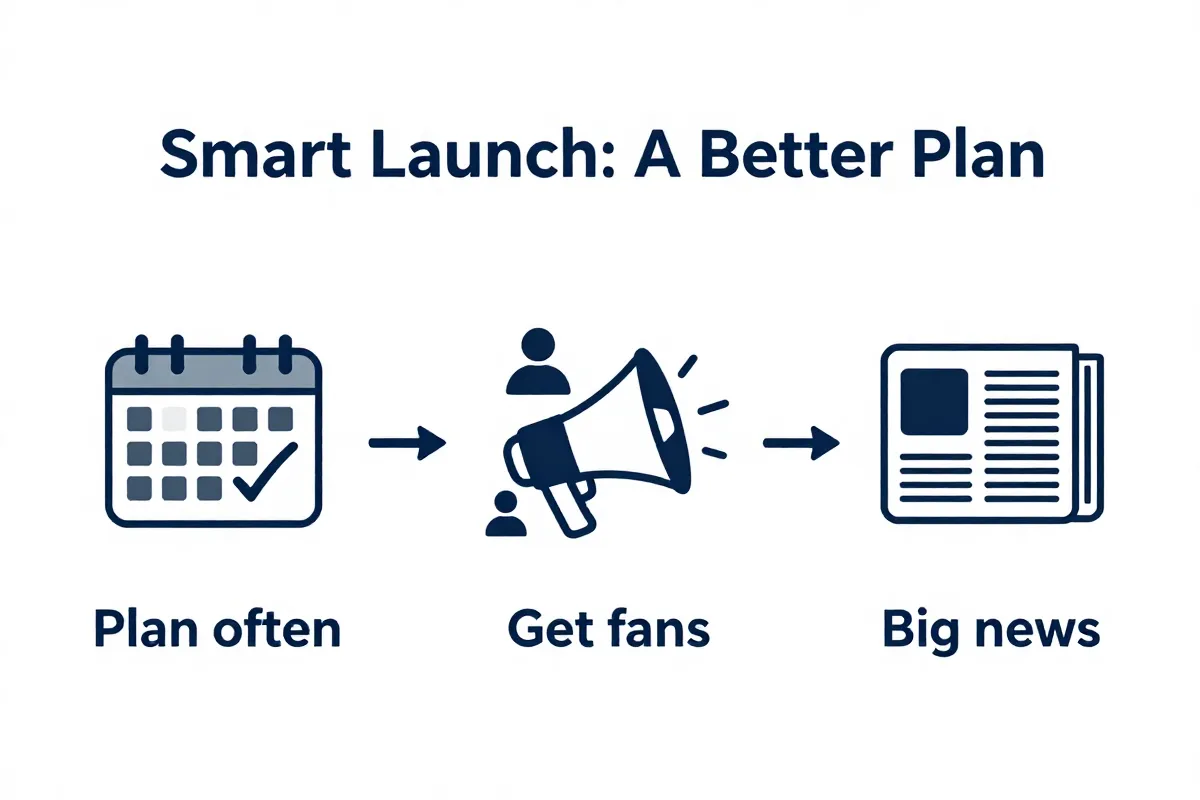
The benefits of a multi-directory approach
Submitting to 50+ smaller directories can create a more powerful backlink profile. It beats the fleeting attention from a single day on Product Hunt's front page.
Think of it this way: One is a sugar rush, the other is sustained energy.
The problem with focusing solely on Product Hunt is its fleeting nature. Yes, you might get a spike in traffic. But what happens after 24 hours? You're competing against everyone else launching that day.
A multi-directory approach, by contrast, builds lasting SEO backlinks. Each submission, while individually less impactful, contributes to your overall domain authority. The long-term benefit is cumulative.
Here's why:
- Diversity matters: Google favors a diverse backlink profile. Links from multiple sources signal authority.
- Relevance is key: Submitting to niche-specific directories ensures that your backlinks are relevant to your industry. This increases their value.
- Long-term visibility: Startup directories provide a persistent listing that potential customers can discover long after your Product Hunt launch fades.
It is also important that you submit to directories that have higher domain authority. Higher domain authority increases trust. Trust is the most important part of gaining users.
And, what if your site breaks? (It happens). More backlinks are better than one backlink.
Bottom line: A diversified approach to directory submissions provides stronger SEO value than a single-day event.
Now, determine your outreach strategy and consider launching on Product Hunt alternatives where founders should launch.
Using LaunchDirectories for automated distribution
Manual directory submissions can be a real grind—filling out forms, resizing images, crafting unique descriptions, and keeping track of all the different requirements. That’s exactly why LaunchDirectories exists. Instead of spending hours on repetitive work, you get professional manual submissions that help increase your startup’s visibility and SEO with quality backlinks.
Why LaunchDirectories’ Submission Service Works
Done-For-You Manual SubmissionWith LaunchDirectories, you fill out one simple form with your product details, and their team manually submits your startup to a curated set of directories that matter. This isn’t automated bots or shortcuts—each submission is handled by real humans to meet each directory’s specific requirements.
Curated Directory SelectionDepending on the plan you choose, LaunchDirectories will submit your product to 30+, 60+, or 100+ directories. These include startup directories and launch platforms that can deliver backlinks, referral traffic, and long-term SEO benefits.
Detailed ReportingAfter submissions are completed, you receive a detailed report showing where your product was submitted and which directories accepted the listing—giving you transparency and clear insight into your backlink profile.
What You Get With Each Plan
LaunchDirectories offers straightforward pricing tiers tied to the number of directories covered:
Starter List (~30+ directories) – Affordable entry package with manual submissions to around 30 directories and a submission report.
Pro List (~60+ directories) – Mid-tier option with broader coverage and access to higher-domain-authority sites.
Premium List (~100+ directories) – Their most comprehensive service, submitting to over 100 relevant directories for maximum visibility.
Each tier is done-for-you, saves you significant time, and includes backlinks that can boost your search visibility without ongoing effort.
with 100+ Directory Listings
Skip the grind. We'll submit your product to top directories so you get real users, feedback, and lifetime backlinks without lifting a finger.
Why This Matters for Your Startup
Backlinks That Last: Every approved directory listing creates a permanent backlink pointing to your site—these keep working for you long after the submission process is done.
Time Savings: Instead of laboring over submissions yourself, you free up hours to focus on refinement, user outreach, and product development.
Better Discoverability: Proper directory listings help with SEO, drive organic traffic, and can even make your product more visible in AI recommendation tools that pull from quality directory sources.
Ready to start building your backlink foundation?
Comparison of top Product Hunt alternatives
Here’s a head-to-head comparison of platforms. Use this matrix to select the right launch platform for your SaaS.
| Feature | Product Hunt | Indie Hackers | Hacker News | Niche Directories |
|---|---|---|---|---|
| Ideal User | Startups with polished products & budget | Indie developers seeking community | Tech-focused projects, developer tools | Products targeting specific industries |
| Cost | High (time & resources) | Free | Free | Low to Moderate (time or paid submission) |
| Ease of Launch | Moderate to High prep work | Easy | Moderate (requires technical depth) | Easy (but time-consuming) |
| Expected Result | Short-term traffic spike, PR | Community feedback, long-term engagement | Developer virality, organic traffic | Targeted traffic, SEO backlinks |
Launching on Product Hunt can be a costly experiment, especially if you're bootstrapping. The cost is higher for indie developers due to the hidden costs such as marketing material.
Indie Hackers thrives on authenticity. But don't expect instant virality. It's about building a community of users and getting product feedback which results in users who believe in your product and give feedback on how you can improve.
Hacker News is developer-centric, so focus your efforts there if you have the technical chops. Not all products are equal so focus on the audience you want to build. Don't expect success without understanding their expectations.
Submitting to niche directories can be time consuming. However, the increased visibility can be worth the effort.
Questions founders ask about launch platforms
Is Product Hunt "dead"? Not exactly, but it's more of a launch graveyard for indie projects. The perception is that Product Hunt is no longer the kingmaker it once was, but a place where big budgets and pre-existing networks win.
Founders often have questions on launch platforms.
- "When's the best time to launch?" There isn't a universal "golden hour." Consider your target audience, and where they spend time online. If you have an international user base, staggering your launch across different time zones will help.
- "Can I launch on multiple platforms at once?" Yes, but don't spread yourself too thin. The key is to tailor your message to each platform. A generic "Hey, check out my product!" blast won't cut it.
- "Does Product Hunt still matter?" It can. But it should be one piece of a larger puzzle. Think of it as a starting point, not the finish line.
The bigger issue is where to focus your efforts. Instead of obsessing over one "big day" on Product Hunt, consider spreading your launch across multiple platforms over weeks or months. It is an investment in genuine visibility.
Ready to build high-quality backlinks?
We'll submit your product to 100+ directories and build valuable backlinks for your SEO. Save hours of manual work so you can focus on what's important — selling and building, not submitting boring forms.