Backlinks are still one of the clearest "trust signals" on the open web, but buying links blindly is one of the fastest ways to waste budget or trigger a cleanup project you never wanted. The best backlink services do not sell you a pile of URLs. They sell you access to real audiences, real editorial standards, and repeatable processes that earn links you would be proud to show a customer.
If you are comparing the best backlink services right now, you are probably trying to answer three questions:
How fast will this move my rankings?How risky is it?And what does "good" actually cost?
What is a backlink service?
A backlink service is a paid team or provider that helps you earn links from other websites through execution work like outreach, content creation, PR pitching, and directory submissions. The value is not the link itself. The value is the quality of the source, the relevance to your niche, and the process used to get it without creating a spam footprint.
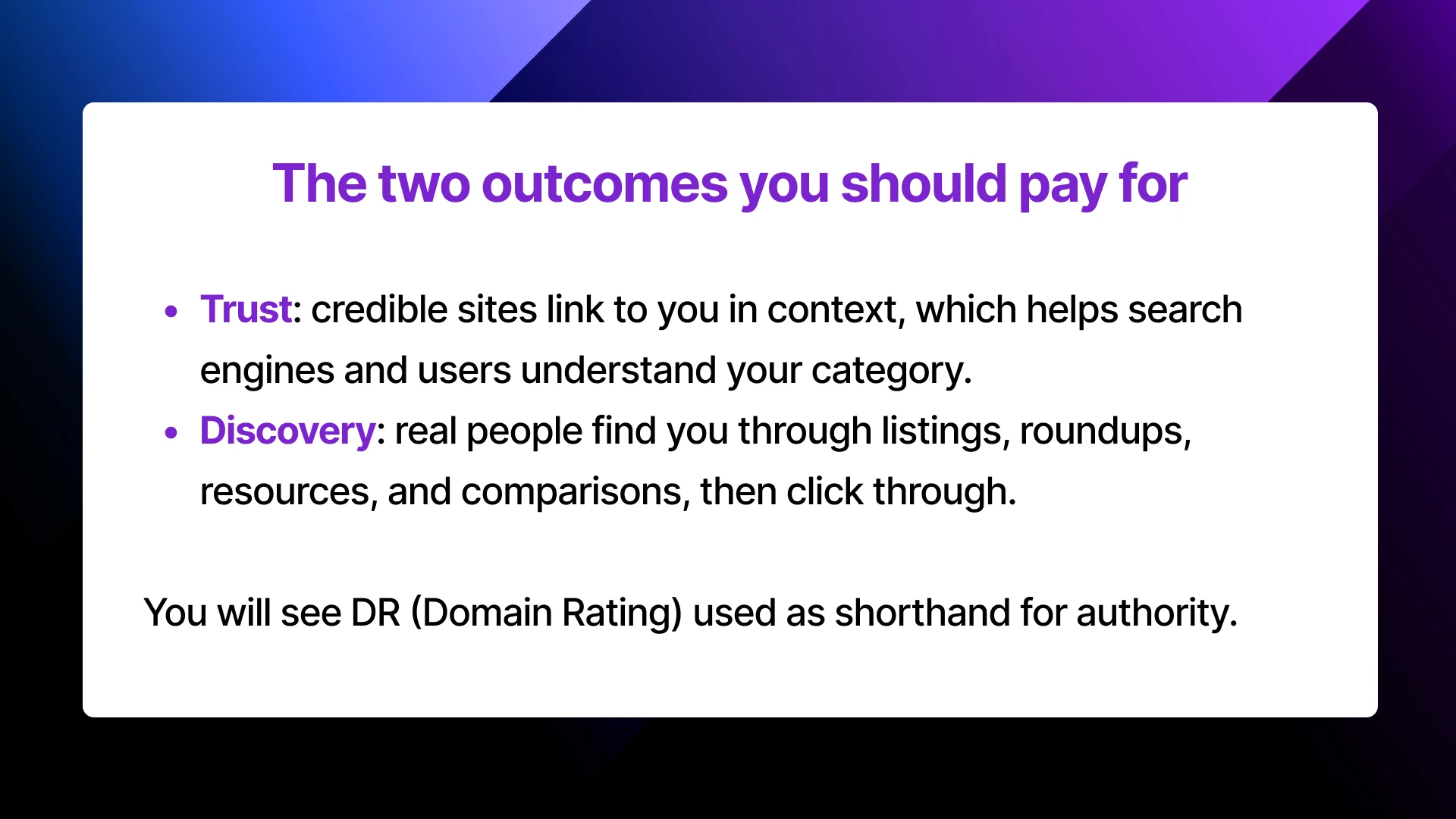
How Google treats links (and where services get you in trouble)
Google does not punish you for doing outreach or promoting content. It takes action when links exist primarily to manipulate rankings, especially when they are scaled, paid, or disguised. That is the line most "cheap link" vendors cross.
Here is the practical rule that keeps you safe:
- If the placement would make sense even if Google did not exist, you are usually fine.
- If the placement only exists because someone paid for PageRank-like value, you are in risky territory.
Google's public spam policies and link guidance make this clear: tactics designed to manipulate ranking systems can be ignored, demoted, or trigger manual actions.
The hidden risk: wasted spend from non-indexed links
Even when you avoid penalties, low-quality services burn you in quieter ways:
- Links never get indexed, so nothing moves.
- Sites get deindexed later, so you lose the link.
- Pages are thin and irrelevant, so the link does not send referral traffic.
- Your link profile becomes repetitive, which is easy to discount.
The safest services obsess over indexation and relevance, not only metrics.
Best backlink services compared by tactic
There is no single best provider for everyone. There is a best tactic for your stage, budget, and risk tolerance. Use this table to narrow your options before you talk to any vendor.
| Service type | What you get | Typical speed | Typical cost range | Risk level | Best for |
|---|---|---|---|---|---|
| Directory submission (manual, curated) | Listings + foundational links | Days to weeks | Low to mid | Low | New sites, fast baseline, launch visibility |
| Guest posts (relationship-based outreach) | Contextual editorial links | Weeks | Mid | Medium | Category pages, mid-stage growth |
| Digital PR | High-authority mentions from news and industry sites | Weeks to months | High | Low to medium | Authority jumps, brand credibility |
| Link insertions (niche edits) | Add your link to an existing page | Days to weeks | Low to mid | High | Only when fully editorial and relevant |
| Expert commentary (HARO-style, journalist quotes) | Quotes + links from publishers | Weeks | Low to mid | Low | Founders with strong POV, niche experts |
| Linkable assets + promotion | Tools, templates, data pages that earn citations | Months | Mid | Low | Long-term compounding links |
1) Directory submission services (the founder-friendly baseline)
The difference between "good" and "bad" is curation. A curated database that tracks DR, traffic, and link type helps you avoid dead platforms and low-value listings. Launch Directories positions itself as a database of 100+ startup directories and launch platforms with those metrics, updated regularly.
If you do not want to spend a week in forms, a done-for-you directory submission service can compress the work into one execution cycle. Launch Directories' service is positioned as manual submission to 100+ directories, with a report and delivery in a few days.

What to ask before you buy:
- Do you get the live URLs of every approved listing?
- Are they submitting to niche-relevant directories, not only generic lists?
- Do they track dofollow vs nofollow, and does the mix look natural?
- Do they follow up on pending submissions, or is it one-and-done?
2) Guest post services that are actually worth it
Guest posts still work when they are done like publishing, not like buying placements.
A legit guest post service looks like this:
- A short list of relevant sites with real audiences
- Topics that match what those sites already publish
- Editorial standards (editing, formatting, citations)
- A link that fits naturally inside the content
Red flags:
- "We guarantee 50 DR 60 links this month"
- No topic approvals, no site previews, no traffic checks
- The same author bio appears everywhere
- Every link uses the exact same money anchor
3) Digital PR (the authority jump)
Digital PR is expensive, but it earns the kinds of links that are hard to fake: mentions from publications, industry magazines, and respected blogs.
When it works, it tends to look like one of these:
- Original data: benchmarks, industry reports, teardowns
- Strong narrative: founder story, contrarian insight, clear trend
- Product hook: a tool, template, or free resource journalists can reference

4) Link insertions (niche edits) without the sketchy footprint
This is the category most likely to go wrong.
A safe niche edit is editorial: an existing article adds your link because it improves the page. A risky niche edit is a paid insertion on a site that exists to sell insertions.
If you consider this tactic, require:
- A full URL preview before payment
- Proof the page is indexed and gets real traffic
- A clear reason your link improves the section (not just "resource")
5) Expert commentary and quote placement (low risk, high trust)
Founder-led link building is underrated. If you can answer journalist questions quickly, you can earn links from publishers without paying for the placement.
The service you are buying here is not links. It is:
- Monitoring queries
- Drafting answers in your voice
- Fast turnaround and follow-up
This works best when you have a tight niche and a point of view.
6) Linkable assets plus promotion (the long game that compounds)
If you want links that keep coming in without constant outreach, invest in assets people cite repeatedly:
- A calculator tied to your niche
- A benchmark with transparent methodology
- A template library
- A small free tool
- A curated list with filters (not another generic "top 50")
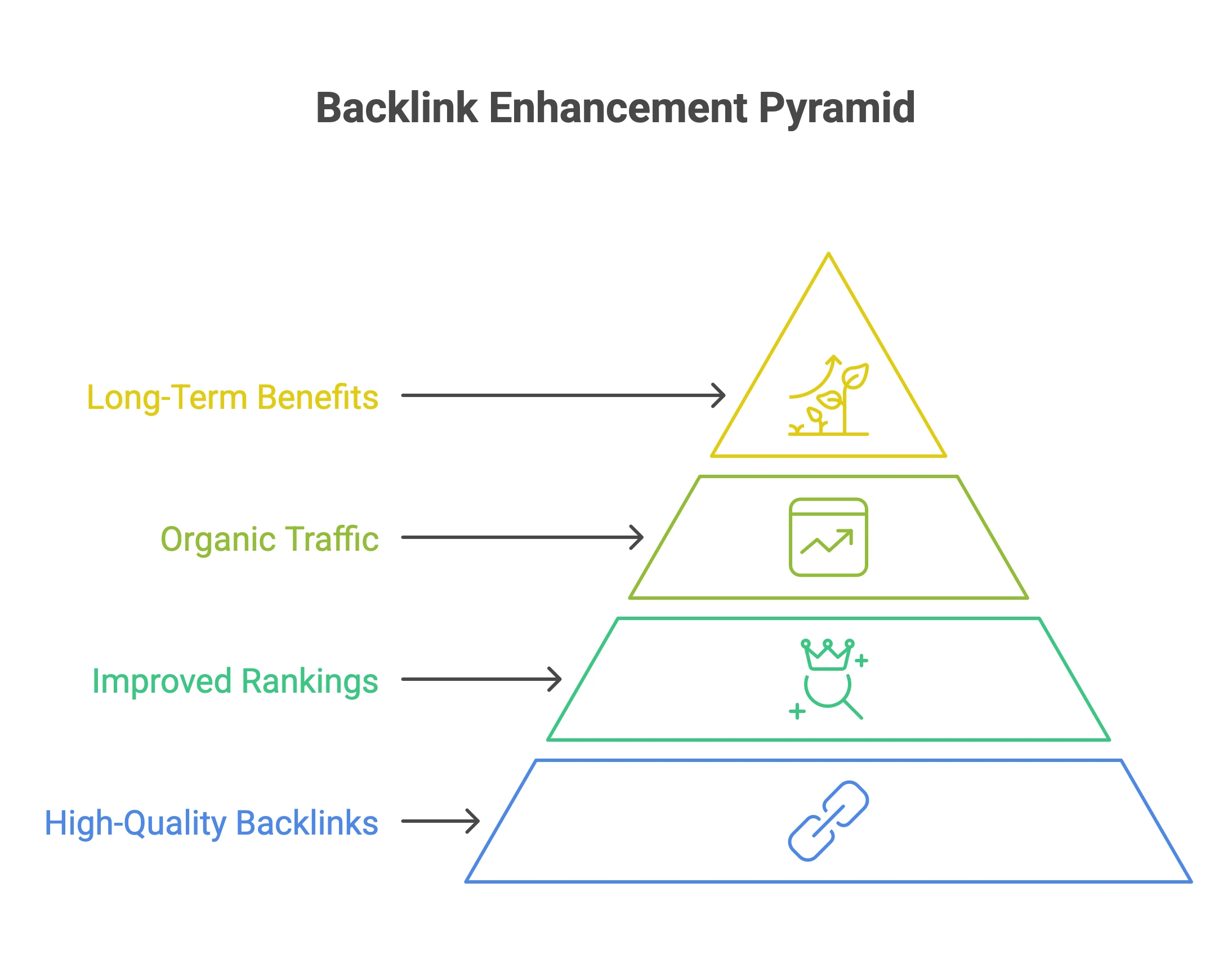
How to choose the best backlink service for your stage
Most disappointment comes from buying the wrong tactic at the wrong time.
If your site is new (DR 0-20)
Your priority is building a credible baseline and getting crawled consistently.
A practical mix:
- 10-20 curated directory and launch platform listings
- 1-2 linkable assets (template or tool page)
- A handful of partner links (integrations, affiliates, ecosystem pages)
This is where directory submission services shine. They are fast, low-risk, and help discovery while you build content.
with 100+ Directory Listings
Skip the grind. We'll submit your product to top directories so you get real users, feedback, and lifetime backlinks without lifting a finger.
If you have product-market fit (DR 20-50)
Now you need editorial context.
Focus on:
- Guest posts on niche sites buyers read
- Resource page placements that send referral traffic
- Digital PR campaigns tied to data
At this stage, paying for "volume" links is a trap. You want fewer, better links.
If you are scaling (DR 50+)
Link building becomes harder because you are competing for top-tier placements.
The highest leverage moves:
- Digital PR and original research
- Partnerships and co-marketing that earn natural citations
- Tools and datasets that become reference points

Pricing reality: what good backlinks cost and why cheap is expensive
Here is the uncomfortable truth: if a vendor can sell you cheap links at scale, it is usually because they are using sites that have no editorial cost.
Here is a useful baseline: BuzzStream's 2025 pricing data gives a useful baseline: average guest post links around a few hundred dollars on average, with high-quality placements rising much higher depending on traffic and quality benchmarks.
Instead of anchoring on "price per link," anchor on "cost per outcome":
- One link that drives qualified referral traffic and gets cited again is worth more than 20 links that never get indexed.
- One directory listing on a relevant marketplace can produce both a backlink and a customer.
- One PR link can shift perceived credibility across your whole niche.
A simple ROI test you can run before you buy
Ask the vendor for 5 sample placements from the last 60 days, then check:
- Does the site have real content and a real audience?
- Do pages rank for anything meaningful?
- Do outbound links look natural, or does every post link out to random tools?
- Can you imagine a buyer clicking the link?
Practical application: a 30-day buying plan
Week 1: Set your baseline (2 hours)
- Export your current referring domains and top linked pages (Ahrefs, Semrush, or a free backlink checker).
- In Google Search Console, note branded impressions, your top converting pages, and any indexing issues.
- Pick one page to "power up" pricing, comparison, or a core landing page) and tighten the CTA.
Week 2: Build your submission and outreach package (half day)
- One-liner (problem + who + outcome)
- Short description (150-200 words)
- Long description (300-500 words) with proof points
- 5-8 screenshots and a clean logo set
- One tracking sheet (submitted, approved, live URL, link type, notes)
Week 3: Buy foundational placements (fast wins)
- Submit to 10-20 curated directories and launch platforms first.
- Track which ones index and send clicks. Keep the winners.
- If you are short on time, outsource execution so you get a report you can audit.
Week 4: Add one editorial motion (slow wins that compound)
- Choose one: 1-2 niche guest posts or expert commentary.
- Define success as: indexed link live + relevant context + at least one referral visit or mention.
After 30 days, repeat the shortlist monthly and invest in one linkable asset per quarter so links keep coming without constant outreach.
Conclusion
The best backlink services are boring in the right way: they are transparent, process-driven, and obsessed with relevance. Start with a clean baseline (curated directory submissions and a solid asset), then layer in editorial links through guest posts, PR, or expert commentary. Avoid anything that looks like volume for volume's sake.
If you want a faster foundation, a curated directory database and a done-for-you submission service can compress weeks of research and form-filling into a single execution cycle, then free you up to build assets and partnerships that compound.
with 100+ Directory Listings
Skip the grind. We'll submit your product to top directories so you get real users, feedback, and lifetime backlinks without lifting a finger.
FAQ
Are best backlink services safe to use?
They are safe when the service focuses on relevance, editorial standards, and transparent reporting. The risk comes from paid or scaled placements designed only to manipulate rankings. Ask for target previews, live URL reporting, and replacement policies. If a provider cannot explain their process clearly, skip them.
How many backlinks should I buy per month?
A realistic early target is 10-20 new referring domains per month, mixing foundational links (directories, launch platforms) with a few editorial links. The right number depends on your content output and niche. A small, consistent cadence beats bursts that look unnatural.
What is a fair price for a high-quality backlink?
Pricing varies by tactic and quality. Data-backed research shows guest posts often cost a few hundred dollars on average, while digital PR links can cost over $1,000 per link. Quality is defined by relevance, traffic, editorial standards, and durability, not only DR.
Do directory backlinks still help?
Yes, when the directories are real, relevant, and indexed. A good listing can drive referral traffic and help search engines discover your site faster. The key is curation: prioritize active directories with clear categories and credible metrics, not random spreadsheets.
Should I focus only on dofollow links?
No. Dofollow links tend to pass more link equity, but a natural profile includes nofollow and sponsored links too, especially for brands that launch publicly. The goal is credible sources that send discovery and trust. If every link is dofollow and paid-looking, that is a footprint.
Ready to build high-quality backlinks?
We'll submit your product to 100+ directories and build valuable backlinks for your SEO. Save hours of manual work so you can focus on what's important — selling and building, not submitting boring forms.