Publishing good pages is not enough if nobody discovers them, trusts them, or links to them.
The fastest way to change that is to earn backlinks that search engines actually respect.These backlink building tips are built for founders and lean teams: you will learn how to spot link opportunities worth your time, how to use directories without turning your profile into spam, and how to earn editorial links with assets people want to cite. You will also see a simple 14-day plan you can repeat each month as your product and content library grow.
What is backlink building, and what counts as a "good" link?
Backlink building is the process of earning links from other websites to yours to build authority, visibility, and referral traffic. A good backlink comes from a relevant page that is indexed, has real readers, and links to you in a natural context. It is not about collecting the most links - it is about collecting the right links.
The 3 signals that separate useful links from noise
- Relevance: The linking site reaches the same audience you want.
- Indexation: The specific page with your link is indexed and regularly crawled.
- Context: Your link sits where it helps the reader (not in a footer full of random anchors).
A quick backlink quality scorecard
| Signal | Green light | Red flag |
|---|---|---|
| Page indexation | The page appears in Google within days | The page stays unindexed for weeks |
| Outbound link density | A curated list of vendors | Hundreds of unrelated links |
| Link placement | Profile, listing, or editorial mention | Sitewide sidebar/footer |
| Audience fit | Clear niche and use cases | "Everything for everyone" |
| Maintenance | Fresh posts, recent updates | Last activity 12+ months ago |
Backlink building tips start with a baseline, not a wish
If you cannot tell whether a link effort worked, you will keep repeating the wrong motion.
Build a simple baseline in 30 minutes
- Google Search Console: export your top queries and pages (impressions, clicks, average position).
- Referring domains: track unique websites linking to you, not raw backlink count.
- Indexation health: search site:yourdomain.com and spot pages missing from the index.
- Two conversion metrics: trial starts, demo requests, or signups from organic and referral traffic.
Put this in one sheet and update it weekly for a month. You are looking for direction, not perfection: more referring domains, faster indexation, and a slow lift in impressions for your target terms.

Set a realistic target for the next 30 days
For most new or low-authority sites, a strong first month is:
- 10-20 new relevant referring domains
- 10-30 directory or launch listings approved
- 1-3 editorial mentions (resource pages, list posts, community roundups)
- Measurable referral visits from 1-2 platforms that actually send buyers
That may sound modest, but these are compounding assets. Your second month is easier than your first.
Directory backlink building that do not look like spam
Directories are not dead. Bad directories are dead.
When you pick directories like an investor picks companies, they become a reliable way to build early authority and discovery. Launch Directories maintains a curated database of 100+ launch platforms and directories with Domain Rating (DR), traffic stats, and link types, and updates its directory data monthly to avoid dead platforms.
Pick your first 10-15 directory targets the smart way
A balanced first batch looks like this:
- 2-3 review or comparison marketplaces where buyers already compare options
- 5-7 niche directories tightly aligned to your category (AI tools, dev tools, design tools, etc.)
- 3-5 launch platforms where founders and early adopters browse daily

Make your listing "link-worthy" so it gets approved and indexed
Most directory submissions fail for boring reasons: missing screenshots, vague positioning, inconsistent naming, or a thin description that looks copied.
Use this checklist for every submission:
- One positioning line: problem + who + outcome
- 150-200 word short description (fast scanning)
- 300-500 word long description with proof points (numbers, integrations, outcomes)
- 3-6 screenshots that show real UI states
- One clear primary category (skip "Other" unless you must)
- A frictionless path: demo, free plan, or quick-start guide
When you standardize this package once, directory submissions become a repeatable system instead of a time sink.
A real example of directory submissions compounding
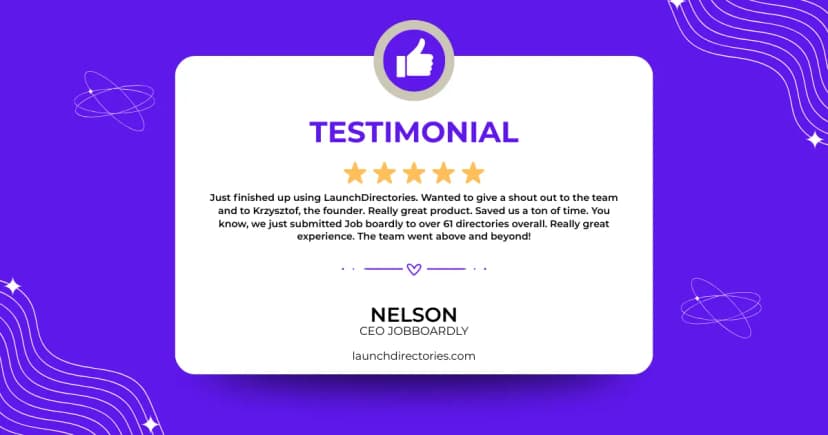
In Launch Directories' JobBoardly case study, the product was listed across 60+ directories and saw Domain Rating move from 64 to 68 in five weeks, while referring domains grew from 556 to 735.
The point is not the exact numbers. The point is the mechanism: consistent listings across relevant platforms create a diverse link profile and regular discovery by crawlers.
Where done-for-you submission makes sense
If you are shipping features weekly, the hidden cost of manual submissions is context switching. Launch Directories' manual directory submission service is positioned as a "no bots, no shortcuts" execution layer, with delivery measured in days, not months.
If you have product-market fit signals and you know your positioning, outsourcing submissions can be cheaper than pulling an engineer or growth lead into form-filling for 20+ hours.
Linkable assets: the easiest way to earn editorial links
Directories create a floor of authority. Linkable assets create the ceiling.
What is a linkable asset?
A linkable asset is a page, tool, or dataset that other sites reference because it makes their content better. It earns links without you begging for them.
Five assets that work especially well for SaaS and indie products
- Original benchmarks: publish a single metric with methodology (example: onboarding completion rates in your niche).
- Free calculators: anything that outputs a number people can share (pricing, ROI, time saved).
- Templates: checklists, email sequences, SOPs, Notion templates.
- Mini-tools: a simple generator, validator, or browser-based utility.
- Comparison pages: "X vs Y" and "X alternative" pages with real criteria and screenshots.
The "citation hook" that turns a good page into a link magnet
Before you hit publish, add at least one element people can cite:
- A comparison table (copyable)
- A downloadable spreadsheet
- A single quotable benchmark with context
- A diagram or framework that can be embedded with attribution
Outreach backlink building tips that get replies (and respect)

A simple outreach structure that works
- Prove relevance in one sentence: show you actually read the page.
- Offer an upgrade: fix something outdated, missing, or unclear.
- Make placement easy: suggest the exact section and provide copy they can paste.
Three outreach plays that consistently earn editorial links
| # | Tactic | Target | Offer |
|---|---|---|---|
| 1 | Resource page add | “Best tools for X”, “Resources”, “Toolbox” pages | One sentence on why your tool is different + a free tier or demo |
| 2 | Data refresh | Posts with outdated stats or broken links | Updated numbers + sources, and call out the broken section |
| 3 | Integration mention | Partners whose customers overlap with yours | A lightweight integration, a shared guide, or a template that helps both audiences |
Keep your volume low and your quality high. Ten good emails beat 200 generic blasts.
Follow-up without being annoying
One follow-up is normal. Two is fine if you add new value (a screenshot, a better placement suggestion, or a quick statistic). After that, stop. Link building is a long game, and your reputation carries.
Partnerships and community links that also bring users
The best backlinks are attached to real distribution.
Low-effort partnerships that generate links naturally
- Integration pages: each partner publishes a "works with" page.
- Customer stories: a short post on how you solved a measurable problem.
- Affiliate and referral partners: partner directories and software ecosystems often link back to featured tools.
- Community contributions: tutorials, sample projects, or open-source helpers that people reference.
with 100+ Directory Listings
Skip the grind. We'll submit your product to top directories so you get real users, feedback, and lifetime backlinks without lifting a finger.
Avoid the partnership trap
If the only reason a partnership exists is "we will swap links," it is fragile and often low-quality. Partnerships should have a user-level reason first: shared audience, shared workflow, or shared outcome.
Mistakes that make backlink building slower and riskier
Backlink building gets a bad reputation because the shortcuts are loud and the consequences are quiet.
The most common mistakes (and the fix)
- Buying cheap "high DR guest posts": You get a DR number and no traffic. Fix: insist on topical fit, indexed pages, and a real audience.
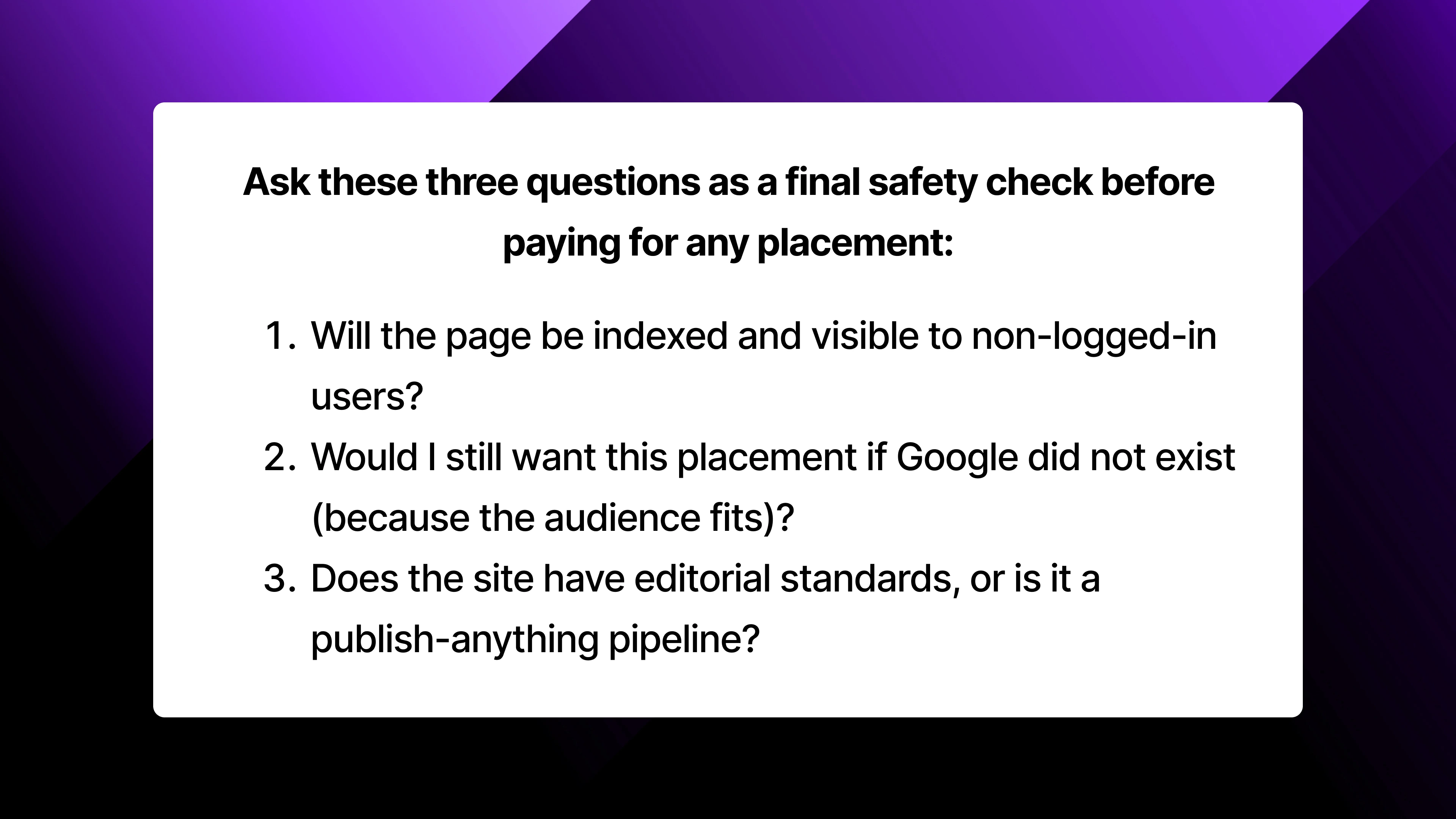
- Mass directory submissions to low-quality sites: You waste time and dilute brand perception. Fix: curate aggressively, prioritize active platforms.
- Over-optimizing anchor text: Exact-match anchors across many links looks unnatural. Fix: use brand and natural anchors most of the time.
- Ignoring link attributes on paid placements: Paid links should be labeled properly. Google recommends qualifying paid links with rel="sponsored" or nofollow, and treats link attributes as hints.
- Pointing links to weak pages: A backlink to a thin landing page rarely holds. Fix: link to pages that deserve to rank (guides, comparison pages, tools).
Practical Application
Here is a founder-friendly 14-day backlink sprint you can repeat monthly.
- Day 1-2: Baseline and targets. Pull Search Console data, list your top 5 pages worth ranking, and set one outcome metric (example: 15 new referring domains in 30 days). Note which pages already attract impressions but sit outside the top 10, those are your fastest wins.
- Day 3-4: Package your assets once. Write a short and long description, prepare screenshots, and create a consistent "About" block for directories. If you have testimonials, pick 1-2 short quotes you can reuse. If you do not have testimonials yet, pull 2-3 specific outcomes from support tickets or onboarding calls.
- Day 5-7: Execute your first directory batch. Submit to 10-15 active, relevant directories and launch platforms. Track URL, status, cost, link type (followed or nofollow), and whether the listing page gets indexed. If you are short on time, use a curated database to build the shortlist, or outsource the execution to a manual submission service so formatting and follow-ups stay consistent.
- Day 8-10: Publish one linkable asset. Ship a calculator, benchmark, template, or comparison table that is easy to cite. Add one obvious "copy/paste" element (a table, a downloadable sheet, or a quotable number with context).
- Day 11-12: Outreach to 10 tight targets. Pick 10 pages where your asset is a clear upgrade and email them with a placement suggestion. One follow-up is enough.
- Day 13-14: Measure and tighten. Check which listings went live, which pages got indexed, and where referral clicks came from. Double down on the two channels that produced real signals, not vanity numbers.
Conclusion
Backlinks are not magic. They are distribution and trust turned into a ranking signal. The backlink building tips that work best for founders are the ones you can repeat: a curated batch of directory submissions, one asset worth citing, and outreach that improves someone else's page.
Start small, measure weekly, and protect your domain from spammy shortcuts that look cheap now and expensive later. If you want to move faster, a curated directory database and done-for-you submissions can compress weeks of research and form-filling into a single execution cycle.
FAQ
How many backlinks do I need to rank?
There is no universal number, but most new sites feel the first real lift after 10-30 quality referring domains pointing to pages that match search demand. Watch for stronger indexation, rising impressions, and more stable rankings before you obsess over DR.
Are directory backlinks still worth it?
Yes, if you choose legitimate directories with real users and active review or curation. Directories help search engines discover you and can send high-intent referral traffic from people comparing tools. Avoid mass submissions to low-quality lists and prioritize relevance and activity.
Do nofollow backlinks help SEO?
Nofollow links usually pass less direct link equity, but they still help with discovery, referral traffic, and brand searches. A natural backlink profile includes both followed and nofollow links. Prioritize quality and relevance first, then treat link attributes as the second filter.
What are the safest ways to pay for backlinks?
Pay for exposure, not rankings. Directory listing fees, sponsorships that are properly labeled, and PR work that earns coverage are generally safer than buying anonymous link bundles. If a seller offers "hundreds of links" with no editorial bar, assume it is low quality.
How do I build backlinks for a brand-new domain?
Start with directories and launch platforms to get indexed and earn your first referring domains. Then publish one linkable asset that solves a specific problem in your niche and pitch it to 10-20 highly relevant resource pages. Repeat monthly and focus on quality over volume.
Ready to build high-quality backlinks?
We'll submit your product to 100+ directories and build valuable backlinks for your SEO. Save hours of manual work so you can focus on what's important — selling and building, not submitting boring forms.