
When you're launching a startup, backlinks are one of the most powerful tools in your SEO arsenal. But not all backlinks are created equal. Understanding the difference between dofollow and nofollow backlinks can mean the difference between a launch that drives organic traffic for months and one that barely moves the needle.
If you're preparing to submit your product to launch directories, Product Hunt, BetaList, or other startup platforms, you need to know exactly what you're getting. This guide breaks down everything startup founders need to know about dofollow vs nofollow backlinks, how they impact your SEO, and how to build a smart backlink strategy that actually works.
What Is a Backlink? (And Why It Matters for Your Startup)
A backlink is simply a link from one website to another. When another site links to your startup's website, that's a backlink. Think of it as a vote of confidence—one website telling Google, "Hey, this site has valuable content."
Backlinks matter because they're one of Google's primary ranking factors. Google's algorithm uses backlinks to assess:
- Authority – Sites with more high-quality backlinks rank higher
- Relevance – Links from related sites in your industry carry more weight
- Trustworthiness – Links from established domains signal credibility
For startups, backlinks from launch directories and product platforms can provide that initial SEO boost needed to start ranking for competitive keywords. But the type of backlink you receive makes all the difference.
What Is a Dofollow Backlink?
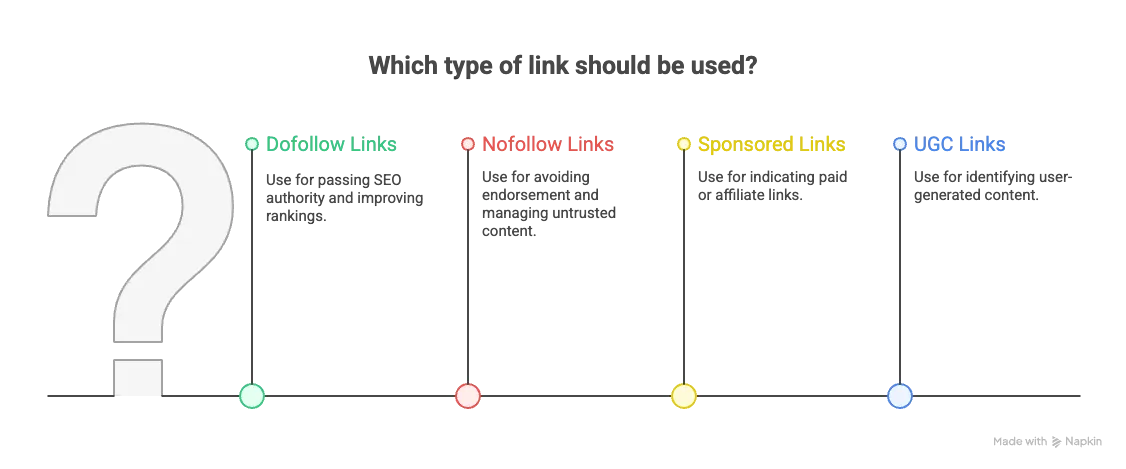
A dofollow backlink is the default type of link. When a website links to your startup without any special attributes, it's a dofollow link. These links pass "link equity" (also called "link juice") from the linking site to yours.
How Dofollow Links Pass Link Equity
Here's what happens behind the scenes: When a high-authority website includes a dofollow link to your startup, Google's crawlers follow that link and transfer some of the linking site's domain authority to your site. This transfer of authority helps your pages rank higher in search results.
Think of domain rating like a reputation score. When a respected site links to you with a dofollow link, they're essentially lending you some of their reputation points.
SEO Benefits of Dofollow Backlinks for Startups
For early-stage startups, dofollow backlinks deliver tangible SEO benefits:
Improved search rankings – Pages with dofollow backlinks from quality sources rank higher for target keywords.
Faster indexing – Google discovers and indexes new pages more quickly when they have dofollow backlinks pointing to them.
Domain authority growth – Accumulating dofollow links from diverse, quality sources gradually builds your overall domain authority.
Referral traffic – Beyond SEO, dofollow links drive direct clicks from interested users.
A single dofollow link from a high-authority startup directory can help your homepage start ranking for your brand name and primary product keywords within weeks.
What Is a Nofollow Backlink?
A nofollow backlink includes a specific HTML attribute (rel="nofollow") that tells Google's crawlers not to follow the link or pass link equity. The link still exists and users can click it, but it doesn't directly contribute to your site's ranking power.
Why Google Introduced Nofollow Links
Google introduced the nofollow attribute in 2005 primarily to combat spam. The goal was to prevent people from manipulating search rankings through:
- Comment spam on blogs
- Paid links disguised as organic endorsements
- User-generated content that site owners couldn't vouch for
- Low-quality directory submissions
Websites use nofollow links when they want to link to content but don't want to officially endorse it with their ranking power.
When Nofollow Links Still Have SEO Value
Here's where it gets interesting: nofollow links aren't worthless for SEO.
While they don't directly pass link equity, nofollow backlinks provide several indirect benefits:
Brand visibility – A nofollow link from Product Hunt or BetaList puts your startup in front of thousands of potential users and investors.
Referral traffic – Nofollow links still drive clicks. If your listing appears on a popular launch platform, you'll get real visitors regardless of the link type.
Natural link profile – Having only dofollow links looks suspicious to Google. A natural backlink profile includes a mix of both.
Discovery and indexing – While nofollow links don't pass equity, Google still crawls them and discovers new content.
Indirect link building – Getting featured on major platforms (even with nofollow links) often leads to dofollow links from bloggers, journalists, and other sites who discover you there.
In 2019, Google changed how it treats nofollow links. Instead of completely ignoring them, Google now treats rel="nofollow" as a "hint" rather than a directive. This means Google may choose to consider these links in certain contexts.
Dofollow vs Nofollow: Key Differences
Here's a clear comparison to help you understand the practical differences:
| Aspect | Dofollow Backlinks | Nofollow Backlinks |
|---|---|---|
| Link equity | Passes authority to your site | Does not pass direct authority |
| HTML code | No special attribute (or rel="dofollow") | Contains rel="nofollow" attribute |
| Impact on rankings | Directly improves search rankings | Indirect benefits only |
| Value for startups | High SEO value, especially from quality sources | High traffic/visibility value, moderate SEO impact |
| Google's treatment | Fully counted as ranking signal | Treated as "hint" since 2019 |
| Natural occurrence | Editorial links, partnerships, press mentions | User content, paid listings, some directories |
| Red flags if excessive | Can look spammy if from low-quality sources | Actually helps create natural link profile |
| Best use case | Building long-term domain authority | Launch visibility, traffic, brand awareness |
How Google Treats Launch Directory Backlinks Today
Google's approach to directory backlinks has evolved significantly. In the early 2000s, directory submissions were a cornerstone of SEO strategy. Today, Google is far more selective.
Google evaluates directory backlinks based on:
Editorial quality – Does the directory curate submissions or accept anyone who pays? High-quality launch directories that review and select startups provide more valuable backlinks.
Relevance – A link from a general web directory means less than one from a startup-specific or industry-specific platform.
User value – Does the directory provide genuine value to users searching for new products and startups? Or is it purely for SEO?
Link patterns – Google can identify and devalue links from directory networks designed solely for link building.
Modern launch platforms like Product Hunt, BetaList, and specialized startup directories fall into a different category than old-school web directories. These platforms provide genuine value by helping users discover new products, which is why their backlinks—even when nofollow—still benefit startups.
with 100+ Directory Listings
Skip the grind. We'll submit your product to top directories so you get real users, feedback, and lifetime backlinks without lifting a finger.
Are Launch Directories Still Good for SEO in 2026?
Yes, but with important qualifications.
Launch directories remain valuable for SEO when you approach them strategically:
Quality over quantity – Submitting to 100 random, low-quality directories won't help. Submitting to 20-30 curated, respected platforms will.
Traffic matters most – Even if a directory uses nofollow links, the referral traffic, user engagement, and brand exposure contribute to your overall online presence (factors Google indirectly considers).
Natural discovery – Getting listed on quality directories leads to natural backlink acquisition. Journalists, bloggers, and potential partners discover your startup through these platforms.
Domain diversity – Links from different types of sources (directories, blogs, news sites, social platforms) create a natural backlink profile.
The startups that succeed with directory submissions are those who treat them as part of a broader launch strategy, not as a pure SEO tactic.
Examples of Dofollow and Nofollow Links from Popular Launch Platforms
Understanding which platforms provide dofollow or nofollow links helps set realistic expectations when launching a product. Many popular launch platforms typically use nofollow links. Product Hunt applies nofollow to all product submission links, but it is still extremely valuable because of the massive visibility and traffic it can generate. Reddit also uses nofollow links for posts and comments, with the main value coming from community engagement and referral traffic rather than SEO. Hacker News follows the same approach with nofollow links, yet a successful post can drive thousands of visitors and often results in organic dofollow links from blogs or news sites that pick up the story.
Some platforms may provide dofollow links. BetaList has historically offered dofollow links, although this can change over time, and it remains useful regardless due to its highly targeted startup audience. Many niche startup directories, especially smaller and curated ones focused on specific industries or startup types, also tend to provide dofollow links.
The key takeaway is that you should not choose launch platforms solely based on whether links are dofollow or nofollow. A strong launch strategy focuses on platforms where your target audience is active, because traffic, visibility, and secondary links often matter more than the link attribute itself.
Common Backlink Mistakes Founders Make When Submitting to Directories
Even experienced founders often make mistakes when submitting their startups to directories, weakening both their backlink profile and launch results. A common issue is focusing only on dofollow directories. This usually leads to submissions on low-quality or inactive sites that bring little value, while a nofollow link from a trusted, high-traffic platform often delivers far better results. Another mistake is mass directory submissions. Using automated tools to submit to hundreds of directories creates an unnatural, spam-like backlink profile that search engines can easily detect and devalue.
Founders also frequently ignore anchor text diversity by repeating the same keyword or brand phrase across listings, which looks unnatural. A healthier approach is to mix brand names, product categories, descriptive phrases, and generic anchors. The content surrounding the link is another overlooked factor. Well-written descriptions that clearly explain the product’s value and include relevant keywords improve both SEO impact and conversion rates.
Many listings are left outdated, even though directories are not a one-time effort. As products evolve, features change, or pricing updates, listings should be refreshed to maintain credibility and quality signals. Another mistake is focusing only on backlinks instead of conversions. Traffic that does not convert is a missed opportunity, which is why listings should include compelling copy, strong visuals, and clear calls-to-action. Finally, submitting to directories before a website is fully ready can waste valuable exposure, as slow load times, thin content, or poor user experience prevent visitors from converting.
That’s why a curated, quality-first approach works best. Instead of mass submissions, we create optimized listings and submit your startup to the top 30, 60, or 100 trusted directories, ensuring proper anchor text variation, strong positioning, and conversion-focused descriptions that drive real traffic—not just links.
with 100+ Directory Listings
Skip the grind. We'll submit your product to top directories so you get real users, feedback, and lifetime backlinks without lifting a finger.
How to Balance Dofollow and Nofollow Backlinks Naturally
A natural backlink profile includes both dofollow and nofollow links. Here's how to achieve the right balance:
Focus on Link Diversity
Google expects to see links from various sources:
- Editorial content and blog posts (usually dofollow)
- Social media platforms (nofollow)
- User-generated content (nofollow)
- Press mentions (usually dofollow)
- Directory listings (mixed)
- Partner websites (usually dofollow)
If 100% of your backlinks are dofollow, that's a red flag. A healthy ratio might be 60-70% dofollow and 30-40% nofollow, though this varies by industry.
Prioritize Relevance Over Link Type
A relevant nofollow link from an industry-specific platform provides more value than an irrelevant dofollow link from a general directory. Always prioritize:
- Relevance to your industry and audience
- Quality and authority of the linking domain
- Potential for referral traffic
- Then consider whether it's dofollow or nofollow
Build Links Through Multiple Channels
Don't rely solely on directory submissions. Diversify your backlink acquisition:
- Create valuable content that naturally attracts links
- Build partnerships with complementary businesses
- Engage with your community on forums and social platforms
- Pursue press coverage and guest posting opportunities
- Participate in startup competitions and awards
This multi-channel approach automatically creates a natural mix of link types.
How to Choose the Right Launch Directories for SEO
Not all launch directories are worth your time. Submitting to low-quality platforms can waste effort, dilute your backlink profile, and deliver little to no traffic. Choosing the right directories comes down to authority, relevance, audience fit, and traffic quality—but founders shouldn’t have to research all of this manually.
Domain authority is the first filter. Strong launch directories have established trust, consistent organic traffic, and clean backlink profiles. Instead of checking Ahrefs, Moz, or Semrush yourself, LaunchDirectories.com already ranks every platform by Domain Rating, so you can instantly see which directories carry real SEO value.
Editorial standards and engagement matter. High-quality directories review submissions manually, reject low-quality products, maintain listings actively, and attract real user interaction. Platforms that rank in Google for startup-related keywords and show signs of ongoing engagement provide exposure that lasts beyond the initial launch.
Audience fit determines results. A directory only delivers value if its audience matches your product. B2B SaaS products perform best in business-focused directories, consumer apps in discovery and lifestyle platforms, developer tools in technical communities, and e-commerce products in directories tailored for online stores. Traffic quality always beats volume—organic visitors from your target market who engage with listings matter most.
How LaunchDirectories.com Helps Founders Save Time and Get Results
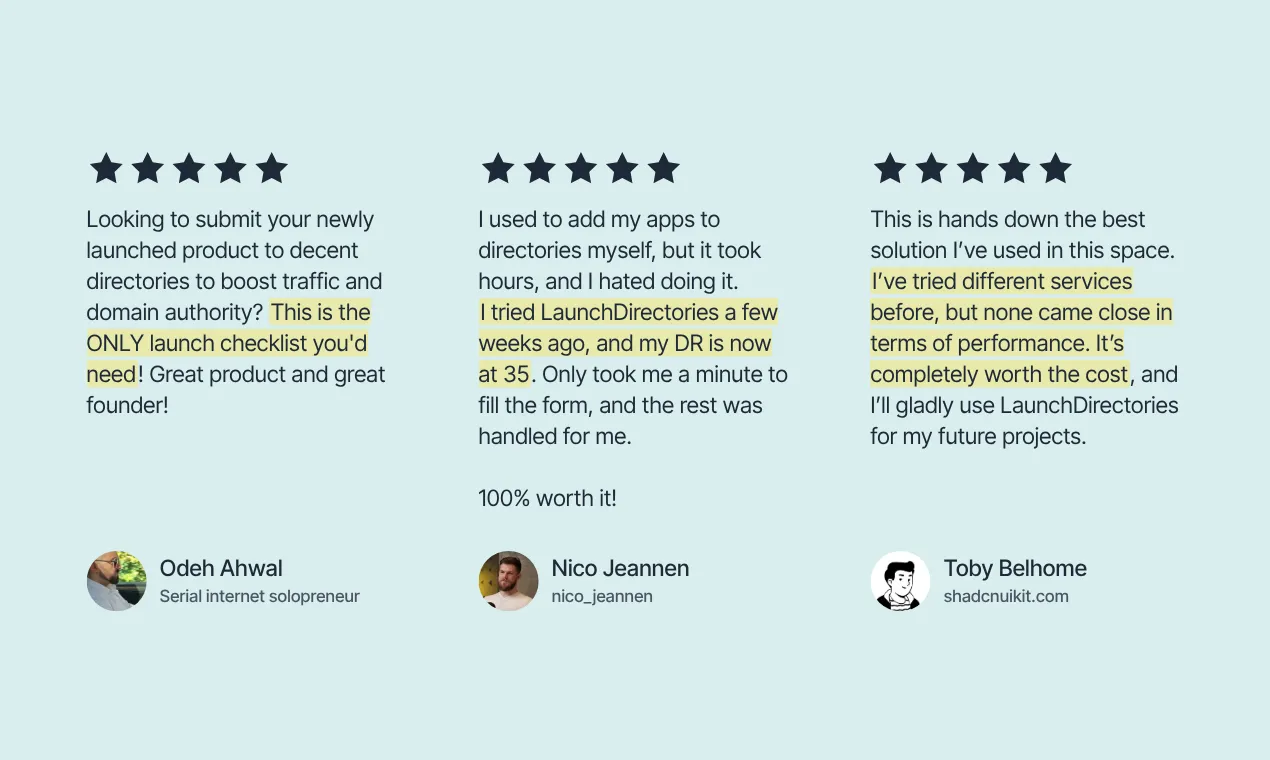
LaunchDirectories.com offers a curated list of 100+ verified launch and Product Hunt–style directories, all ranked by Domain Rating. Founders can quickly identify high-authority platforms without using third-party SEO tools. Directories are categorized by niche, making it easy to find the right platforms for SaaS, side projects, developer tools, consumer apps, and e-commerce products. Each listing includes submission details, review requirements, and typical timelines.
To simplify the process further, we also offer a submission service. Instead of manually submitting your product to multiple directories, our team can handle the submissions for you—optimizing listings, selecting the best directories for your niche, and ensuring anchor text and descriptions are crafted for both SEO and conversions. We also track which directories provide dofollow or nofollow links, helping you build a balanced backlink profile while saving time.
With 100+ trusted directories ranked by authority and our optional submission service, LaunchDirectories.com helps founders promote products efficiently, drive real traffic, and reach the right audience—all without the stress of manual research or tedious submission processes.
Final Checklist Before Submitting Your Startup to Launch Sites
Before you start submitting to directories, run through this checklist:
Pre-Launch Website Optimization
- Site loads in under 3 seconds on mobile and desktop
- Core pages (homepage, pricing, features) have optimized title tags and meta descriptions
- SSL certificate is installed (HTTPS)
- Mobile responsive design is tested
- Analytics (Google Analytics, Mixpanel, etc.) is properly configured
- Clear call-to-action on every important page
Content Preparation
- Product description is written in 3 lengths: short (50 words), medium (150 words), long (300+ words)
- High-quality screenshots and product images are ready in multiple sizes
- Logo files prepared (square and horizontal versions, various sizes)
- Video demo or GIF created (highly recommended)
- Unique tagline that clearly communicates your value proposition
Directory Research
- List of 15-20 quality directories researched and verified
- Priority order established based on audience fit and authority
- Submission requirements documented for each platform
- Appropriate category selected for each directory
- Pricing tiers reviewed (free vs paid listings)
SEO Preparation
- Anchor text variations prepared (avoid repetition)
- Target landing pages decided (don't always link to homepage)
- UTM parameters created for tracking referral traffic
- Existing backlink profile audited (know your starting point)
Post-Submission Strategy
- Calendar reminders set to update listings quarterly
- System to track which directories drive actual traffic and conversions
- Follow-up engagement plan (responding to comments, questions)
- Process to leverage successful launches for additional PR and content
Frequently Asked Questions About Dofollow vs Nofollow Backlinks
Are nofollow links bad for SEO?
No, nofollow links are not bad for SEO. While they don't directly pass link equity, they provide several important benefits: referral traffic, brand visibility, link profile diversity, and potential for indirect link building. A natural backlink profile should include both dofollow and nofollow links. Having only dofollow links can actually appear suspicious to Google.
How many dofollow backlinks does a startup need?
There's no magic number, but quality matters far more than quantity. A new startup might see ranking improvements with just 10-20 high-quality dofollow backlinks from relevant, authoritative sources. Focus on acquiring 2-5 quality backlinks per month rather than chasing hundreds of low-quality links. As your domain authority grows, you'll need more backlinks to continue improving, but starting with a foundation of relevant, quality links is key.
Can directory submissions hurt SEO?
Yes, if done incorrectly. Submitting to hundreds of low-quality directories, using automated submission tools, or targeting obvious link farms can trigger Google penalties. However, submitting to curated, industry-relevant launch directories as part of a broader marketing strategy is perfectly safe and beneficial. The key is being selective and focusing on directories that provide genuine value to users.
Should I pay for directory submissions?
It depends on the directory. Paying for a featured listing on a high-quality platform like BetaList or an industry-specific directory can be worth the investment due to increased visibility and traffic. However, avoid directories that charge purely for a dofollow link—that's considered buying links and violates Google's guidelines. Pay for visibility and premium placement, not for link attributes.
How long does it take to see SEO results from directory backlinks?
Most startups begin seeing initial results within 4-8 weeks of acquiring quality backlinks. However, meaningful ranking improvements typically take 3-6 months as Google crawls and indexes the links, evaluates their quality, and adjusts your site's authority. Directory backlinks work best as part of a long-term SEO strategy, not a quick fix.
Do I need to disclose paid directory listings?
From an SEO perspective, websites should use appropriate rel attributes (like "sponsored" or "nofollow") for paid listings. However, this is typically the directory's responsibility, not yours as the submitter. From a legal and ethical standpoint, if you're promoting your directory listing on your own channels, transparency about paid placements builds trust with your audience.
Conclusion: Smart Backlink Strategy for Long-Term SEO Growth
Understanding dofollow vs nofollow backlinks transforms how you approach launch directories and SEO strategy. The most successful startups don't obsess over link attributes—they focus on building a diverse, natural backlink profile from quality sources that drive real traffic and engagement.
Here's what matters most:
Quality beats quantity every time. Ten backlinks from respected, relevant platforms provide more SEO value than hundreds from low-quality directories.
Mix is natural. A healthy backlink profile includes both dofollow and nofollow links from various source types: directories, social platforms, press coverage, partnerships, and organic editorial links.
Traffic is the real prize. Even a nofollow link from Product Hunt or a major launch platform delivers value through referral traffic, brand exposure, and the secondary backlinks that often follow successful launches.
Context matters. The content surrounding your backlink—your product description, category placement, and user engagement—significantly impacts the link's value.
Patience pays off. SEO results from directory submissions compound over time. The backlinks you build today continue delivering value months and years later.
As you prepare your next product launch, approach directory submissions strategically. Research platforms where your target audience actually spends time. Create compelling listings with optimized descriptions and visuals. Monitor which sources drive engaged traffic, not just clicks. And remember that dofollow vs nofollow backlinks is just one piece of a much larger SEO puzzle.
The startups that win at SEO don't chase link attributes—they build genuine value, create products people love, and earn backlinks naturally through quality and innovation. Use launch directories as one tool in your growth toolkit, not as your entire SEO strategy.
Start by identifying 10-15 quality launch directories where your ideal customers discover new products. Prepare your submissions thoughtfully. Launch with intention. Then build on that momentum with great content, genuine partnerships, and consistent value creation. That's the backlink strategy that delivers lasting SEO growth.
Ready to build high-quality backlinks?
We'll submit your product to 100+ directories and build valuable backlinks for your SEO. Save hours of manual work so you can focus on what's important — selling and building, not submitting boring forms.