You can buy 1,000 backlinks tonight and still be invisible in search six months from now.
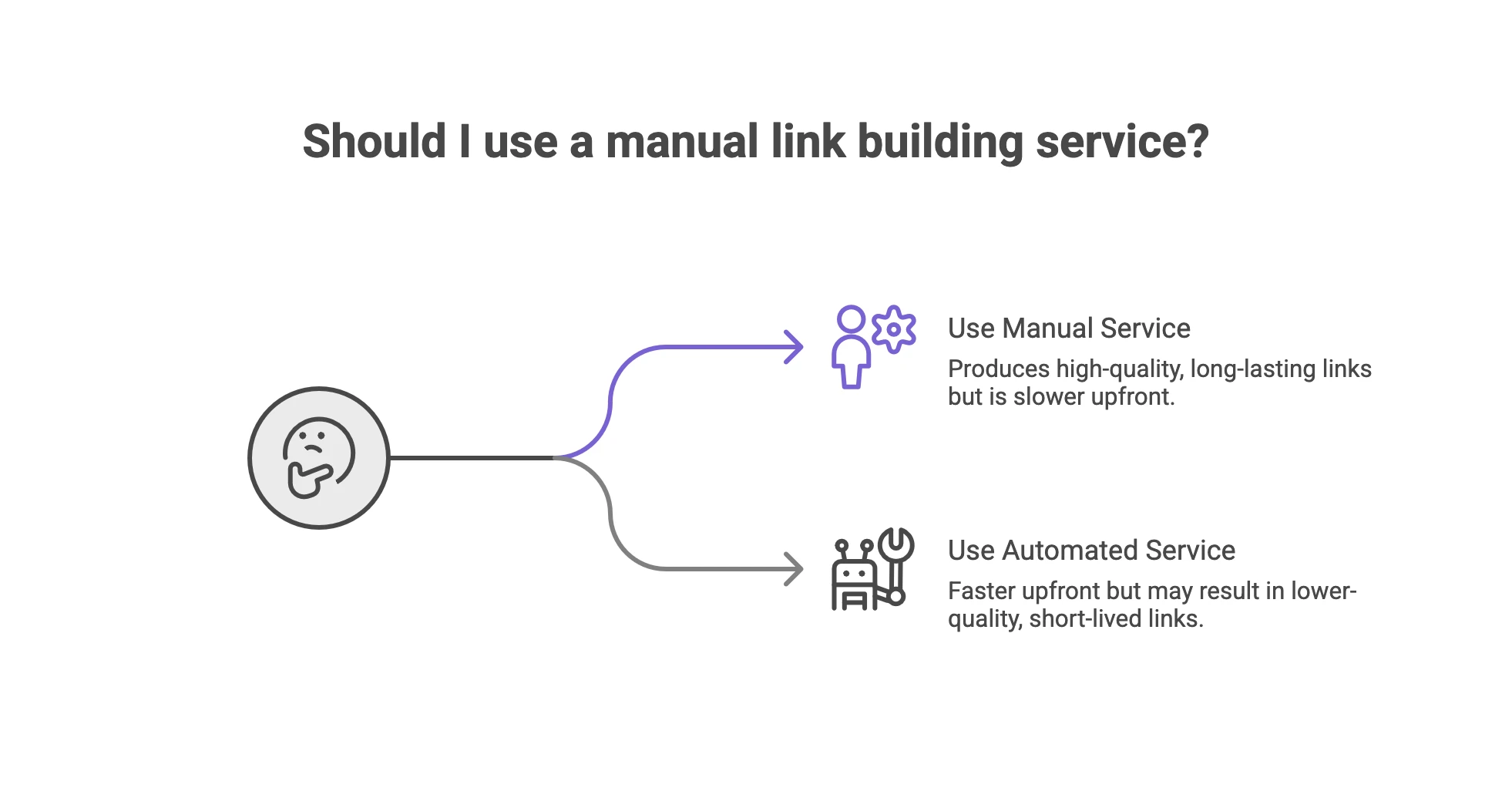
That is the painful truth most founders learn after wasting money on “packages” that look impressive in a report but never earn trust with Google. A manual link building service is the opposite approach: fewer links, higher acceptance rates, cleaner footprints, and real placement work done by humans.
If you are shopping for a manual link building service, you are probably in one of two spots:
- Your site is new and you need a legitimate backlink foundation fast.
- You have traction, but your rankings are stuck behind competitors with stronger authority.
What is a manual link building service?
A manual link building service is a team that earns backlinks through human-led research, outreach, negotiation, and placement. Instead of automating submissions or spamming sites at scale, they hand-pick targets, tailor pitches, and track approvals to build links that are more likely to get published, crawled, and trusted.
In practice, “manual” usually covers one (or more) of these link types:
- Directory submissions (curated startup, SaaS, and niche directories)
- Guest posts and contributor placements
- Niche edits (adding your link to an existing article)
- Resource page inclusions
- Digital PR style mentions (harder, higher leverage)

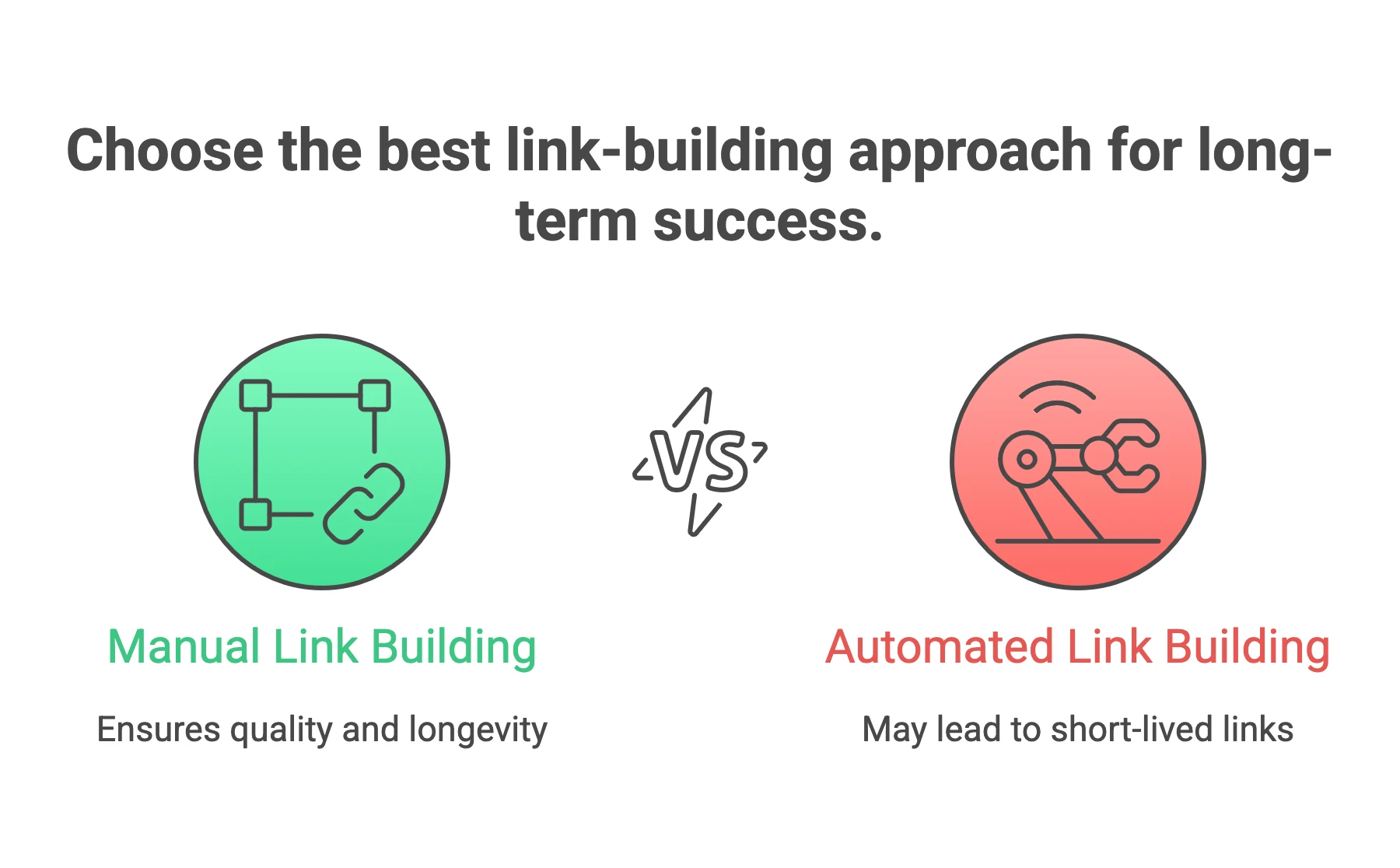
Manual vs automated link building, in one table
| Area | Manual link building | Automated link building |
|---|---|---|
| Target selection | Hand-picked for relevance + quality | Bulk lists, often outdated |
| Acceptance rate | Higher (tailored assets and follow-up) | Low, but hidden by volume |
| Footprint risk | Lower, more varied patterns | Higher, repeatable patterns |
| Reporting | Evidence-based (URLs, status, notes) | Often “sent” not “published” |
| Long-term value | Compounds | Often devalued or ignored |
If a provider cannot explain their target selection process, you are not buying “manual.” You are buying labor used to run a semi-automated machine.
Why “manual” matters (and where most services go wrong)
Google is very clear about one thing: tactics designed to manipulate rankings can fall under spam policies, especially when links are created at scale without genuine editorial intent.
Most link building disasters happen because the service optimizes for what looks good in a report:
- Big link counts
- Short delivery times
- DR-only targets with no relevance check
- Repeated anchor text patterns
- Sites that exist primarily to sell links
The hidden win: cleaner early signals for new domains
If your domain is new, your first 20 to 60 referring domains do a lot of heavy lifting. They help with discovery, crawling frequency, and baseline trust. The first links you build set the tone for everything that comes after. A messy start creates a messy profile you have to clean later.
What a good manual link building service delivers
Here is what you should expect to receive, regardless of the exact link type.
1) Targeting that matches your stage
A good provider does not throw you at the same sites they use for every client.
They segment targets by:
- Relevance (tight niche vs general startup ecosystem)
- Difficulty (easy approvals vs editorial review)
- Link type (dofollow vs nofollow mix that looks normal)
- Risk (no link farms, no obvious pay-to-play footprints)
- Effort (fast foundational placements vs slower editorial)
For startups, this often means starting with curated directories and profiles, then moving to guest posts and editorial outreach once you have stronger assets.
2) Copy and positioning that survives moderation
Manual submissions and outreach die when the copy is generic.
A real service will:
- Rewrite your description for different directory formats (short, medium, long)
- Match category taxonomies (so you are not misfiled and ignored)
- Create variation in headlines and intros (so duplicates do not get filtered)
- Keep your claims defensible (mods reject hype fast)
3) Proof of publication, not proof of “activity”
You want a report that includes:
- Live URLs for every successful placement
- Login credentials used (if accounts were created)
- Status notes (approved, pending, rejected, needs payment, needs follow-up)
- Screenshots where links are hard to find
- A list of skipped opportunities (and why they were skipped)
4) A clear policy on paid placements
This is where trust is earned.
Some directories charge a fee. Some publications accept sponsored posts. Some sites require a reciprocal link.
A good manual link building service will tell you upfront:
- Which placements required payment
- Whether they recommend paying (and why)
- Which sites were skipped because the “deal” looked sketchy
- What anchors were used and where the link sits on the page

Directory submissions as the best “foundation layer” for most startups
For early-stage SaaS, directory links are not glamorous, but they are practical:
- They are easier to earn than editorial links.
- They diversify referring domains quickly.
- They often drive real referral traffic (especially niche directories).
- They help your brand show up in “best tools” and discovery searches.
The keyword is curated. Submitting to 100 dead directories is not link building. It is form-filling.
A curated approach looks like this:
- Start with high-trust launch platforms and startup communities
- Add niche directories that match your category (AI, dev tools, marketing tools, etc.)
- Include a mix of dofollow and high-visibility nofollow listings
- Track indexing and keep the best listings updated over time
This is where a database that includes DR, traffic estimates, and link type saves hours of guessing. Launch Directories is built around that exact workflow: filter directories by metrics and link type, then submit intentionally, not randomly.

The Launch Directories angle (without the fluff)
If your primary need is “build a clean backlink base without wasting a week,” directory submissions are the most founder-friendly place to start:
- Use the directory database to shortlist targets by DR, traffic, and dofollow/nofollow.
- Or use the done-for-you manual submission service to get listed across 30+, 60+, or 100+ directories, with a detailed report and clear notes on what was skipped and why.
The important detail is the manual part: approvals, follow-ups, and copy adjustments are where most DIY submissions fail.
with 100+ Directory Listings
Skip the grind. We'll submit your product to top directories so you get real users, feedback, and lifetime backlinks without lifting a finger.
How to choose a manual link building service (questions that expose quality)
A polished landing page is easy. A reliable process is not.
Use these questions. The answers tell you how the service actually operates.
“How do you pick targets beyond DR?”
DR (Domain Rating) is useful, but it is not the finish line. It is a proxy for backlink strength, scored on a 0-100 logarithmic scale.
A strong answer mentions:
- Topical relevance
- Organic traffic checks (not just DR)
- Spam footprint checks (obvious sell links, thin content, sitewide outbound links)
- Indexing checks (is the page type consistently indexed?)
- Editorial standards (does the site curate, or accept everything?)
A weak answer is “we only use DR 50+.”
“Where will the link be placed, exactly?”
You want context, not a hidden footer link.
Ask for examples and look for:
- In-content placement inside a relevant paragraph
- Natural anchor text (not exact-match spam)
- Surrounding text that actually references your product category
If they cannot show examples, they cannot control outcomes.
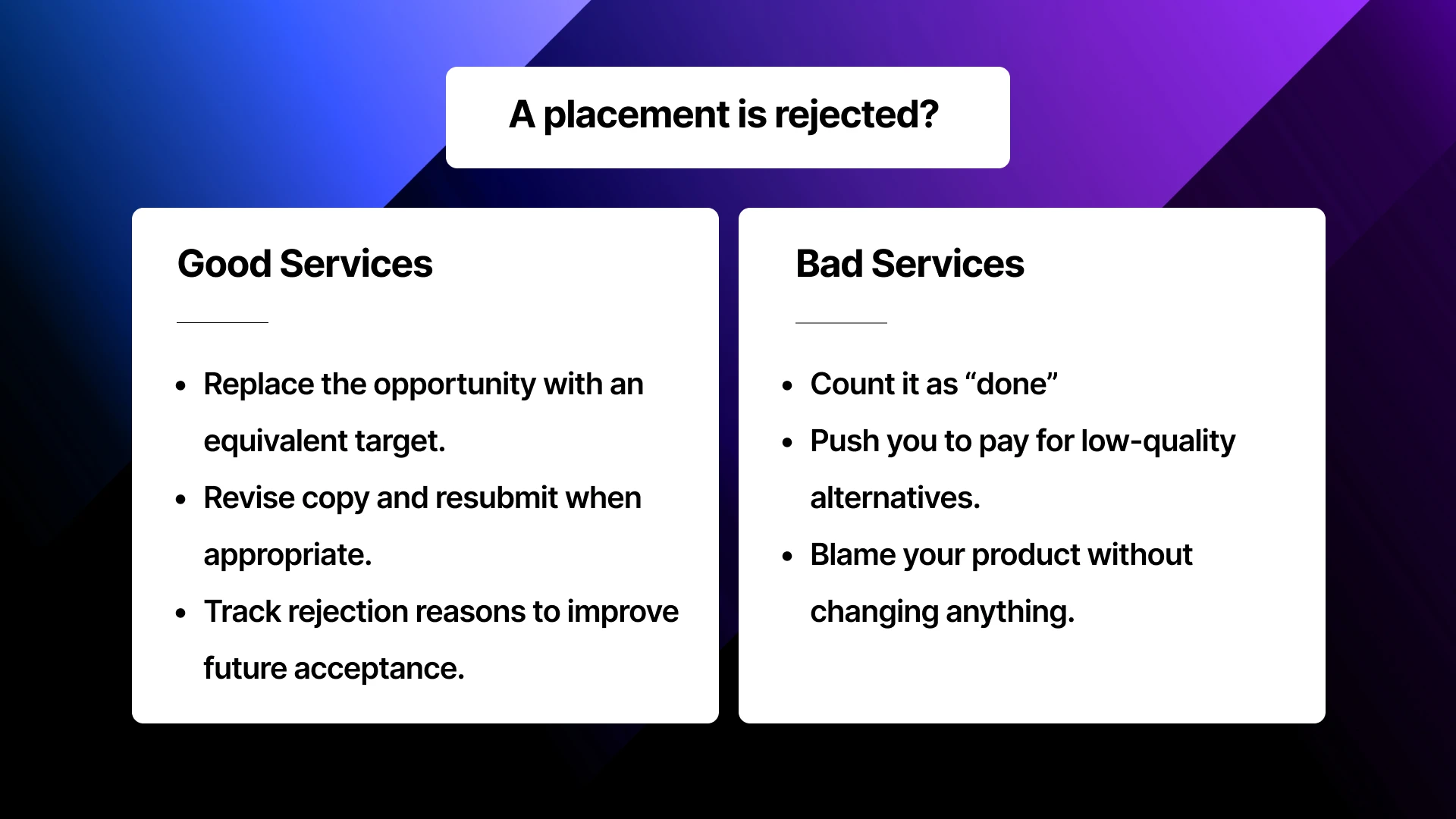
“What happens when a placement is rejected?”
Rejections are normal in manual work. The question is what they do next.
“What do you consider a red flag site?”
If they cannot name red flags, they do not have standards.
Red flags include:
- Sites with hundreds of unrelated categories and near-duplicate pages
- “Write for us” pages that openly sell links with no editorial bar
- Outbound link patterns that look like paid placement farms
- No real audience, no real updates, no real indexing
“How do you avoid link spam patterns?”
They should talk about:
- Varied anchors
- Pacing (no unnatural bursts for a brand new domain)
- Mixing link types
- Avoiding repeated templates and identical descriptions
Manual link building service pricing: what’s normal, what’s suspect
Pricing depends on link type and effort. Directory submissions are typically the lowest-cost way to build a baseline, while outreach-based editorial links cost more because humans are doing higher-friction work (research, pitching, follow-up, negotiation).
A useful way to think about pricing is by workload:
- Foundational submissions (directories, profiles): cheaper, faster, higher volume
- Mid-tier outreach (guest posts, niche edits): moderate cost, moderate volume
- Top-tier editorial (PR, major publications): high cost, low volume, high leverage
To ground expectations, industry reporting often cites wide ranges for paid guest posts and niche edits, with averages varying by method and site quality.
Pricing red flags you should not ignore
- “500 links for $99”
- Guaranteed rankings
- No mention of rejection or replacement policy
- No clarity on whether links are sponsored, exchanged, or paid
- Reports without live URLs

ROI: what you should measure (not vanity metrics)
Track outcomes that tie to growth:
- Search Console impressions for your money pages
- Rankings for bottom-funnel terms (not just blog posts)
- Referral traffic from listings and placements
- Branded search growth
- Conversions from pages that gained links
If a service only reports DR changes, they are measuring themselves, not your business.
When to use a manual link building service (and when to wait)
Manual link building works best when you have something worth pointing to.
Use it when:
- Your site is live and your core pages are solid (home, product, pricing, a few use cases)
- You can clearly state who it is for and what problem it solves
- You are ready to invest in a repeatable channel, not a one-time trick
Wait if:
- Your positioning is still changing weekly
- Your website is thin (no real pages to link to)
- You have no plan for what happens after the first wave of links
A practical sequence that fits most SaaS:
- Build a clean directory foundation (curated submissions)
- Publish 2-4 linkable assets (templates, comparison pages, research, tools)
- Layer in outreach for the assets that deserve editorial links
- Keep compounding with partnerships and mentions
This is also where Launch Directories fits naturally: start with curated directories or let the manual submission service handle the heavy lifting so you can spend your time on product and conversion.

Practical application: a simple buying checklist that prevents regret
Use this before you hire anyone.
Step 1: Define the outcome for the next 60 days.
Pick one: faster indexing and authority (new site) or stronger rankings on specific pages (existing site). If you cannot say what success looks like, the provider will define it for you.
Step 2: Prep a “submission kit” once.
Create a folder with: logo, screenshots, short and long descriptions, 1-line positioning, pricing, founder bio, and a list of 3 competitors. Manual services move faster and get higher approval rates when assets are ready.
Step 3: Choose your first link type intentionally.
- New domain: curated directories and profiles first.
- Established domain with content: outreach for your strongest assets.
Step 4: Interview the process, not the pitch.
Ask: how targets are chosen, what gets skipped, replacement policy, and what reporting includes. If they cannot show a sample report, walk away.
Step 5: Start with a controlled batch.
Buy a smaller package first (for example, 30-60 curated submissions) and review quality. Scale only after you confirm placements are indexed, relevant, and clean.
Step 6: Track impact weekly.
Watch impressions, indexing, and referral traffic. Do not overreact to day-to-day noise. Look for trend shifts over 30-45 days.
Step 7: Decide what comes next.
If the foundation is set, move to higher-leverage editorial work. If not, fix the bottleneck (often copy, positioning, or page quality).
Conclusion
A manual link building service is worth paying for when it delivers real placements, clean targeting, and reporting you can audit without guessing. The best providers build links the way you would if you had time: they select relevant sites, adapt copy to pass moderation, follow up until outcomes are clear, and avoid patterns that look manufactured.
If you want the fastest, safest first step, start with curated directory submissions and build a foundation that makes every future piece of content easier to rank. When you are ready to move, choose a manual link building service that can explain its standards, not just its prices.
with 100+ Directory Listings
Skip the grind. We'll submit your product to top directories so you get real users, feedback, and lifetime backlinks without lifting a finger.
FAQ
How long does a manual link building service take to show results?
Expect placements to happen within days to weeks, depending on link type. Directory submissions are often faster, while editorial outreach takes longer due to review cycles. Ranking impact usually shows after search engines crawl and process the new links, so measure trends over 30-90 days, not 7.
Is a manual link building service safe for SEO?
Yes, if it follows a clean process: relevant targets, real editorial standards, and no link scheme behavior. Google’s spam policies focus on manipulative patterns and scaled link tactics intended purely to game rankings. Choose services that prioritize relevance, transparency, and proof of publication.
What should be included in a manual link building report?
You should get live URLs for every published link, status notes for pending or rejected placements, evidence of placement when links are hard to find, and a list of skipped sites with reasons. If the report focuses on “submitted” counts instead of published URLs, it is not a real outcome report.
What is the difference between manual directory submissions and manual outreach?
Manual directory submissions focus on listings in curated directories and launch platforms, typically higher volume and faster approvals. Manual outreach focuses on convincing site owners or editors to publish content that includes your link, which is slower and usually more expensive but can deliver stronger contextual placements when you have solid assets.
Ready to build high-quality backlinks?
We'll submit your product to 100+ directories and build valuable backlinks for your SEO. Save hours of manual work so you can focus on what's important — selling and building, not submitting boring forms.