If your site feels “stuck” in Google, domain authority is usually the symptom, not the disease. Most founders try to improve domain authority by chasing random backlinks, publishing more blog posts, or paying for “high DA links” that never move the needle.
The fix is simpler: make your site easy to crawl, publish a few pages worth citing, and earn links from places that real people actually use. Do that consistently for 90 days and the authority metrics follow, along with rankings, impressions, and signups.
What is domain authority
Domain authority is a third-party score (popularized by Moz) that estimates how likely a website is to rank, based largely on the size and quality of its backlink profile. It is a comparative metric, so it’s most useful when you track it over time or against direct competitors, not as a standalone “grade.”
Domain Authority vs Domain Rating vs “authority” in Google
The fastest way to waste time is treating these numbers like Google’s algorithm. They are not. They are proxies that help you benchmark link strength.
Here’s a quick translation table you can reuse:
| Metric | Provider | What it mostly reflects | What it’s good for | What it’s bad for |
|---|---|---|---|---|
| Domain Authority (DA) | Moz | Link profile strength + model-based predictions | Benchmarking vs competitors | Chasing a number instead of rankings |
| Domain Rating (DR) | Ahrefs | Backlink profile strength on a 0-100 scale | Comparing link opportunities and progress | Overvaluing a single metric |
| Organic rankings | Relevance + quality + trust signals | The thing that actually matters | Being slow to show early improvements |

The “authority trap” founders fall into
A predictable failure mode looks like this:
- You publish content, but important pages do not index reliably.
- You build a few links, but they are irrelevant, duplicated, or ignored.
- Your authority metric barely moves, so you switch tactics every two weeks.
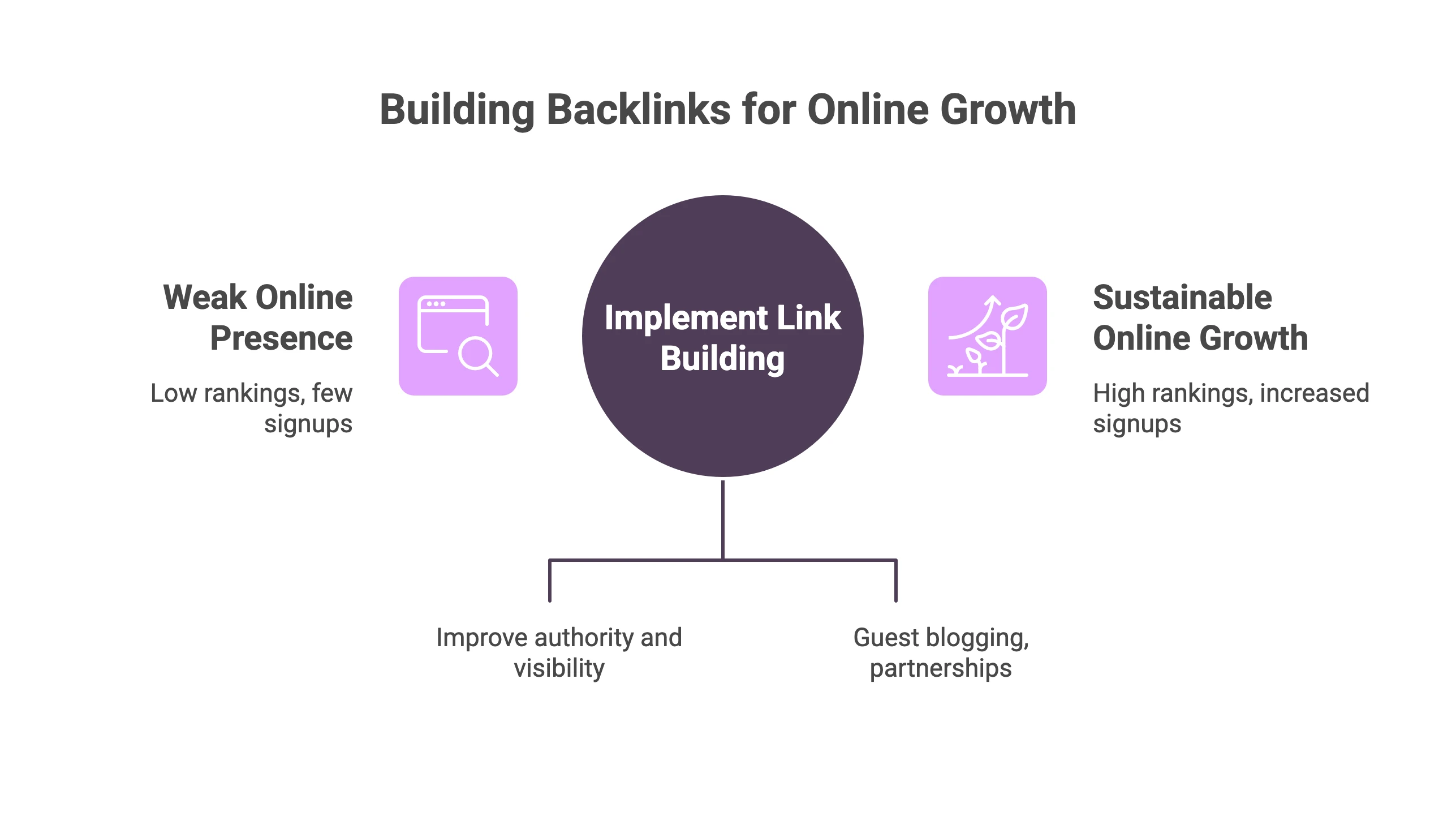
The cure is a repeatable system with three layers: technical access, link-worthy assets, and steady distribution.
Improve domain authority by fixing the foundations first
If Google struggles to crawl, understand, or trust your pages, backlinks have less leverage. Before you build links, make sure the basics are not quietly sabotaging you.
Make sure your “money pages” are indexable
Start with the pages that should convert: pricing, comparisons, use cases, templates, and your core landing pages.
Common blockers that keep these pages invisible:
- Accidental noindex tags (often on staging or duplicated templates)
- Canonicals pointing to the wrong URL
- Thin programmatic pages that look like clones
- Orphan pages with no internal links pointing to them
- Heavy client-side rendering that hides content until JavaScript loads
Fixing these is unglamorous, but it is the easiest compounding win you will get.
Build a crawl path that makes sense
Search engines follow links like humans do. If your site structure is messy, your authority gets diluted.
A simple structure that works well:
- Homepage -> category pages (use cases, solutions, industries)
- Category pages -> best content and best landing pages
- Blog posts -> internal links to the category hub and relevant product pages
If you have to choose one thing, choose internal links. They are the cheapest way to move authority to the pages that matter.
Publish pages that naturally earn links
Backlinks are easier when you stop asking for them and start giving people something to reference.
A good “link magnet” has two traits:
- It solves a specific job better than generic blog content.
- It includes a cite-able element (a table, a benchmark, a tool, or a downloadable asset).
Link magnets that work for SaaS and indie products
Pick one format you can execute well, then ship it with ruthless clarity.
1) Comparison pages that reduce decisions
- “X vs Y” with real criteria (pricing, setup time, limitations)
- “Best tools for [job]” with a transparent selection method
2) Benchmarks and mini-studies
- “We tested 20 onboarding flows, here’s what improved activation”
- “Cold email response rates by subject line length (2026 data)”
3) Templates people reuse
- A product launch checklist
- A directory submission tracker
- A Notion onboarding SOP
4) Free tools and calculators
- A pricing calculator
- A DR improvement estimator (even a simple one)
- A technical SEO checklist generator
If you only have time for one, ship a template plus a short explanation page. Templates earn links from blogs, communities, and “resources” pages because they save time.
The underrated play: build a tiny niche directory
A focused directory can be a strong citation engine if it is genuinely useful. Examples:
- “Best payroll tools for contractors”
- “Open-source alternatives to HubSpot”
- “AI meeting notes tools for sales teams”
This works because bloggers cite directories as reference lists, especially when they are curated and updated.
How to improve domain authority with backlinks that last
High-quality links usually come from one of three buckets. The best plan uses all three, in that order.

Bucket 1: Foundational links that are easy to earn
These are links you can get without begging:
- Relevant directories in your niche
- Industry partner pages (integrations, affiliates, marketplaces)
- Community profiles where your product is legitimately used
This bucket is where most early-stage sites should start, because it builds a base of referring domains.
Bucket 2: Editorial links that require usefulness
These are earned because your content improves someone else’s page:
- Adding your benchmark to an article that is outdated
- Offering a better table or clearer definition
- Becoming the best reference for a specific subtopic
This is where your link magnets do the heavy lifting.
Bucket 3: Relationship links that compound
These are the highest leverage links over time:
- Co-marketing with adjacent products
- Guest webinars and podcasts with real audiences
- Joint templates and resource hubs
The key is simple: your collaboration has to give their audience a win, not just give you a link.
The links that hurt more than they help
If you want sustainable improvement, avoid these patterns:
- Paid links placed to manipulate rankings (especially undisclosed)
- Massive link exchanges (“you link to me, I link to you” at scale)
- Low-quality guest posts on irrelevant sites
- Automated directory blasts that duplicate the same description everywhere
If money changes hands for placement, mark it properly. Google explicitly recommends qualifying paid links with rel="sponsored" or nofollow.
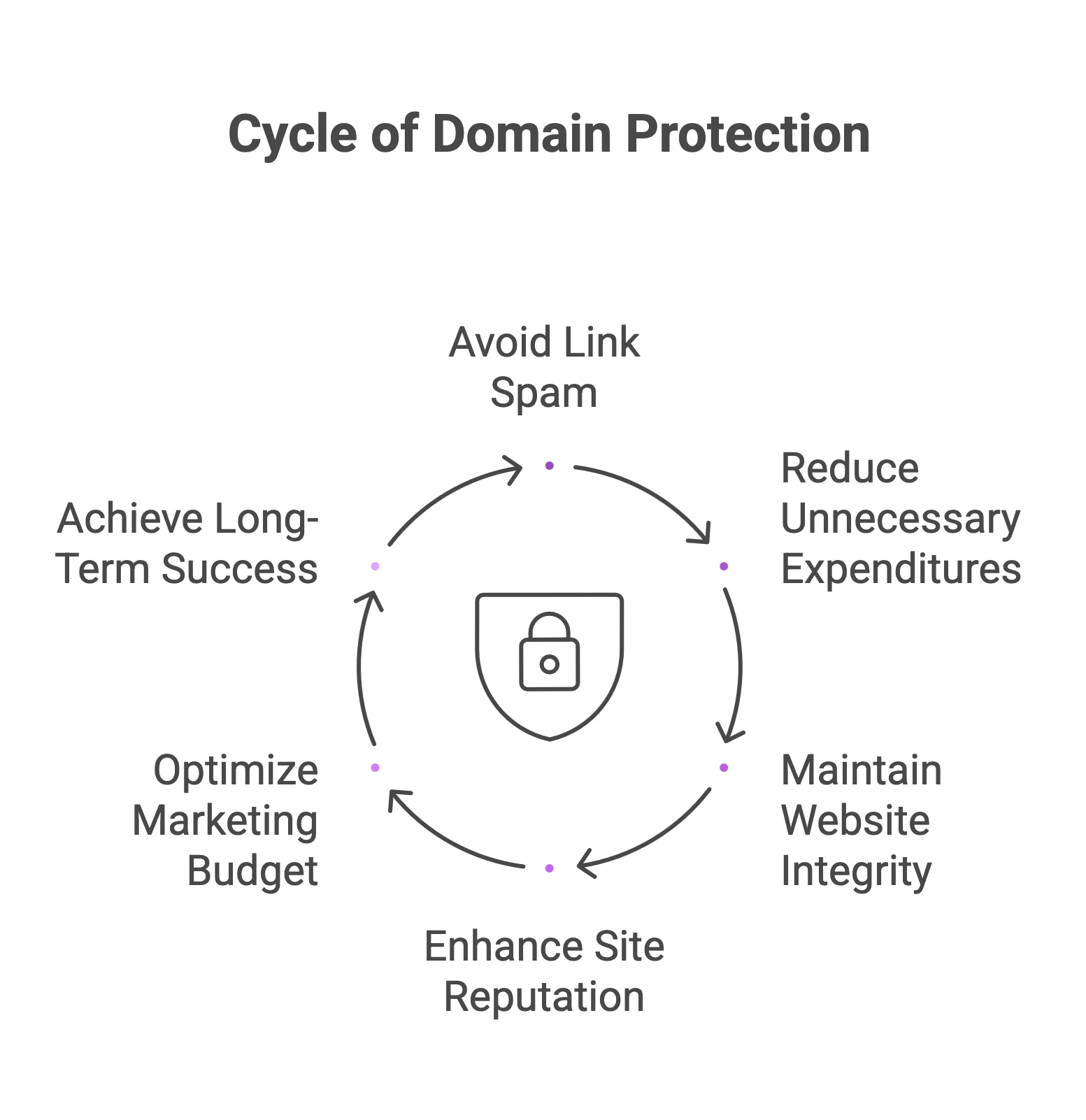
Directory backlinks to improve domain authority safely
Directory links work when you treat them like a curated portfolio, not a volume game.
A simple checklist for “good” directories
Use this filter before you submit anywhere:
- The directory itself is indexed and has real traffic
- Listings are curated or moderated (not instantly spammed)
- Your category exists and your listing will be relevant
- The directory page for your listing can rank or be discovered
- The site is not a “link farm” with thousands of thin pages
Dofollow links are valuable, but do not ignore high-traffic nofollow platforms. Nofollow can still drive discovery, brand searches, and downstream links.
How many directories should you submit to?
A practical range for early traction is 10-20 high-fit directories, then expand gradually. What matters is diversity and relevance, not brute force.
If you are an agency or running multiple launches, the work becomes operational: tracking requirements, screenshots, categories, and approvals across dozens of sites.
Make submissions look human (and convert)
Most directory backlinks fail because the listing is lazy. Treat each one like a mini landing page:
- Write a tight one-line value prop (outcome first)
- Add 2-3 screenshots that match the directory audience
- Customize the description slightly per platform
- Use consistent naming and URLs (avoid random UTM chaos)
- Add a single clear CTA (free trial, demo, waitlist)
If you want to shortcut the research layer, Launch Directories positions itself as a curated database of 100+ directories with DR, traffic, and link type data so you can shortlist faster.
If you want to shortcut the execution layer, their pricing page highlights a done-for-you manual submission service to 100+ directories and claims an average DR increase of +25 with delivery in 3-5 days (use those numbers as directional, not guaranteed).

Internal links are the multiplier most sites ignore
Backlinks raise the “water level” of your domain. Internal links decide which pages benefit.
If you build links but your internal structure is weak, authority pools in the wrong places (often your homepage and a few random blog posts).
A simple internal linking system that works
- Pick 3-5 “hub pages” (use cases, solutions, categories)
- Link from each hub to the best supporting content and your highest intent pages
- From each supporting page, link back to the hub and to one money page
This creates a tight cluster Google can understand.
Use internal links to move authority to pages that convert
A practical rule:
- Every blog post should link to 2-3 relevant commercial pages
- Every commercial page should link to 2-3 supporting resources
- No important page should be more than 3 clicks from the homepage
If you do nothing else this month, add internal links from your top 5 pages by traffic to your highest intent page (usually pricing or a key use case). That alone can lift rankings when you already have impressions.
Measure authority like a compounding growth loop
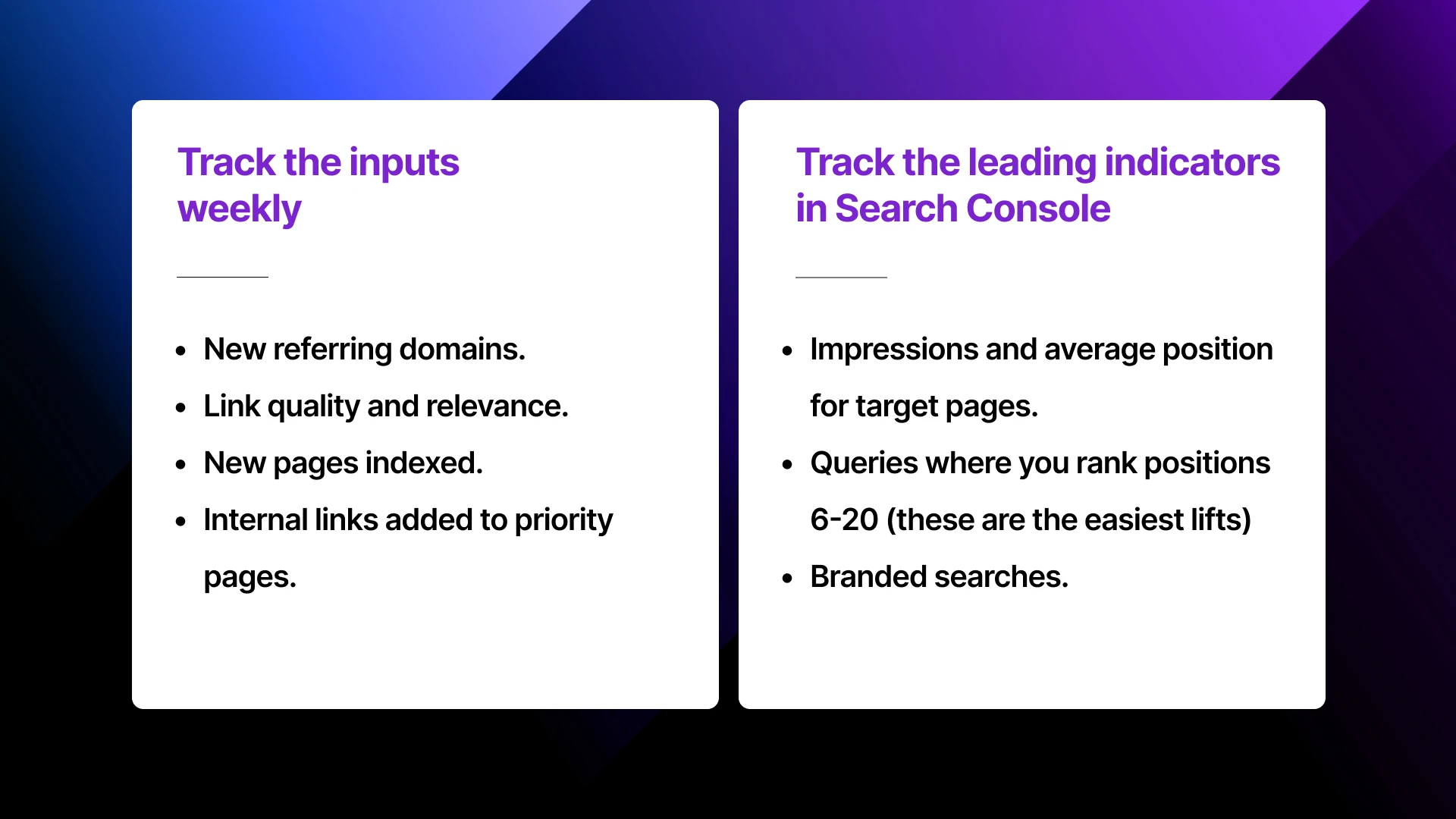
Authority work feels slow when you measure the wrong things. Measure the inputs and the leading indicators, then let the score catch up.
What timelines are realistic?
For most early-stage sites:
- 2-4 weeks: indexing improvements, impressions lift, clearer crawl behavior
- **4-8 weeks: **ranking movement on long-tail terms, early referral traffic from directories
- 8-12 weeks: authority metrics start moving more noticeably, plus more stable ranking gains
If you are not seeing any movement by week 6, it is usually one of these:
- You chose keywords you cannot beat yet
- Your pages are thin or not matching search intent
- Your link sources are low-quality or irrelevant
- Your internal linking is not pushing authority to the right pages
Practical application: a 30-day improve domain authority sprint
Week 1: Fix discovery (2-3 hours total)
- Pick 5 priority pages (pricing, a key use case, a comparison, a template, a core landing page).
- Check indexing and remove blockers (noindex, wrong canonicals, orphan pages).
- Add 10 internal links into those pages from relevant posts and hubs.
- Write a 40-60 word “answer block” near the top of each page that states the outcome clearly.
Week 2: Ship one linkable asset (4-6 hours)
- Choose one: a template, a benchmark table, or a simple calculator.
- Publish it on a clean URL and add a short methodology or “how to use this” section.
- Create a lightweight outreach list of 10 pages that already cover the topic.
Week 3: Build foundational links (3-5 hours)
- Submit to 10-15 relevant directories (prioritize real traffic and clear moderation).
- Customize your listing copy so it does not look syndicated.
- Track approvals in a simple sheet: directory, status, URL, link type, notes.
Week 4: Earn 3 editorial placements (3-5 hours)
- Send 10 targeted emails: “Your section X is missing Y, here is a better resource/table/template.”
- Follow up once with a short message and a direct placement suggestion.
- Review Search Console for queries in positions 6-20 and expand the section that matches what people are searching.
Run this sprint twice. Two months of consistent execution usually beats a year of random link building.
Conclusion
To improve domain authority, stop chasing the number and build the system that creates it: crawlable pages, link-worthy assets, and steady, relevant backlinks. Start with technical basics so your best pages can be found. Then publish something people want to cite, and distribute it through directories, editors, and partnerships.
Once you see impressions and rankings move, the authority metrics tend to follow. If you want to move faster, build a shortlist of quality directories, submit consistently, and use internal links to push authority to the pages that convert.
with 100+ Directory Listings
Skip the grind. We'll submit your product to top directories so you get real users, feedback, and lifetime backlinks without lifting a finger.
FAQ
How long does it take to improve domain authority?
Most sites see early progress in 4-8 weeks if they fix indexing issues, add internal links, and earn consistent referring domains. The domain authority score itself often lags behind rankings and impressions, so track Search Console leading indicators first and treat authority metrics as a trailing signal.
Does Google use domain authority as a ranking factor?
No. Domain authority is a third-party metric used for benchmarking, not a Google ranking factor. Google rankings are driven by relevance, quality, and trust signals. The overlap is that strong backlink profiles and credible pages tend to improve both rankings and authority scores over time.
What is a “good” domain authority score?
A good score is relative to your competitors, not a universal threshold. If the sites you need to outrank are DA 25-35, then moving from 12 to 20 is meaningful. Focus on closing the gap with your direct SERP competitors, not chasing an arbitrary number.
Do directory submissions improve domain authority?
Yes, when the directories are relevant, moderated, and actually indexed. Directory links work best as a foundational layer that adds diverse referring domains and discovery. Low-quality directory blasts can do nothing or create risk, so use a curated shortlist and submit with unique, high-quality listings.
How many backlinks do I need to increase domain authority?
There is no fixed number because quality and diversity matter more than volume. One new referring domain from a reputable, relevant site can outweigh dozens of weak links. A practical target is earning 10-30 new referring domains over 90 days through directories, editorial placements, and partnerships.
Ready to build high-quality backlinks?
We'll submit your product to 100+ directories and build valuable backlinks for your SEO. Save hours of manual work so you can focus on what's important — selling and building, not submitting boring forms.