Most startups do not have a content problem. They have an authority problem. You can ship 50 solid pages and still sit on page 3 because Google has no reason to trust a new domain. Backlinks are one of the clearest trust signals on the web. That is why learning how to build backlinks matters.
Backlinko’s analysis of 11.8 million results found that about 95% of pages have zero backlinks, which explains why so much “good content” never gets discovered. Ahrefs found that 96.55% of pages get no organic traffic from Google, often because authority never compounds.
Earn links a real person would click, from pages that are indexed, relevant, and editorially maintained. Start with a clean foundation, then layer in linkable assets and outreach that earns citations over time.
What is a backlink and why does it matter?
A backlink is a link from another website to yours. Search engines treat it like a public reference: one site is vouching for another. In practice, backlinks help you rank because they pass trust, help Google discover and recrawl your pages faster, and can send qualified referral traffic.
Backlinks only help when they come from pages that are crawlable and indexed. A “link” on a dead listing that never gets indexed is just noise.
The 3 signals that make a backlink count
- Relevance: the linking page is about your topic or buyer.
- Trust: the site has real users, real content, and a clean history.
- Placement: the link is visible and contextual, not buried in a footer.
Dofollow vs nofollow (the practical version)
Some links are tagged with rel="nofollow", rel="sponsored", or rel="ugc". Google recommends qualifying paid and user-generated links with these attributes.
- Dofollow-style links usually pass the most ranking value.
- Nofollow / sponsored / UGC links still help discovery, brand visibility, and referral traffic.
- A natural profile includes both, especially if you launch in public.
How to build backlinks that search engines actually count
Backlink building fails when you chase volume instead of outcomes. The outcome is “better pages ranking for buyer-intent queries,” not “more links.”
Start by mapping links to pages, not only to your domain. Your “alternatives” page, pricing page, and top use-case pages are the ones that tend to compound.
Pick 4 pages worth building links to first
For a SaaS or tool, these usually work best:
- Homepage (trust and brand searches)
- Pricing page (conversion and comparisons)
- One use-case page (high intent)
- One comparison or alternatives page (demand + links)
If these pages are weak, fix them first. You cannot out-link a confusing landing page.
A quick link quality checklist
Before you pitch or submit, check:
- The linking page is indexed (you can find it in Google).
- The site has real content and a clear niche.
- The link will be visible and useful to readers.
- The page is not stuffed with outgoing links or templated junk.
How to build backlinks with directories and launch platforms
Directories are not glamorous, but they are the cleanest “foundation layer” for new sites. The best ones do two jobs at once: they give you a listing page that can rank for your brand, and they create a backlink from a domain Google already crawls often.
The trap is submitting everywhere. Low-quality directories waste time and produce pages that never get indexed.
Directory selection in one table
| Source | Why it helps | Common risk | Best use |
|---|---|---|---|
| Curated startup directories | Clean foundation links + early users | Some listings are noindex | New domains, MVP launches |
| Niche directories | High relevance, easier approvals | Small traffic | Targeted long-tail rankings |
| Big software marketplaces | Trust, brand visibility | Often nofollow | Credibility + referrals |
| Community launch platforms | Attention + mentions | Short-lived spike | Launch week distribution |
A simple directory strategy that works
Treat directory submissions like a portfolio:
- 10-20 strong directories with editorial review
- 10-30 niche directories that match your category (AI, dev tools, job boards)
- Skip the rest unless you can confirm their listing pages are indexed
If you want to move faster, use a curated directory database that includes DR, traffic estimates, and link types so you are not guessing. Launch Directories is built around this workflow: filter the directory list, save the ones that match your niche, then submit in batches.
What to include in every submission
Keep a small “launch asset pack” ready:
- One-line positioning (who it is for + outcome)
- 2-3 sentence description (problem, solution, proof)
- 3 screenshots
- Founder name + real email
How to build backlinks with linkable assets (the citation hook)
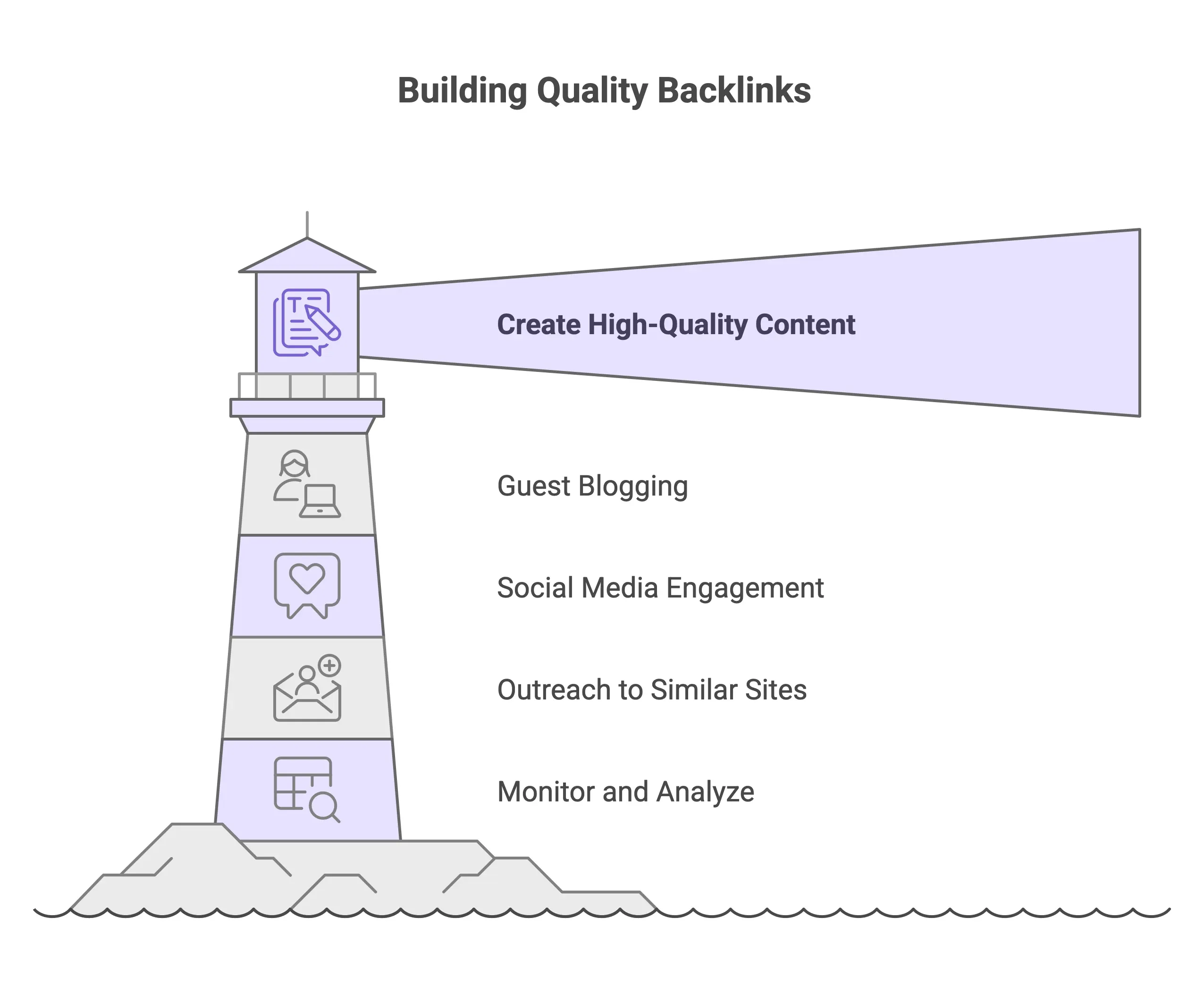
Once your foundation layer is live, you need editorial links. These come from assets people cite because they are useful, not because you asked.
The easiest way to design these is the “citation hook.” Every linkable asset has one element that makes a writer think, “I can reference that.”
5 linkable assets that reliably earn citations
Benchmarks and mini-studiesExample: “We analyzed 300 onboarding flows. Here are the patterns that correlate with activation.”
Templates with a real outcomeExample: a launch checklist, pricing spreadsheet, or outreach tracker people can copy.
Interactive micro-toolsExample: a calculator, grader, or generator that solves one painful task fast.
Comparison tables people can embedExample: “Best X for Y” with clear criteria, not affiliate fluff.
Curated mini-directoriesA focused directory (one category, one buyer persona) often earns natural citations from bloggers and communities.
Outreach that earns editorial links (without sounding spammy)
Outreach works when you help an editor improve a page they already care about. It fails when your pitch has zero editorial value.
Start with competitor link gaps
Pick one competitor who ranks for a query you want. Export their backlinks for that page, then filter to sites that:
- Are in your niche or adjacent niche
- Link out to similar tools or resources
- Have updated content (last 12-18 months)
This is a high-signal list because you already know they link to “your type of thing.”
The 5-sentence outreach template
- Personal line (prove you read the page)
- The gap (what is missing or outdated)
- Your asset (one sentence on the outcome)
- Proof (one number or concrete detail)
- Close (one clear ask)
with 100+ Directory Listings
Skip the grind. We'll submit your product to top directories so you get real users, feedback, and lifetime backlinks without lifting a finger.
Product-led backlink building for SaaS
Some of the strongest links come from real product relationships. These are safer because they are grounded in collaboration and real pages.
- Integrations and partner pages: integration listings, partner directories, “built with” showcases.
- Customer stories with numbers: publish with the customer, then let them share it.
- Badges and embeddable widgets: small social proof elements that other sites embed with attribution.
Launch Directories offers a badge generator for directories, and “featured on” badges are a practical way to earn attribution links from partners and listings.
Keep it safe: what not to do when building backlinks
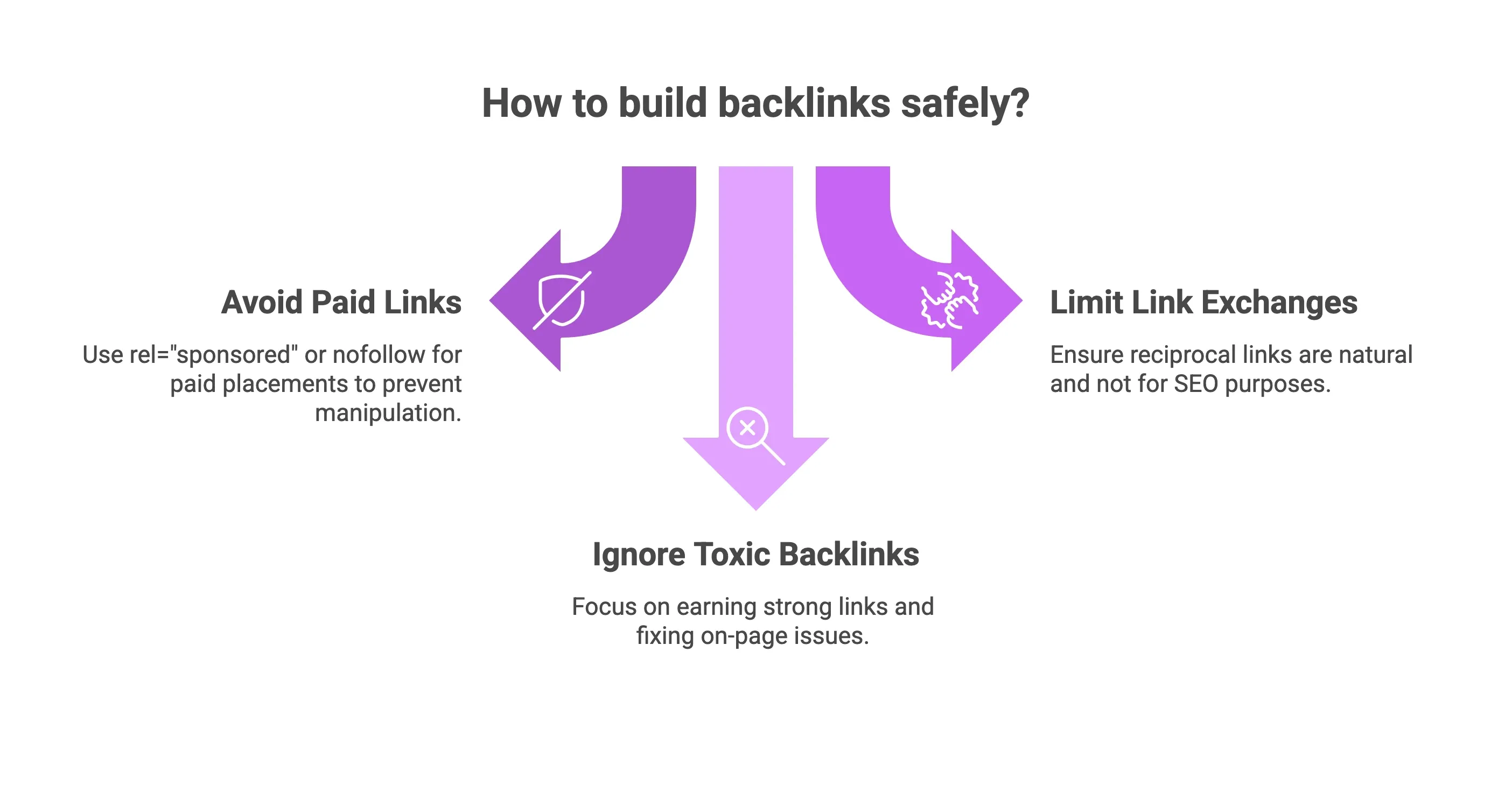
Google’s guidance is consistent: avoid link schemes meant to manipulate ranking signals, and qualify paid links properly.
Avoid paid links that pass ranking signals
Ads are fine. Sponsorships are fine. The problem is when the intent is to pass ranking value.
Google recommends using rel="sponsored" or nofollow for paid placements. If a site promises “dofollow links for $50,” that is not a partnership. It is a footprint.
Be careful with excessive link exchanges
Reciprocal links can happen naturally in partnerships, integrations, and co-marketing. They become risky when you do them at scale purely for SEO.
“Toxic backlinks” are usually a distraction
Most startups waste time panicking about random spam links they did not build. Google is good at ignoring low-quality noise. Focus on earning strong links and fixing on-page issues.
Practical Application: a 30-day backlink build sprint
Week 1: Pick 4 priority pages, tighten positioning, and fix basics (titles, internal links, clear CTAs). Build a launch asset pack: description, screenshots, and a short founder bio.
Week 2:Submit to directories with intent. Aim for 15-30 quality directories and launch platforms. Prioritize sites with real audiences and indexed listings. If you want to compress the work, LaunchDirectories’ database helps you filter by DR, traffic, and link type, and the done-for-you directory submission service can handle submissions across 100+ directories while you keep building.
Week 3: Ship one citation hook. Publish one linkable asset (template, calculator, benchmark, or mini-directory). Add one embeddable element like a table, a downloadable sheet, or a diagram so people can cite you easily.
Week 4: Outreach and partnerships. Build a list of 50 high-signal prospects using competitor link gaps. Send 10 tailored emails per day for 5 days. One follow-up per thread. In parallel, ask 5 customers or partners for a public mention that is genuinely useful (integration page, stack page, or co-written case study).
Log every live URL, confirm indexation in Search Console, and add internal links from new mentions to your priority pages.
Your goal after 30 days: a clean foundation layer, one asset worth citing, and an outreach pipeline you can repeat every month.
Conclusion
Backlinks that move rankings come from a system: foundation, assets, outreach, and repetition. Directories and launch platforms give you early credibility and crawl signals. Linkable assets and product-led partnerships earn editorial links that compound. Outreach works when you help an editor improve a page, not when you beg for a link.
The fastest way to stall is chasing volume. The fastest way to win is earning a few high-trust links to your highest-intent pages, then repeating the process with discipline.
If you want a shortcut, start with curated directories, then invest your energy into one linkable asset per month. That is how to build backlinks in a way that stays clean, scalable, and founder-friendly.
with 100+ Directory Listings
Skip the grind. We'll submit your product to top directories so you get real users, feedback, and lifetime backlinks without lifting a finger.
FAQ
How long does it take to see results from backlinks?
Most sites notice early signals within 3-6 weeks: faster indexing, small lifts on long-tail queries, and referral clicks from new placements. Larger ranking gains often show in 8-12 weeks once Google recrawls linking pages and re-evaluates authority across your topic cluster.
Do nofollow backlinks help with SEO?
Yes, just differently. Nofollow, sponsored, and UGC links may pass limited ranking value, but they help discovery, diversify your link profile, and can drive real referral traffic. For new domains, a mix of link types is normal and often healthier than an “all dofollow” footprint.
How many backlinks do I need to rank?
There is no universal number. You need enough high-quality referring domains to be competitive for your niche and keyword difficulty. For low-competition queries, a handful of relevant links can be enough. For competitive terms, expect sustained link earning plus strong content and internal linking.
Are directory backlinks still worth it in 2026?
Yes, when you choose curated directories with real audiences and indexed listings. Directory links are not a replacement for editorial links, but they are a reliable foundation layer for startups. The ROI comes from targeting quality over volume and pairing submissions with pages that convert.
Can I build backlinks without doing outreach?
You can, but it is slower. Directories, product marketplaces, and partner pages can build a baseline without cold emails. To earn consistent editorial links, most teams still do some outreach, even if it is just reaching out to partners, customers, or creators who already benefit from your product.
Ready to build high-quality backlinks?
We'll submit your product to 100+ directories and build valuable backlinks for your SEO. Save hours of manual work so you can focus on what's important — selling and building, not submitting boring forms.