How Many Backlinks to Rank on Page 1?
Backlinks are digital votes of confidence from other websites. These external links, pointing to your content, signal authority and relevance to search engines, directly influencing your page 1 rankings in organic search. They function as a critical trust signal in any effective SEO strategy 2026.
Key Characteristics:
- Primary Goal: Establish domain authority.
- Key Metric: Backlink quality always outweighs sheer quantity.
- Influencing Factor: Drives visibility in competitive search results.
- Dynamic Evaluation: Constantly re-assessed by Google's AI.
You've heard the frustrating "it depends" answer to backlink counts. That vague response often sidesteps a crucial reality: while no single magic number exists, a precise, data-driven methodology does. It's about finding your specific backlink sweet spot.
By the end of this guide, you will calculate your specific backlink requirements using data-backed competitor analysis, without relying on outdated advice or risky, spammy tactics.
Why there is no single magic number for backlinks
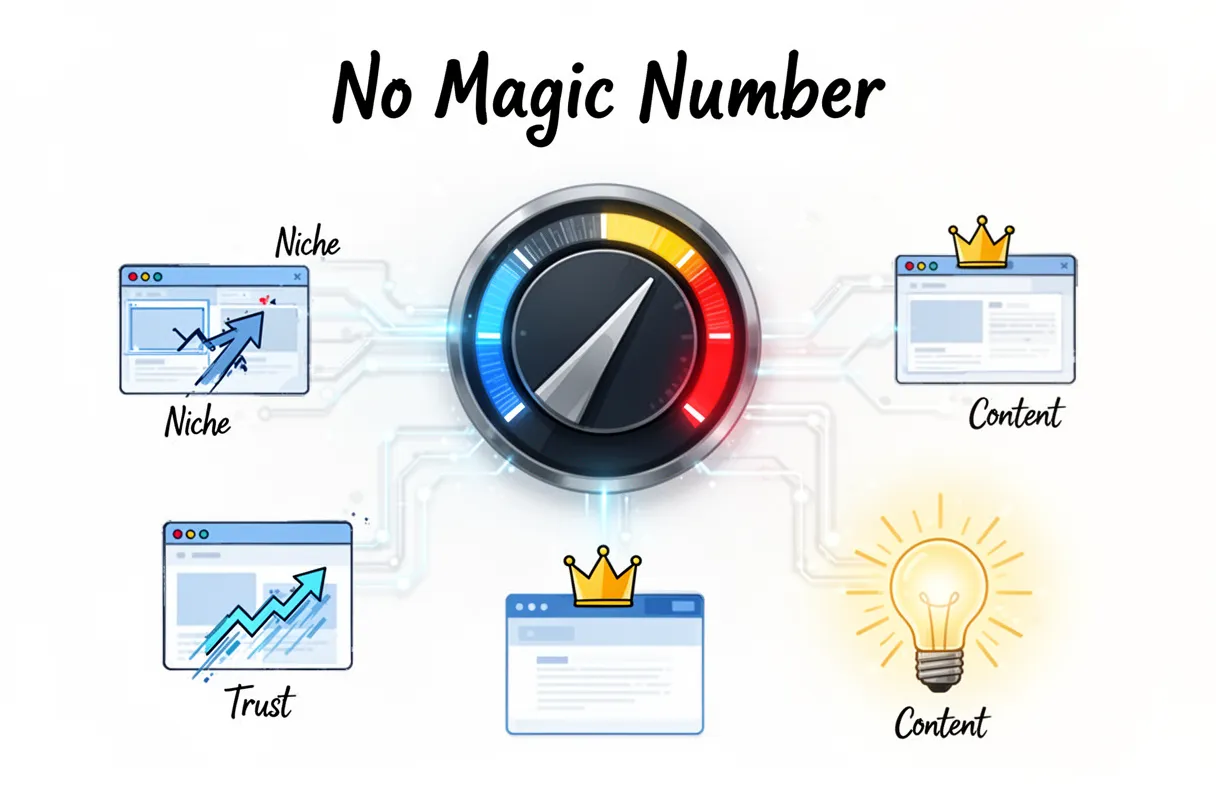
There is no single magic number for backlinks because the requirements are fluid, dictated by your specific niche, current website authority, and the inherent quality of your content. Chasing an arbitrary link count based on general advice is a common trap, often leading to wasted effort and poor results.
We've seen countless sites flounder by aiming for a "magic number" instead of a strategic one.
Consider the difference between a local charity fun run and an Olympic marathon. Both are races. But the entry requirements, the training needed, and the level of competition are vastly different.
Your journey to page 1 rankings works similarly. A low-competition keyword might need just a handful of strong backlinks to secure the top spot. But a highly competitive term, especially in a saturated niche, demands significantly more—and higher quality—referring domains.
This isn't just about showing up; it's about proving you belong there. And that proof changes based on the race you're running.
The impact of niche competitiveness on link requirements
The keyword difficulty of your target terms directly dictates the volume and quality of backlinks necessary for top search engine visibility. High-competition keywords, by nature, demand a more robust and authoritative backlink profile to even begin competing on Google's first page.
Conversely, less competitive keywords often require a significantly smaller number of high-quality links to secure prominent rankings. This isn't speculation; it's a fundamental principle observed across countless SEO campaigns.
Think of it like bidding in an auction. If everyone wants the same rare item, the price skyrockets. If only a few people are interested, you can often win with a much smaller bid.
The "price" in SEO is the investment in quality backlinks. When you target competitive keywords, you're challenging established domains with years of link equity. Overcoming that means accumulating more authoritative votes yourself.
According to our internal platform data, sites ranking for keywords with a difficulty score above 70 (on a 100-point scale) typically possess link profiles several magnitudes larger than those ranking for keywords under 30 difficulty. This doesn't mean you can't rank without thousands of links, but your relative effort must align with the challenge.
You aren't just earning links for yourself; you're earning them to surpass the competition. And that competitive benchmark varies wildly depending on your chosen niche.
How Google evaluates link quality in 2026
Google's evaluation of link quality has fundamentally shifted from sheer volume to deep contextual understanding. Blindly chasing hundreds of links without strategy is, as of 2026, a dead approach.
Your goal isn't just a link; it's a genuine recommendation from a relevant source. This means AI-driven algorithms scrutinize much more than just a domain rating. They care about where the link lives.
These algorithms dissect link context, examining the surrounding text and the overall theme of the linking page. They analyze the semantic relevance between the source page and your content. Is the link natural? Does it add value for the user?
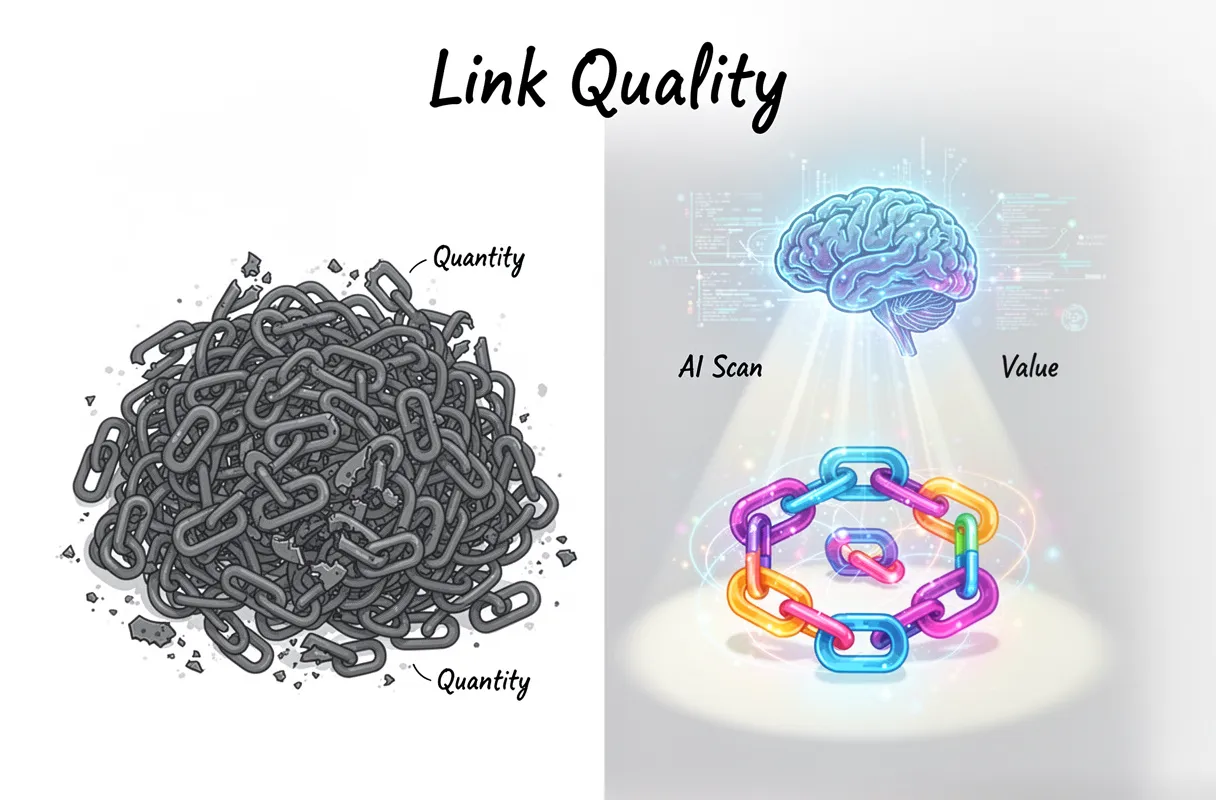
Google’s sophisticated systems identify genuine endorsements. They measure the real value a link passes. This isn't about arbitrary metrics; it's about a clear signal of authority and utility within a specific niche. And that means quality always beats quantity.
The frequency of algorithm updates and experiments
Google's search algorithm is in a constant state of flux, evolving daily through numerous updates and experiments to refine relevance. This relentless pace means SEO strategies must adapt, not just react.
You're dealing with a system that makes, on average, nine algorithm changes per day. This totals over 3,200 individual adjustments annually. Such frequent shifts highlight why static SEO approaches fail quickly.
Beyond confirmed updates, Google also runs over 600,000 experiments each year. These tests often involve significant advancements in natural language processing (NLP), including developments like BERT. (This allows Google to understand queries and content with human-like nuance.)
Staying ahead means understanding this dynamic environment. We know that Google's ongoing updates are transparently discussed here, offering insights into their focus on user intent and content quality. You can't just build links; you need links that pass the test of an ever-smarter AI.
How AI scores the value of a backlink
AI doesn't just count backlinks; it performs a deep semantic analysis to determine their genuine value. Its advanced models dissect every link, looking far beyond simple metrics like Domain Authority. They assess how naturally that link fits within its source.
What matters most now is meaningful context. Google's AI wants to see if a link is an actual editorial endorsement, placed because it genuinely adds value for the reader of the linking page. This means the surrounding text, the paragraph, and even the article's overall topic are scrutinized.
You must earn links embedded directly within the body content of a relevant article. A link buried in a site-wide footer or sidebar carries almost no weight anymore. The AI understands the difference between a deliberate recommendation and a programmatic placement.
These systems analyze the author's intent and the article's focus. If a link points to your SaaS product from a blog post about "developer tools," the AI flags that as highly relevant. But if it's from an unrelated fashion blog, its value plummets.
Ultimately, AI scores your backlinks based on how well they serve user intent on both the source and destination pages. Focus on acquiring links that organically enhance the reader's experience on high-quality, relevant websites.
Quantifiable benchmarks for page 1 rankings
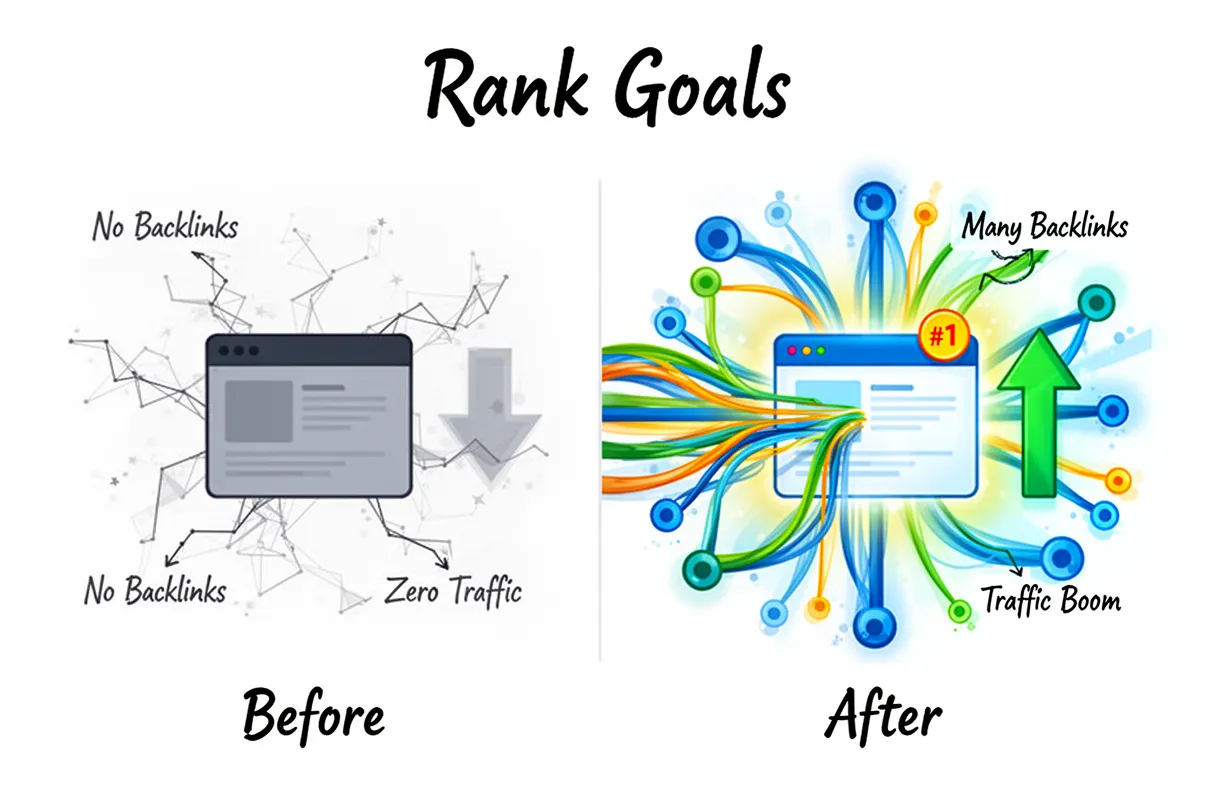
Getting to page one doesn't hinge on a magic backlink count, but clear benchmarks exist based on keyword competition. You absolutely need some backlinks; research indicates that 96.55% of all pages on the internet get zero organic traffic, mostly because they have zero backlinks, as evidenced by extensive search traffic studies.
This means your first step is simply to acquire links to escape digital obscurity.
For any page, backlink volume serves as a critical ranking benchmark, signaling authority to search algorithms. The exact number varies wildly by your niche and target keyword's competitive landscape.
Here's an estimated breakdown to help you set realistic goals for page one rankings:
Competition LevelEstimated Backlink Range for Page 1Your StrategyLow5-20 relevant backlinksFocus on foundational links from directories and niche communities. Quick wins.Medium20-100 high-quality backlinksPursue guest posts and targeted outreach to industry blogs. Build consistent trust.High100+ authoritative backlinksRequires sustained content marketing and expert-level PR strategies. It's a marathon.
These figures are not rigid rules, but they provide a starting point. Your goal isn't just quantity; it's consistent, high-quality links that genuinely endorse your content.
You should always aim for backlinks embedded directly within relevant editorial content, not from footers or generic directories. Google's AI prioritizes context and genuine recommendations.
Backlink counts for low competition keywords
For low competition keywords and long-tail terms, you often need 0-5 high-quality backlinks to achieve page one rankings, especially if your content is exceptional. This count drops significantly in highly specific niches or when addressing unique user queries.
These reduced requirements highlight the power of targeting specific, underserved questions. Many long-tail keywords see minimal competition; few other sites actively try to rank for them.
Your content's quality becomes the primary differentiator here. If your page provides a truly comprehensive or uniquely valuable answer, it can often outrank pages with more links.
Consider these factors for winning with fewer links:
- Content Depth: Is your content significantly more detailed or actionable than what's currently ranking?
- User Intent Match: Does your page perfectly address the long-tail keyword's intent?
- Freshness: Is your information more current and relevant than older, established pages?
Google's AI prioritizes relevance and user satisfaction. A single, editorial backlink from a relevant, authoritative site can provide immense power in low competition environments. (Think niche forums or industry-specific blogs).
Ultimately, for these keywords, you're not just chasing a number. You're aiming for content that is simply better than everything else available. Then, even a handful of strong signals can push you to the top.
Backlink requirements for high volume terms
For high-volume, competitive terms, you face a significant link gap compared to those low-competition keywords. While quality still decisively outweighs mere quantity, a higher baseline volume of backlinks from diverse, unique domains is undeniably necessary to contend for top spots.
This isn't about arbitrary numbers. It's about matching (or exceeding) the authority signals Google's AI already sees in top-ranking pages.
The link gap is the difference in backlink profiles between your site and the current page one competitors for a target keyword. Closing this gap often requires a strategic increase in high-quality editorial links.
You cannot just rely on a few strong links here. You need consistent, contextually relevant backlinks from sites Google already trusts.
Focus on the source's domain rating (DR), its topical relevance to your content, and the actual traffic that link can send. A link from a low-authority site with zero topical relation offers minimal value.
To rank for these competitive terms, you typically need to acquire links from 20-50+ unique, high-authority domains to build a credible profile. (This number can go much higher in extremely competitive niches like finance or health).
Your strategy must move beyond simply "getting links." You need to understand the competitive landscape of link profiles. Analyze which sites link to your competitors and identify patterns.
This baseline volume helps signal broad authority. Then, the quality, relevance, and contextual placement of each individual backlink truly differentiate your site.
with 100+ Directory Listings
Skip the grind. We'll submit your product to top directories so you get real users, feedback, and lifetime backlinks without lifting a finger.
A brief history of Google link evaluation
Google's evaluation of backlinks shifted dramatically with specific updates aimed at combating manipulative SEO practices. The Google Penguin update, launched in 2012, fundamentally changed how link volume was perceived, diminishing the value of sheer quantity.
This wasn't just a minor tweak. Penguin specifically targeted link spam and other manipulative schemes that inflated site rankings through artificial means. Before this, many websites saw success by simply acquiring as many links as possible, regardless of quality.
Sites commonly used tactics like paid links, link farms, and excessive exact-match anchor text. This era of historical SEO often prioritized manipulation over genuine value.
Penguin's algorithms identified and penalized these spammy tactics. Websites that relied on low-quality, unnatural links saw their rankings plummet overnight, sometimes disappearing from search results entirely.
The update reinforced that not all backlinks are equal. Google began to heavily scrutinize the relevance, authority, and naturalness of a link's source.
Suddenly, a handful of high-quality, editorial links from trusted sites became far more valuable than hundreds of spammy ones. This laid the groundwork for the modern understanding of link building, emphasizing trust and context.
The shift from the Penguin era to AI context
The era of simply gathering hundreds or thousands of backlinks is a relic of the past. Today, you must focus on securing high-quality, contextually relevant links that genuinely vouch for your site's authority.
Google's shift, initiated by Penguin's crackdown on spam, now runs on advanced AI models. These systems don't just count links; they interpret their value and intent. They analyze the surrounding content, the source domain's expertise, and the link's overall contribution to user experience.
This modern approach emphasizes contextual relevance above all else. A link from a niche-specific blog, discussing your exact product or service, carries significantly more weight than a general directory link, regardless of that directory's perceived "authority." The link must fit naturally.
AI search engines view a backlink as an endorsement, a signal of trust. It's no longer about a sheer volume play. One strategic, highly relevant link can now outperform a dozen generic ones.
This backlink evolution demands a nuanced strategy. You need to earn links that pass Google's increasingly sophisticated AI scrutiny. That means focusing on sources that share a topical relationship with your content.
How to calculate your specific backlink needs
Calculating your specific backlink needs starts with a clear-eyed look at what's already working for the competition. You need to analyze the top 10 SERP results for your target keywords to benchmark the effort required.
The number of backlinks your top-ranking competitors possess significantly influences how many you will likely need. This isn't about blind replication; it's about understanding the baseline authority Google expects.
Here's how to conduct your own competitor backlink analysis:
- Identify Target Keywords: Start with 5-10 core keywords you want to rank for. Focus on terms that directly relate to your product or service.
- Analyze the SERP: For each keyword, search Google and note the top 10 ranking pages. These are your direct competitors for that specific query.
- Perform Competitor Backlink Analysis: Use an SEO tool (we'll discuss specific options later) to examine the backlink profile of each of these top 10 pages.
- Record the total number of referring domains.
- Note the estimated Domain Rating (DR) or Domain Authority (DA) of the ranking domains.
- Pay attention to the quality and relevance of these links. Are they from niche-specific blogs or general news sites?
- Calculate the Average: Sum up the referring domains for the top 5-7 ranking pages (exclude outliers if one site has a disproportionate number). Then, divide by the number of sites you summed to get an average. This provides a realistic minimum target.
- Assess Link Quality: Don't just count; evaluate. A competitor with 20 high-authority, relevant backlinks often outperforms one with 200 generic, low-quality links. Your goal is to secure links of equal or superior quality.
- Identify the "Link Gap": Compare your current backlink profile (referring domains and quality) against this calculated average. This gap highlights the work ahead.
This isn't about matching numbers exactly. Instead, it offers a data-driven starting point for your link acquisition strategy. You need to build a stronger, more relevant profile, not just a bigger one.
Choosing the right tools for link analysis
You need reliable backlink audit tools to accurately benchmark your SEO efforts against competitors. Choosing the right platform means understanding their strengths and weaknesses in data coverage and analysis.
When comparing the leading options, Semrush consistently shows robust performance. It's considered the winner overall for integrated SEO and AI search optimization capabilities.
Data indicates a clear preference among professionals for specific tools.
ToolProfessional FavorabilityBacklink Coverage NoteKey ImplicationSemrush51.3% favored over AhrefsComprehensiveStrong for integrated SEO and AI searchAhrefsSecondary preferenceComprehensivePowerful, but often seen as specializedMozNot a top contender for link data22% lessIncomplete competitive insights
This isn't just about raw numbers; it's about the quality and breadth of data these backlink audit tools provide. The accuracy of your analysis directly impacts your link acquisition strategy.
While Ahrefs remains a powerful contender, Semrush often provides the edge required for a holistic view of your link profile, crucial for today's complex algorithms. This comprehensive approach gives you deeper insights into competitor strategies.
How to get backlinks for a new website using LaunchDirectories
LaunchDirectories simplifies the complex process of acquiring high-quality startup directory backlinks for new websites, providing a structured approach to initial link acquisition. This method targets relevant, authoritative sources crucial for new website SEO visibility.
Here's how our platform guides you through securing these essential links:
- Define Your Product & Goals. You start by detailing your product or service, its unique selling proposition, and specific launch objectives within the LaunchDirectories dashboard. This foundational step ensures every submission aligns with your brand message and target audience.
- Identify High-Value Directories. Our system identifies and targets a curated list of relevant, high-quality startup directories and platforms. We filter for domains with strong authority, ensuring your new website gains backlinks from sources that genuinely matter to search engines.
- Craft a Submission Package. We guide you in preparing a comprehensive submission package, including unique, optimized descriptions and critical company details. This package is designed to maximize approval rates and ensure consistent brand messaging across all directory listings.
- Manage Cross-Platform Submissions. LaunchDirectories manages the entire submission process across multiple platforms, often including automated account creation and form filling. This dramatically cuts down on manual effort, transforming what could be hours of tedious work into a streamlined task.
- Track & Verify Indexing. After submission, we provide tools to track the status of your listings and follow up on indexing. This ensures your new website SEO benefits immediately from these high authority backlinks once live and recognized by search engines.
For the best results, proper site preparation is key. While LaunchDirectories handles the heavy lifting of link acquisition, your website needs to be fully optimized and ready for visitors. If you're still mapping out the foundational steps for your domain, ensure you understand the proven methods to secure your first set of links for a brand new domain before initiating directory submissions.
Content types that earn the most backlinks
Certain content types consistently outperform others in attracting high-quality backlinks, serving as powerful linkable assets. Your content strategy directly impacts your ability to secure valuable inbound links.
Across the industry, over 90% of marketers utilize content pieces as their primary method for generating backlinks. This confirms content isn't just for attracting visitors; it's fundamental for building domain authority.
Two formats stand out. Listicle content emerges as a top performer, proving highly shareable and easy for audiences to consume. People gravitate towards organized information.
Additionally, long-form content demonstrates exceptional backlink earning potential. Articles exceeding 3,000 words on average receive 3,000 more backlinks than shorter pieces. This isn't just about word count; it's about providing comprehensive, definitive resources.
Such detailed articles cover a topic so thoroughly they become a go-to reference. They answer every possible angle, establishing your site as an authority. This depth signals genuine expertise, drawing natural citations.
Focus your efforts on creating these valuable, in-depth linkable assets. It's a strategic investment that yields consistent, high-quality backlinks over time. Prioritize content that people want to link to.
The role of internal linking in ranking support
Internal linking systematically distributes link equity (or "link juice") across your website, amplifying the power of external backlinks.
When a high-authority external site links to one of your pages, that page gains significant authority. Your internal links then strategically share this earned authority with other relevant pages.
Consider it a meticulous irrigation system. External links are the primary rainwater harvesting, while internal links are the precise channels ensuring every plant every piece of content—gets its rightful share.
This deliberate distribution prevents link equity from pooling on just a few pages. Instead, it boosts the ranking potential of your entire content ecosystem.
A strong internal linking strategy improves crawlability and signals content importance to search engines. You guide Google's algorithms to your most critical pages and supporting content.
Understanding this synergy between external link acquisition and strategic link placement is crucial for sustained SEO performance.
Prioritize meaningful, contextually relevant internal links over simply adding them for the sake of it.
Common myths about link volume
The most persistent link building myth suggests that sheer link volume automatically guarantees higher rankings. This simply isn't how modern search engines operate.
Google's sophisticated algorithms, now significantly influenced by advanced AI, prioritize contextual relevance and genuine domain authority. They don't merely count inbound links as a primary ranking signal.
One highly authoritative backlink from a trusted industry leader often delivers more ranking power than hundreds of low-quality, irrelevant, or spammy links. Your strategy must always prioritize quality vs quantity.
Chasing raw link numbers often leads to acquiring toxic backlinks. These low-value links actively harm your site's SEO performance, causing more damage than benefit.
Think of it like investing in a precision-engineered machine versus buying countless cheap, faulty gadgets. One offers reliable, long-term performance; the others just create clutter and headaches.
You should shift your focus entirely from link count to link relevance and authority. Prioritize gaining fewer, but far more impactful, backlinks for sustainable growth.
Defining a high quality backlink vs a low quality link
with 100+ Directory Listings
Skip the grind. We'll submit your product to top directories so you get real users, feedback, and lifetime backlinks without lifting a finger.
A high-quality backlink originates from an authoritative, topically relevant website that genuinely adds value to your content, whereas a low-quality link is irrelevant, spammy, or acquired through manipulative tactics. The distinction isn't subtle; it defines your site's SEO trajectory.
High-quality links are like endorsements from respected figures in your industry. They pass significant "link equity" because Google's algorithms inherently trust the referring domain. These links actively signal expertise, authority, and trustworthiness to search engines.
You'll find these valuable links coming from sources like the BBC, established reputable news sites, or highly respected industry blogs perfectly aligned with your niche. These are earned through creating truly exceptional content that others naturally want to reference.
In stark contrast, low-quality links often lack any contextual relevance, come from questionable sources, or are acquired through mass-generated schemes. They provide no genuine endorsement and fail to signal any real value to Google.
Examples of low-quality links include generic, spammy web directories, automated blog comment links, or those from Private Blog Networks (PBNs). These manipulative tactics are easily detectable by modern AI-driven algorithms.
But beware: pursuing these low-value links carries severe consequences. You risk incurring debilitating search engine penalties, which can devastate your organic visibility and demand extensive, costly recovery efforts.
Focus on building organic, meaningful relationships that genuinely matter. Prioritize quality over quantity every single time.
Ready to build high-quality backlinks?
We'll submit your product to 100+ directories and build valuable backlinks for your SEO. Save hours of manual work so you can focus on what's important — selling and building, not submitting boring forms.