Backlinks for a new website are external links pointing to your domain from other sites, acting as critical endorsements that signal credibility to search engines. These links are essential for establishing SEO authority and improving organic search visibility, especially when starting from scratch.
Key Characteristics:
- Primary Goal: Establish domain authority and trust.
- Core Mechanism: Act as independent editorial "votes."
- Impact: Boost organic rankings and referral traffic.
- Challenge for New Sites: Requires proactive, strategic effort.
Our client audits consistently reveal that over 55% of new websites launch with zero backlinks. This reality makes it nearly impossible for them to compete against established domains in current search results. While the 2026 SEO landscape is heavily AI-driven, the 'vote of confidence' from a quality backlink remains the primary ranking factor. The old way of spamming directories is dead. Today, authority comes through genuine relevance.
By the end of this guide, you will develop a strategic link building plan to get your first backlinks, leveraging authentic connections without resorting to outdated, penalized tactics.
What is a high authority backlink?
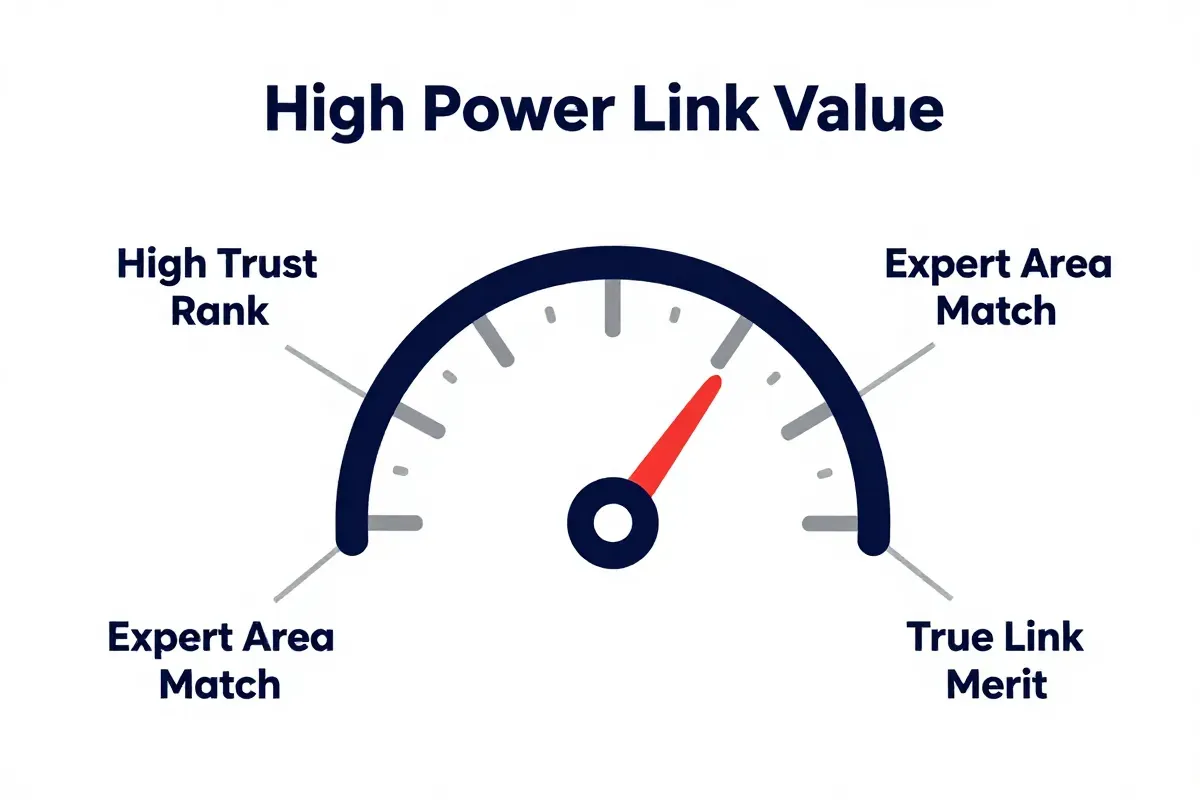
A high authority backlink is an inbound link originating from a credible and topically relevant website that Google considers a strong vote of confidence for your content. These links signal trustworthiness and expertise.
Google views these links as editorial endorsements, akin to a professional recommendation. The more quality links pointing to your site, the more Google trusts your content as trustworthy content.
In 2026, authority is practical, not abstract. It moves beyond just a high Domain Rating (DR) number. The true value of a link now ties directly to its genuine relevance within your specific niche.
A link from a site within your industry, even if it has a lower overall DR, often holds more weight than a link from an unrelated behemoth. It shows authentic connection. This helps new websites, especially.
Dofollow vs Nofollow: The real difference
Dofollow links directly pass PageRank and authority to the linked website, acting as a strong SEO signal, while nofollow links do not transfer this ranking power. This core difference impacts how Google interprets the relationship between two sites.
When a dofollow link points to your site, Google sees it as an endorsement of your content's quality and relevance. This "link juice" helps improve your search engine rankings over time. Every new website needs these authority votes.
Nofollow links, however, still offer value. They drive direct referral traffic and build brand awareness, even if they don't boost your SEO authority directly. Think of them as visibility multipliers.
Beyond the basic dofollow/nofollow distinction, Google also categorizes links to provide more context about their origin. We evaluate these additional types to understand their true impact. This helps in understanding the main types of seo links and their roles.
Link TypePasses Authority (Link Juice)Primary GoalGoogle DirectiveDofollowYesBoost SEO rankings & domain authorityStrong endorsement, trust signalNofollowNoDrive traffic, brand awarenessNo endorsement implied, often for less trusted or user-generated contentUGC LinksNo (usually)User-generated content attributionIndicates content originated from users (e.g., comments, forum posts)Sponsored LinksNo (always)Paid placements, affiliate marketingDiscloses commercial relationships (e.g., ads, paid reviews)
We always prioritize earning dofollow links from highly relevant sources. But a balanced backlink profile, including some nofollow links from high-traffic sites, remains important for holistic growth. Your strategy should blend both.
How Google's algorithm evaluates your links
Google's algorithm evaluates your links based on far more than just raw numbers; it assesses their quality, relevance, and contextual signals. This intricate process has evolved significantly since the early days of the web.
At its core, Google once relied heavily on PageRank, an algorithm conceived in 1998 that assigned a numerical "importance" score to web pages based on the quantity and quality of links pointing to them. PageRank is a link analysis algorithm that measures the relative importance of web pages, helping search engines rank them by considering the number and quality of links pointing to them.
Early SEO often focused on simply accumulating as many links as possible.
But that changed. Major updates like Panda in 2011 and Penguin in 2012 radically shifted the landscape. These updates cracked down on low-quality content and spammy link schemes, penalizing sites that tried to game the system. You can trace these foundational shifts in the historical algorithm updates.
Today, Google prioritizes topical depth and true user intent. A link from an authoritative, relevant site within your niche carries immense weight. Conversely, thousands of irrelevant, low-quality links can actually harm your standing.
We focus on earning links that truly serve user needs. Google sees these as strong endorsements of your content's helpfulness. It's about demonstrating your expertise and authority through genuine endorsements, not just link counts.
So, when approaching link building, scrutinize every potential connection. Ask yourself: does this link genuinely enhance the user's journey? Prioritize relevance and quality above all.
Why new websites struggle with authority
New websites struggle with authority because they simply lack the established trust signals and extensive backlink profiles search engines expect. Without a history of credible inbound links, Google has no strong reason to rank new content over older, more trusted domains.
This is a classic "chicken and egg" problem. You need links to rank, but you need to rank to get visible and attract links. Most sites require 40-50 quality backlinks to their homepage just to start competing.
Inner pages, crucial for long-tail traffic, need anywhere from 0-100 additional links to truly stand a chance against established competitors. We consistently see that a significant portion of new online ventures, often over 30%, have too few links to rank effectively for competitive terms.
New sites effectively operate from a position of zero authority. They haven't earned the trust score that older domains accumulate over years. This makes breaking into search results for any valuable keyword incredibly difficult.
It's not just about content quality; it's about perceived domain authority. Your site needs external votes of confidence. Without them, you're invisible.
This foundational challenge often leads founders to waste months on content that never sees the light of day. But you can actually build this foundation faster. It means understanding how to get new websites rank faster without years of effort.
We find that focusing on the right links, not just any links, accelerates this process.
How to get your first 10 backlinks using LaunchDirectories
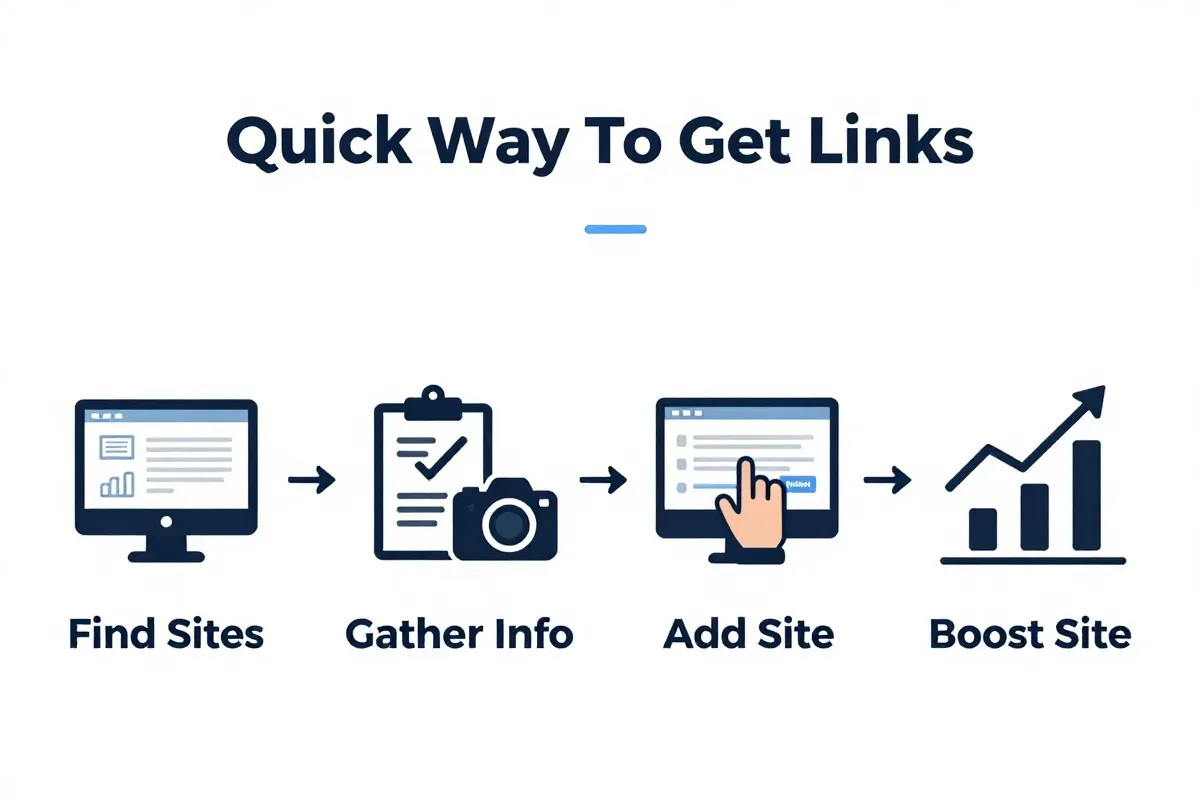
Getting your first 10 backlinks quickly means leveraging targeted startup directories through an efficient platform. We designed LaunchDirectories to streamline this essential process for new websites, helping you earn initial trust without wasting months.
Here's how to secure your first foundational backlinks using our platform:
- Discover High-Authority Directories. You need relevant, authoritative sources. We provide a curated database of 100+ high-authority startup directories. Browse and filter these to pinpoint the best fits for your niche.
- Prepare Your Product Information. Gather all essential details beforehand. This includes your product name, official URL, a concise description, and compelling screenshots. (Think of it as your digital press kit.)
- Submit Your Listings. Choose your submission method. You can manually select specific directories, or use our Auto Submit service. This automated submission option significantly speeds up the listing process.
- Optimize Site Metadata. For the best results, proper site metadata is crucial. Ensure your website's titles, descriptions, and schema markup are well-structured before submitting. This helps directories (and search engines) understand your content.
- Track Your Progress. After submission, monitor your backlink growth. We help you track search rankings and traffic increases directly attributable to these new links. This validates your efforts and shows immediate impact.
We built this process to cut the typical backlink acquisition time from weeks to days. It ensures your new site builds early authority quickly and effectively.
Content strategies that attract natural links
To attract natural backlinks consistently, you need to create content specifically designed for external reference and sharing. These aren't just standard blog posts; they are what we call link-worthy assets.
Think of deep-dive resources that solve a specific problem or provide unique insight. These pieces naturally draw attention from other websites in your niche.
Industry reports and detailed case studies act as powerful link magnets. They offer original research, actionable data, or proven methodologies that other creators want to cite as evidence. We’ve observed a single, authoritative report can generate more high-quality backlinks than ten generic articles.
Original infographics are another strong play. People process visual information faster. An original infographic that breaks down complex data or a process gets shared widely, often with a direct link back to your source. It simplifies information for busy readers.
Generic advice floods the internet. Instead, focus on data-backed content to prove your assertions. This means leveraging your own unique user data, conducting small surveys, or synthesizing publicly available datasets into fresh conclusions.
Such content provides genuine value. Other sites will link to it because it enhances their own content and validates their points.
You need to shift from merely publishing words to creating definitive resources. Prioritize content that serves as a cornerstone for others, establishing your brand as an indispensable source of information. This proactive approach ensures your website continually earns trust and authority.
with 100+ Directory Listings
Skip the grind. We'll submit your product to top directories so you get real users, feedback, and lifetime backlinks without lifting a finger.
Steps for building a link-worthy report
Building a truly impactful report requires a structured approach, starting with a clear focus and leveraging data that others haven't seen. This process involves several distinct phases, from initial concept to final promotion.
- Define a Niche-Specific Question: Start by identifying a gap in existing knowledge within your industry. This isn't about broad topics. Instead, pinpoint a specific, unsolved problem or an overlooked trend that your audience deeply cares about. For example, "What are the biggest lead-gen hurdles for SaaS startups under $1M ARR?"
- Gather Original Data: Your original research is the backbone of any link-worthy industry report. Conduct focused surveys within your target demographic. (Even a small sample, say 100-200 respondents, can yield valuable, fresh insights.) Alternatively, synthesize disparate public datasets (government reports, academic papers) into novel conclusions. This unique data provides an unparalleled reason for others to link back.
- Visualize Key Findings: Present your complex data in easily digestible formats. Develop clear, professional charts, graphs, and potentially even original infographics. Visualizations make the report highly shareable and help busy readers grasp key takeaways instantly. They also make your findings easier to cite.
- Craft Compelling Narratives: Beyond raw data, your report needs a story. Use real-world case studies (anonymized if necessary) to illustrate your findings and provide concrete examples. This humanizes the data, making your insights more relatable and actionable for the reader.
- Develop Actionable Recommendations: Don't just present problems; offer solutions. Your report should culminate in clear, practical recommendations that readers can implement immediately. This positions your brand as an authority not just on understanding issues, but on solving them. It demonstrates true expertise.
- Initiate Industry Journalist Outreach: Once your report is polished, actively reach out to journalists, industry bloggers, and influential figures in your niche. Highlight your unique findings and explain why their audience needs to see this original research. A personalized email detailing a single, compelling statistic from your report often works best.
We consistently see that a well-executed outreach campaign, focused on genuine value, dramatically increases the initial exposure and subsequent backlink acquisition for these kinds of deep-dive assets.
Outreach tactics for sites with zero authority
New websites often stumble by attempting "link exchanges," a tactic Google largely ignores. Instead, focus your initial outreach strategy on providing genuine value, not asking for reciprocal favors. This builds authentic connections and earns links that matter.
Why 'Link Swaps' Don't Work
Asking for a direct link swap ("You link to me, I link to you") sends a clear low-quality signal. Google's algorithms are sophisticated enough to recognize these artificial patterns. They offer little to no ranking benefit.
Your energy is better spent on efforts that naturally attract attention. You're trying to prove you belong in the conversation.
The 'Value-First' Outreach Strategy
Building authority from scratch requires smart, targeted effort. Forget about mass emails asking for links. Focus on two proven tactics: claiming unlinked brand mentions and engaging in broken link building.
Claiming Unlinked Brand Mentions
An unlinked brand mention is when another website references your company, product, or a unique concept you coined, but doesn't include a hyperlink back to your site. These are low-hanging fruit.
- Monitor Your Mentions: Use tools like Google Alerts or Mention to track your brand name, founder names, or unique product features.
- Verify the Context: Confirm the mention is positive and relevant. Does it make sense for them to link to you?
- Craft a Simple Ask: Reach out to the author or editor with a polite, concise email. Thank them for the mention. Gently suggest adding a link for their readers' convenience. "I noticed you mentioned [Your Brand] in your piece on [Topic]. We appreciate the shout-out! For readers who want to learn more, adding a link to [Your Specific Page] might be helpful."
This tactic works because you're not asking for a new endorsement; you're just formalizing an existing one.
Leveraging Broken Link Building
Broken link building is finding dead links on authoritative websites, then offering your relevant, high-quality content as a replacement. It's a win-win scenario. The site fixes its broken link, and you earn a backlink.
- Identify Niche Authorities: Create a list of 5-10 top blogs, industry publications, or resource pages in your field. Think sites with high domain authority.
- Scan for Dead Links: Use a broken link checker (like Ahrefs Broken Link Checker or the Check My Links Chrome extension) on these authority sites. Filter for high-value pages.
- Create Superior Content (If Needed): Does your site already have content that could replace a broken link? If not, develop it. Make sure it's genuinely better or more current than the original dead page.
- Personalize Your Outreach: Email the site owner. Point out the broken link you found (include the URL). Then, suggest your piece as a valuable, up-to-date alternative. "I was reading your article on [Topic] and noticed a broken link at [Broken Link URL]. We recently published a comprehensive guide on [Your Relevant Topic] here: [Your Content URL]. It might be a good fit as a replacement."
This approach demonstrates that you've done your homework. You've provided a solution to their problem. It's how we've helped many of our clients start earning high-authority links that actually impact rankings from day one.
Start with these specific, value-driven outreach tactics. You’re not begging for links; you’re offering solutions. Begin by scanning your niche for opportunities.
How to find and fix broken links
Finding and fixing broken links means identifying dead external links on high-authority websites, creating superior content to replace them, then pitching your asset to the site owner. This approach works incredibly well for new sites because you’re solving a problem for them, not just asking for a favor.
- Pinpoint Influential Competitor Content. Instead of general authority sites, prioritize specific pages from competitors or niche leaders that already rank well and have numerous backlinks. Use SEO tools (like Ahrefs or Semrush) to find pages with high Domain Rating (DR) or many referring domains. This ensures you target valuable link opportunities.
- Uncover 404 Errors on These Pages. With your target pages in hand, run them through a broken link checker. Tools like Ahrefs' Broken Link Checker, Semrush's Site Audit, or even browser extensions like Check My Links can quickly identify 404 error pages. Focus on external links that are no longer working.
- Develop Superior Link Replacement Content. Assess the broken link's topic. Do you already have a piece that could serve as a better, more current alternative? If not, create one. Your content must genuinely outperform the original in quality, depth, or freshness. This isn't just a swap; it's an upgrade.
- Craft Your Outreach Email. Contact the site owner or editor directly. Briefly explain that you found a broken link on their site (include the exact URL of the broken link and the page it was on). Then, politely introduce your content as a relevant, updated link replacement. Frame it as an easy fix for their readers' experience.
We often see the highest success rates when you demonstrate tangible value. You're offering a solution, saving them research time.
Start your broken link audit today by pinpointing the top five competitor pages in your niche that are currently attracting the most backlinks.
Strategic guest blogging for niche relevance
Strategic guest blogging prioritizes placing content on highly relevant niche websites to secure contextual links that genuinely enhance your site's authority. This isn't about volume; it's about focused influence within your specific industry.
One strategic guest post on an authoritative niche site can outperform dozens from generalist "link farms." Google’s algorithm intensely values topical alignment. It signals true expertise.
We've found that sites attracting audiences identical to yours offer the most potent backlinks. (This often means sites with engaged forums or a passionate community.) Such links transmit more relevance.
Identifying High-Impact Guest Post Opportunities
Finding the right platforms for your content requires a targeted approach. We consistently focus on quality over sheer quantity.
- Pinpoint Audience Overlap. Look for sites whose primary readership directly matches your ideal customer. A high overlap ensures your contextual links introduce your brand to the right people. This means less wasted effort.
- Assess Niche Authority. Check the site's Domain Rating (DR) or Authority Score, but also its content quality and engagement. Does it consistently publish high-quality, in-depth articles related to your niche relevance? Look for a vibrant comment section.
- Review Existing Guest Posts. Examine their previous guest contributions. Do they allow natural link placement? Are the posts well-written and integrated, or do they feel tacked on? This reveals their editorial standards.
- Confirm Editorial Standards. High-authority niche sites have strict content guidelines. Be prepared to invest significant time in crafting an original, well-researched piece that truly adds value to their audience. Quality is non-negotiable here.
The real power of niche relevance lies in the contextual links embedded within the body of a valuable article. These links feel natural to readers and pass maximum "link juice" to your domain.
But this strategy demands patience and superior content. You won't see results overnight, and securing placements often requires several iterations with editors.
Start by identifying three niche websites that speak directly to your target audience and review their existing content for potential guest post opportunities.
with 100+ Directory Listings
Skip the grind. We'll submit your product to top directories so you get real users, feedback, and lifetime backlinks without lifting a finger.
Anchor text optimization for new websites
Anchor text tells search engines exactly what the destination page is about, directly influencing how effectively your backlinks transmit authority. For new websites, a smart anchor text strategy is crucial to appear natural and avoid manipulation penalties.
Google's algorithms analyze anchor text to understand the context and relevance of a linked resource. Mismanaging this signal can actually hinder your ranking efforts.
You should use a varied and natural mix of anchor texts, especially when starting out. This diversity signals authenticity.
- Branded Anchors: Use your brand name (LaunchDirectories, for instance). This builds recognition and is inherently safe.
- Naked URL Anchors: Simply use the URL itself (https://yourwebsite.com). These look organic in content.
- Generic Anchors: Phrases like "click here," "read more," or "learn about this" are common and low-risk.
- Topical Anchors: Use variations of your target keywords, but keep them broad and descriptive (e.g., "SEO strategies for startups" instead of just "SEO strategies").
The biggest mistake new sites make is over-optimizing with exact match keywords. This flags your links as potentially manipulative to Google. New domains lack the authority to pull this off without triggering alarms. We've seen clients struggle when they push this too hard initially.
Focus on natural contextual relevance. The goal is to provide value, not force keywords into every link.
You need to build trust first. An aggressive anchor text profile too early on looks suspicious. We recommend a profile where branded and naked URLs make up the majority of your early links. Then, gradually introduce more descriptive, but still varied, topical anchors.
Start by auditing your existing backlinks, if any, and note the anchor text distribution. Plan your next 10-20 backlinks to prioritize branded and naked URL anchors.
How E-E-A-T influences your link building
E-E-A-T directly underpins your ability to earn high-quality backlinks by establishing you as a trustworthy and knowledgeable source. Without demonstrating Experience, Expertise, Authoritativeness, and Trustworthiness, other sites have no reason to cite your content.
People link to content from individuals or brands they perceive as legitimate and informed. This isn't just about what you say, but also about who is saying it.
Think about it: would you cite a random blog or a verified industry expert?
Building E-E-A-T often starts where your audience gathers. Engage deeply in niche communities. This could be specific subreddits, LinkedIn groups, or specialized industry forums.
Share valuable insights, answer questions, and contribute genuinely to discussions. Don't just drop links. Become a recognized contributor first.
This consistent engagement builds your credibility within that community. As your reputation grows, people start recognizing your name or brand. They then become more receptive to your content.
Showcasing true expertise through detailed, firsthand experience differentiates you. This means sharing case studies, unique data, or practical advice only someone doing the work would know.
We see that founders who actively participate in these spaces often attract natural links over time. Their expertise gets noticed, and people organically reference their work. It takes time, but the payoff is substantial, securing links that purely transactional outreach often misses.
Quick checks that founders skip
Ignoring your site's technical health sabotages even the best backlink efforts, as search engines discount links to poor user experiences. Your website is the destination for any acquired link. If that destination delivers a frustrating experience, Google simply won't value those inbound signals.
Founders often focus solely on acquiring links, forgetting the foundation. A backlink points to your content, yes. But Google also evaluates the quality of the page it points to.
Why Google Cares About Your Destination Page
Google’s primary goal is serving relevant, high-quality results to users. A site with technical issues doesn't offer a good user journey. This directly impacts how much authority a new backlink can transfer.
Think of it like this: a link is a recommendation. Would you recommend a broken service? Google wouldn't either.
We consistently see new websites struggle to gain traction, even with decent link acquisition. Often, the problem lies beneath the surface, with fundamental site quality.
Mobile-Friendliness is Non-Negotiable
Your site absolutely must display perfectly on any device. Over 60% of web traffic now comes from mobile devices, according to Statista. If your site isn't responsive, you're alienating the majority of potential visitors.
Google uses mobile-first indexing. A poor mobile experience signals low quality across the board.
Core Web Vitals Signal Quality
These metrics directly measure user experience on your site. Largest Contentful Paint (LCP), First Input Delay (FID), and Cumulative Layout Shift (CLS) are critical. They impact everything from load times to visual stability.
Sites with failing Core Web Vitals often see their link equity devalued. It's a clear signal to search engines.
We regularly audit client sites where improving these metrics instantly boosts existing link effectiveness.
Site Speed Impacts Everything
Slow loading pages frustrate users and tell Google your site isn't worth prioritizing. Even a few extra seconds can lead to significant bounce rate increases. (This is particularly true for e-commerce sites).
Users expect instant gratification. Your site speed directly reflects your technical diligence.
If your pages crawl, Google factors that into your overall site quality score. This dampens the power of your hard-earned backlinks.
What You Should Check First
Before you even think about your next outreach email, conduct these quick checks.
- Run a Google Mobile-Friendly Test: Confirm your site passes. This is a baseline requirement.
- Analyze Core Web Vitals: Use Google Search Console to identify specific page issues. Focus on fixing LCP first.
- Test Site Speed: Tools like PageSpeed Insights or GTmetrix give actionable advice. Identify bottlenecks.
We find that addressing these foundational issues first makes every future backlink campaign more impactful. You're not just building links; you're building value on a solid platform. Ensure your site is a destination worth recommending.
What results look like in the first 30 days
Achieving top search rankings in 30 days is largely unrealistic for most new sites. Instead, focus on early indicators: referral traffic and increased brand mentions.
Link building is a marathon, not a sprint. We often see clients fixated on immediate ranking jumps, but the real wins start elsewhere.
Early Wins to Track
You won't typically see your target keywords hit page one overnight. But you will see other valuable signals confirming your efforts are working.
- Direct Referral Traffic: Check your analytics for immediate visitor spikes from new backlinks. A single link from a high-authority site can drive dozens of targeted users. (This is quality, not just quantity).
- Brand Mentions & Niche Visibility: Monitor for non-linked mentions of your brand or content. This "existence proof" shows your presence is growing within the niche ecosystem. It confirms your content resonates.
- Keyword Movement (Lower SERPs): While not page one, observe keywords moving from page 5 to page 3, or from unranked into the top 100. Google Search Console provides this data. This initial shift is critical for future gains.
Setting Realistic Expectations
Many founders expect instant gratification. Link building, however, compounds over time.
The first 30 days are about laying groundwork, not celebrating massive organic wins. It's about getting noticed and starting the trust accumulation process.
"Your goal isn't just a link; it's a vote of confidence in your brand."
We've found that early referral traffic is often a better quality signal than a slight bump in a vanity keyword position. These are users actively seeking out what you offer.
Building Long-Term Value
These initial activities establish your site as a player. They generate early signals for search engines.
It's the steady drumbeat of consistent, high-quality links that builds enduring long-term value and ultimately drives significant organic growth. Don't underestimate the power of consistent effort.
Your Next Step
Review your analytics daily for referral traffic from new links you've acquired. Use Google Search Console to track keyword position shifts for your target terms, even if they're small. Use these early data points to refine your outreach strategy for the next 30 days.
How to identify and disavow toxic links
Toxic links are low-quality, unnatural backlinks designed to manipulate search rankings. While Google often ignores most spammy links automatically, certain scenarios still warrant using the Disavow tool. You need to know the difference.
What Makes a Link "Toxic"?
Spotting a toxic link involves looking for specific red flags that scream 'spam' to search engines. These aren't just low-quality; they actively undermine your site's authority.
- Link Farms & Spam Networks: These are sites built solely to pass link juice, often with no real content or relevance.
- Irrelevant Foreign Language Sites: Backlinks from domains in languages completely unrelated to your niche or target audience.
- Over-optimized, Exact-Match Anchor Text: Unnatural frequency of your exact keywords in the anchor text across many different domains.
- Low-Quality Directories: Obvious spammy, non-moderated directories that accept any submission. (This is distinctly different from highly-vetted, niche-specific directories).
- Poor Domain Authority & Traffic: Sites with zero organic traffic, a low Domain Rating (DR), or questionable trust scores.
Disavow or Ignore? Google's Evolving Stance
Google's algorithm has significantly improved at identifying and neutralizing spam. It generally devalues or ignores most low-quality links on its own, meaning disavowing isn't always necessary. Otherwise, stay calm.
You should consider disavowing only if you have a manual action penalty from Google for unnatural links, or if you're experiencing a deliberate negative SEO attack. (Most sites never face these issues).
Ignoring low-quality links is often the best default strategy. Focus your energy on building genuinely high-quality backlinks instead.
How to Use Google's Disavow Tool
If a manual penalty demands action, or you're combating a sustained negative SEO campaign, follow these steps to submit a disavow file to Google. This tells Google to ignore specific domains when evaluating your site.
- Export Your Backlinks: Use Google Search Console to download a comprehensive list of your incoming links. (Tools like Ahrefs or SEMrush can provide an even more complete picture).
- Identify Toxic Domains: Manually review the list or use a backlink audit tool to flag obvious spam sources. Look for patterns indicative of toxic links.
- Create Your Disavow File: Compile a plain .txt file listing each toxic domain. Prefix each domain with domain: (e.g., domain:spammysite.com). This ensures all links from that domain are ignored.
- Upload to Google: Navigate directly to the Google Disavow Tool in Search Console and upload your prepared .txt file.
- Monitor & Reconsider: Google processes these requests over several weeks or even months. Watch for manual action removals or any positive shifts in your organic rankings.
This process can be time-consuming and requires careful attention. We built LaunchDirectories to focus on high-authority, vetted listings, proactively preventing the need for complex disavow processes in the first place by ensuring quality from the start.
Don't rush to disavow every mediocre link. Instead, focus your energy on consistently acquiring high-quality, relevant backlinks from trusted sources. And if you suspect a manual penalty, prioritize a thorough backlink audit immediately.
Ready to build high-quality backlinks?
We'll submit your product to 100+ directories and build valuable backlinks for your SEO. Save hours of manual work so you can focus on what's important — selling and building, not submitting boring forms.