People keep asking if directory backlinks are dead for SEO in 2026. They aren't. But the strategy has changed dramatically.
Before Google’s Penguin update, backlinking often prioritized sheer quantity. You’d blast submissions everywhere.
That approach is a garbage fire today. Instead, focus on quality over quantity.
Trusted, niche-relevant directories still hold serious weight. We see it with our clients; the first thing Repute Post does for new projects is list them in appropriate directories.
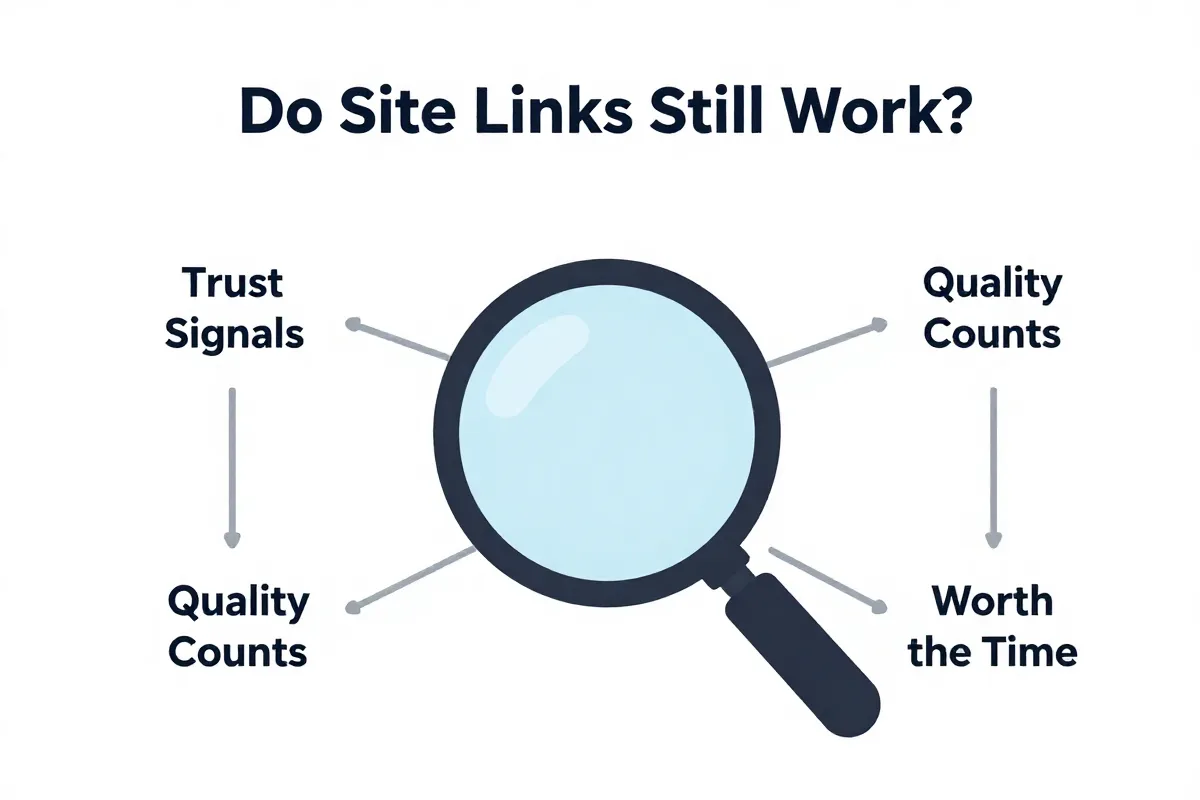
Think of a modern directory not as a giant wall of random flyers, but as a city’s official business registry. It's a place for legitimate trust signals.
And because 73.2% of SEO experts believe backlinks influence AI search results, you can’t ignore quality signals here. Citations are a top 5 ranking factor for local search in 2026, too.
We’ve seen a plumbing company jump from page three to the local pack within eight weeks by simply cleaning up their messy citation profile. You need to focus on optimized listings with accurate, consistent details across platforms.
This shift from bulk submission to strategic placement is critical. Want to understand where to start? Check out our guide on finding the Top 12 Website Submission Directory Platforms For 2025.
Do directory backlinks still work for SEO in 2026?
Yes, directory backlinks still work for SEO in 2026, but you must emphasize quality over quantity. They're not a "magic bullet," but they are foundational.
Too many founders write them off as a waste of time. The truth?
Directory links act as essential trust signals. Think of them as digital breadcrumbs confirming your business's existence and legitimacy. This is especially vital as search engines become increasingly reliant on AI to assess website authority.
And because 73.2% of SEO experts now believe backlinks significantly influence your chances of ranking in AI search results, ignoring directory submissions is a mistake.
Here's what you need to focus on:
- Claim existing listings (Yelp, Yellow Pages, etc.)
- Ensure your NAP (Name, Address, Phone number) is consistent everywhere.
- Pursue niche-specific directories with real editorial oversight.
Directory submissions shouldn't exist in isolation. We find they work best when combined with a balanced backlink profile that includes guest posts and niche edits. Don't just build links; build a reputation. And ensure you learn about "Dofollow Vs Nofollow Backlinks What You Must Know" for the best strategy.
How the Google Penguin update changed directories
The Google Penguin update flipped directory submissions on their head. Before, quantity was king.
Google’s algorithm penalized sites engaging in manipulative link schemes. This was a direct shot at the "spray and pray" approach to directory submissions. Google's official stance on link schemes and manipulative building practices can be found in their documentation.
Here's the deal:
- Pre-Penguin: The focus was on sheer volume. The more links, the better, regardless of the directory's quality.
- Post-Penguin: Google started devaluing links from low-quality, spammy directories. Sites that relied on these links saw their rankings plummet.
The update forced SEOs to rethink their strategy. It wasn’t just about having backlinks; it was about having good backlinks. The algorithm began favoring links from authoritative, relevant sources. Relevance became the new currency.
Now, directory SEO is about more than just "link juice." It's about establishing your business's E-E-A-T (Experience, Expertise, Authoritativeness, and Trustworthiness). A citation in a trusted local directory is a signal of legitimacy. It helps build trust with both search engines and potential customers.
What does this mean for you?
Focus on claiming and optimizing listings in reputable directories. Make sure your NAP (Name, Address, Phone Number) information is accurate and consistent across all platforms.
Modern directories have evolved. They attract organic traffic and connect buyers and sellers. Think of them as key components of your local SEO strategy, not just digital phone books.
For example, if you're a SaaS business, you might find value in listing your product on specialized platforms. Check out our list of "12 Best Free Saas Directories For Seo Visibility In 2025" to see what I mean.
Next, make sure you go and read the "Backlink Building Tips That Secure Real Authority".
The shift from link quantity to link quality
Directory backlinks aren't about volume anymore; it's about targeted quality. One thousand low-quality links from link farms can actively damage your SEO.
Think of it like this: associating with "bad neighborhoods" online taints your reputation. Google's Penguin update specifically targeted these "toxic backlinks," penalizing sites that relied on them. It is still doing this today.
Here's why quality trumps quantity:
- Relevance: A backlink from a niche-relevant directory signals expertise.
- Authority: Links from trusted directories pass more "link juice" and boost your Domain Rating (DR). (DR is an Ahrefs metric representing a website's backlink profile strength on a logarithmic scale from 0 to 100).
- Trust: High-quality directories have editorial oversight, ensuring only legitimate businesses are listed.
The risk?
Link farms and low-quality directories can get your site penalized. These sites often have thin content, irrelevant listings, and suspicious backlink profiles. Google sees these as attempts to manipulate search rankings and will adjust your ranking accordingly. Don't let cheap backlinks drag you down.
So, focus on building a portfolio of backlinks from reputable, relevant directories. Ensure your listings are accurate and optimized for your target keywords. This approach will yield far better results than chasing a high volume of low-quality links. It’s not easy, because each directory has its own unique requirements; from creating individual user accounts, adjusting description lengths, and formatting images, to filling out submission forms that often look completely different from one another. And if you're scaling a SaaS startup, check out "Your Guide To Saas Growth Through Directory Submissions" before you do anything else.
Why link juice from directories helps your site authority
"Link juice" is the power or equity passed from one site to another through hyperlinks. And when directories link to your site, they are essentially passing authority.
This is huge, especially for new domains. Think of it as a vote of confidence that can help you exit the "sandbox" (the period where Google hesitates to rank new sites).
Here's the thing:
The more reputable the directory, the more potent the "juice." A link from a well-established directory with a high Domain Rating (DR 70+) carries significantly more weight than one from a spammy, low-quality site.
But it's not just about DR. Topical authority matters, too. If a directory is highly relevant to your niche, that link signals to Google that you're a player in that space. It's a confirmation of your legitimacy, and helps build trust.
To sum up:
- Links from authoritative directories act as trust signals.
- They help new domains escape the "sandbox" faster.
- And they contribute to your overall topical authority.
Don't underestimate the power of a well-placed directory link.
with 100+ Directory Listings
Skip the grind. We'll submit your product to top directories so you get real users, feedback, and lifetime backlinks without lifting a finger.
Dofollow vs Nofollow backlinks
Dofollow links pass "link juice"; nofollow links do not. But writing off nofollow links completely misses the point of a natural link profile.
A dofollow link tells Google to credit your site with some of the linking site's authority. Nofollow, on the other hand, tells Google not to pass on that authority.
And 56.0% of SEO experts don’t even think Google can identify and discount paid links effectively.
Here's the catch:
A site with only dofollow links looks unnatural. It screams, "I'm gaming the system." Google's algorithm is smart enough to recognize this and penalize you for it.
Nofollow links can drive referral traffic and brand awareness. A citation on a high-traffic directory, even if it's nofollow, puts your business in front of potential customers. Those customers might not have found you otherwise.
For a more detailed breakdown of dofollow and nofollow link mechanics, read this article.
How Domain Rating influences ranking power
Domain Rating (DR) is an Ahrefs metric that represents a website's backlink profile strength. A directory with a DR of 70+ is significantly more valuable than one with a DR of 10.
Context matters, however. A niche-relevant directory with a DR of 40 might still be a better option than a general directory with a DR of 75, especially if it’s a niche you are trying to target.
Directories with higher DR scores tend to pass on more "link juice," boosting your own site's authority. But how is Domain Rating calculated? According to Ahrefs' definition of Domain Rating and how it is calculated, it's based on the number and quality of backlinks pointing to a website, as well as the DR of those linking sites.
Therefore, focus on directories that not only have a high DR, but also a strong reputation within your specific industry. These links signal expertise and help build topical relevance.
How AI search algorithms impact directory value
AI search algorithms use directory data for bedrock verification. They cross-reference info to confirm your business is legit and relevant. This wasn’t a big deal in 2020. Now? Vital.
SGE (Search Generative Experience) and AI agents crawl directories. They're not just looking for links; they're mining for consistent NAP data (Name, Address, Phone number). A discrepancy across platforms is a red flag.
Here's why this matters:
- Data Verification: AI needs reliable data to avoid hallucinations. Directories are often seen as trusted sources for basic business information.
- Niche Relevance: AI algorithms analyze the categories and keywords associated with your directory listings to understand your business's niche.
- AI Discovery: Modern directories are evolving into AI-driven discovery platforms, connecting buyers and sellers in new ways.
Think of it this way: if Google’s AI can't verify your business details in a few trusted directories, why should it recommend you to potential customers? The bot has to trust you first.
Consider, too, that citations (NAP mentions) are a top 5 ranking factor for local search this year. AI algorithms treat consistent and accurate directory listings as a signal of trustworthiness and authority.
But keep this in mind: you can't automate the quality. A high volume of directory links won't save you if the information is wrong.
Next step? Claim your existing listings and scrub them for errors. Accuracy first, always.
Types of directories that move the needle in 2026
In 2026, a healthy backlink profile includes a mix of directory types. A blended strategy strengthens your online presence.
Here's a breakdown:
- Niche Directories: These are gold. If you're selling accounting software, a listing in a directory for CPAs tells Google (and potential customers) you're legit.
- Local Directories: Essential for brick-and-mortar businesses. Claim your listings on Yelp, Google Business Profile, and other local platforms. It impacts local SERPs.
- General Directories: Think of these as foundational. They're not going to move mountains, but they establish a basic level of credibility.
The mix matters. A site with only niche directory links looks unnatural. General directories broaden your profile and make it appear more organic.
The bigger issue?
Many directories have decayed into link graveyards. Focus on finding active, well-maintained directories with editorial oversight. This ensures your listing is seen by real people, not just bots. Because modern directories sit at the intersection of SEO, marketplaces, AI-driven discovery, and recurring revenue models, so choosing wisely is key.
Local citations and the importance of NAP
Citations are online mentions of your business's Name, Address, and Phone number (NAP). Get this wrong, and kiss local search rankings goodbye.
NAP consistency across the web, especially in key directories like Yelp and Yell (formerly Yellow Pages), isn't just good practice; it’s a top 5 ranking factor for local SEO. Google uses this data to verify your business's existence and relevance. If the bot can't trust you, neither will customers.
Consider this:
- Inconsistent NAP data confuses search engines.
- It hurts your chances of appearing in the local pack.
- And it erodes customer trust.
Here's what happens when you get it right: a plumbing company jumped from page three to the local pack within eight weeks just by cleaning up their citation profile. It's a relatively simple fix that can yield outsized results.
The bigger issue?
Scaling this manually.
Each directory requires its own submission, and each submission requires perfect data alignment. We built our platform to automate this. Other tools blast your information everywhere without regard for accuracy, but we prioritize NAP consistency above all else.
Next step? Audit your existing citations across the web.
Niche platforms for SaaS and Startups
Niche directories give your SaaS startup more relevant exposure than general business listings. Think of it as laser-targeting your audience instead of casting a wide net.
For a SaaS company, a listing on Product Hunt, Indie Hackers, or G2 delivers more qualified leads. General business directories, while still useful for basic citation building, simply can't match the industry-specific reach of these niche platforms.
The core benefits?
- Targeted Traffic: Potential customers actively seeking SaaS solutions.
- Higher Conversion Rates: Visitors are pre-qualified and more likely to convert.
- Valuable Feedback: Many niche directories include review systems, providing valuable insights for product development.
This means your product is shown to the right people, and is being looked at by the right people.
But, don’t forget each directory has its own requirements. There can be account creations, image formatting and descriptions to write, all of which take time. If this feels like a lot, we built our platform to automate this. We handle the tedious parts, so you can focus on building your product.
Now, the next step is to audit your existing citations. This ensures that your business information is accurate and consistent across all platforms.
How to spot a high quality directory
Spotting top-tier directories requires a keen eye. Focus on metrics that reveal legitimacy and value for your SEO efforts.
Here's a checklist:
- Organic Traffic: Use tools like Semrush or Ahrefs to estimate a directory's organic traffic. High traffic suggests real users, not just bots, are visiting the site. Look for consistent traffic patterns over time, too. Spikes may indicate artificial traffic (avoid those).
- Low Spam Score: Moz's Spam Score indicates the percentage of sites with similar features we've found to be penalized or banned by Google. Aim for directories with a score below 4%.
- Manual Moderation: Look for directories that have clear editorial guidelines. These directories often have stricter submission requirements. They may take longer to approve listings, but this process ensures higher quality. And Google will reward the wait.
- Niche Relevance: Is the directory focused on your specific industry or location? Niche-relevant directories provide more targeted traffic and send stronger relevance signals to search engines. General business directories are okay, but niche wins.
- Backlink Profile: Analyze the directory's backlink profile using Ahrefs. Look for a mix of high-quality, authoritative links from diverse domains. A healthy backlink profile indicates the directory itself is trusted by Google.
The bigger issue is avoiding the temptation of "easy" links. Low-quality directories might offer instant approval and promise guaranteed results, but they can damage your site's reputation in the long run. Don't fall for it. Prioritize quality and relevance over quantity. This is why 81% of marketers prefer building quality backlinks over quantity.
Signs of a healthy user community and reviews
A directory brimming with active users and recent reviews is worth its weight in digital gold. A dead directory? Less than useless.
User reviews and community engagement are key indicators of a directory's health. After all, a directory's primary function is to connect buyers and sellers. If no one is using it, it’s a ghost town.
So, how do you spot an active community?
- Recent Reviews: Look for directories with recent reviews and testimonials. Stale reviews (older than 6-12 months) suggest the directory isn't actively maintained.
- Active Forums/Comments: Does the directory have a forum or comment section where users can interact? Active discussions indicate a vibrant community.
- Responsiveness: Do directory administrators respond to user inquiries and feedback? A responsive team signals commitment to the platform.
This matters because Google's AI algorithms prioritize user experience. A directory with genuine user engagement is seen as more trustworthy and relevant. That means it passes on more "link juice" and boosts your SEO. It's a feedback loop.
And remember, directories are evolving from digital phone books to key components of local SEO strategy in 2026. Don't settle for anything less than a thriving community.
Red flags of modern link farms
Red flags are everywhere. Dodgy directory practices damage your brand, so tread carefully.
Think of the web as a real neighborhood. Avoid the shady corners.
Here’s what to watch for:
- Hidden “write for us” pages with a low quality bar. These sites are just content mills churning out garbage.
- Sites linking to unrelated niches. Seeing links to gambling or pharmaceuticals on a site about accounting software? Run.
- No real physical presence or contact info. Transparency matters.
These are hallmarks of automated directories. Avoid those. If the site isn’t actively managed, your listing will be buried under spam. A healthy backlink profile strengthens your SEO efforts. Steer clear of the "bad neighborhood" sites.
with 100+ Directory Listings
Skip the grind. We'll submit your product to top directories so you get real users, feedback, and lifetime backlinks without lifting a finger.
Results from real world directory link building
Directory link building translates to quantifiable results, but it’s not a fire-and-forget exercise. Think investment, not expense.
A single, high-quality backlink now averages $508.95. And competing in competitive niches demands a minimum monthly SEO budget of $8,406.
Here’s why this spend is justified:
- Increased Traffic: Expect a measurable uptick in organic traffic, particularly from local searches.
- Higher Rankings: Watch your search engine rankings climb as your domain authority increases.
- Improved Conversions: Translate that increased traffic into tangible business outcomes, such as leads and sales.
However, these gains hinge on a strategic approach, not a scattershot one. Focus on directories with real editorial oversight and a thriving user base.
And resist the temptation to cut corners with cheap, automated submissions. Those can backfire, tanking your rankings and harming your brand’s reputation. Instead, carefully vet each directory, optimize your listing, and track your results. Done right, directory link building yields a significant return on investment.
Next, audit your existing citations for consistency. And for a deep-dive into what really moves the needle, see our "Backlink Building Tips That Secure Real Authority".
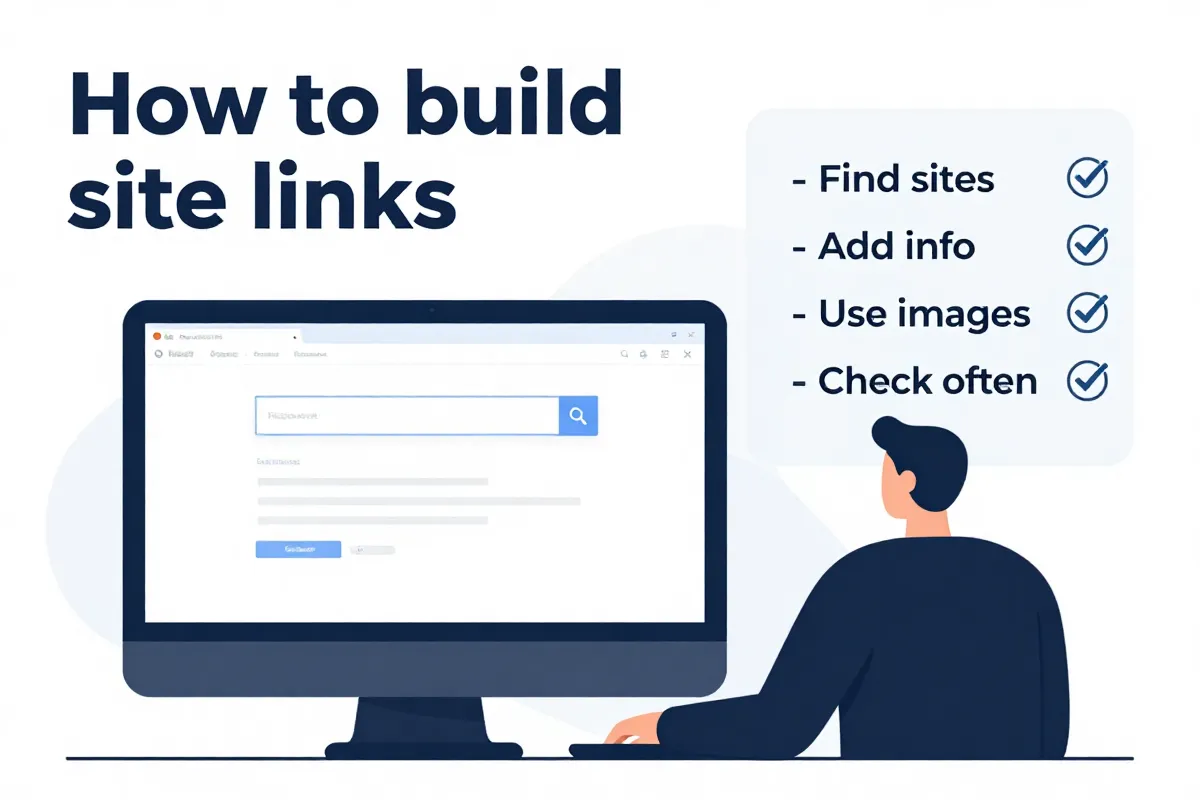
How to build directory links the right way
Optimized listings with unique descriptions and high-quality images are non-negotiable. Don’t even waste your time with the alternative.
Here's the breakdown:
- Unique Descriptions: Never copy-paste. Google hates duplicate content, and so do users. Tailor each description to the specific directory, highlighting the most relevant aspects of your business.
- High-Quality Images: Use professional-grade photos and logos. Blurry or pixelated images scream "amateur." Invest in professional shots, or use AI upscaling tools to enhance existing images.
- Complete Business Details: Provide accurate and up-to-date information. This includes your address, phone number, website URL, and hours of operation.
The sheer amount of time this takes is why so many founders give up. But consider this: a study by the IZA Institute of Labor Economics found that more intelligent people hate doing the same things repeatedly. So, what can you do?
Manual submission is a grind. Each directory has its own unique form, its own formatting rules, and its own submission process. We built our platform to automate the heavy lifting and let you concentrate on higher-value tasks. After all, time spent building a business is more valuable than time spent doing tedious tasks.
Comparison of top website submission platforms
Manual submission is a time sink; founders waste weeks on something we automate in hours. Here's how the options break down.
- Manual Submission: Prepare to bleed time. Each directory requires account creation, unique descriptions, and custom image formatting. It’s tedious and prone to errors.
- Generic Agencies: These blast your listing to hundreds of directories. The problem? Most are low-quality or irrelevant. You get a ton of links, but they can hurt more than help.
- Curated Platforms: We (LaunchDirectories) focus on high-authority startup directories. Our platform automates submission to relevant directories. This saves time while improving your backlink profile.
The bigger issue is relevance.
Generic agencies don't care if a directory is a fit for your business. They're just chasing numbers. This dilutes your backlink profile and can signal to Google that you're trying to game the system. Bad move. We built our platform to avoid this.
Consider it this way: would you rather have 100 links from spammy sites or 10 links from high-authority, niche-relevant directories? I prefer the latter. So does Google.
And if you’re looking for a list of the most effective platforms for directory submissions, check out this 2025 roundup to see what the market is offering and how platforms are continuously adapting to user needs.
Generic agencies also provide very generic results.
Comparison Table: Directory Submission Options
| Feature | Manual Submission | Generic Agencies | Curated Platforms (LaunchDirectories) |
|---|---|---|---|
| Time Investment | High (weeks) | Low (initial setup) | Medium (account setup, content review) |
| Quality of Links | Potentially high (if done meticulously) | Low (many irrelevant, spammy directories) | High (niche-relevant, authoritative directories) |
| Relevance | High (if carefully selected) | Low (little to no targeting) | High (algorithm ensures niche relevance) |
| Risk of Penalties | Low (if quality maintained) | High (due to low-quality links) | Low (focus on quality over quantity) |
| Automation | None | High (but indiscriminate) | Selective (prioritizes quality and relevance) |
| Cost | Time (unpaid hours) | Varies (often low upfront cost) | Subscription based (focuses on quality directories) |
Because of the high cost to acquire a backlink, founders need to optimize their approach.
We designed our platform to give founders a way to get the high-authority startup directories they need, without the manual grind. It's not the cheapest option, but it's cheaper than spending $508.95 for a single backlink from an agency.
What's next? Start by auditing your existing citations and identify gaps in your backlink profile.
Common questions about directory SEO
Common questions about directory SEO are frequently asked, especially from those new to the process. There are a lot of strange beliefs about how directory SEO functions.
Does Google penalize for directories? No, not inherently, but it will penalize you for spammy tactics. Google’s algorithm is designed to penalize manipulative link schemes. Avoid low-quality directories and link farms.
The question is:
How many directories do I actually need? Don't chase sheer numbers. Target the top 50-100 directories relevant to your niche and location. A smaller number of high-quality links is more valuable than a barrage of low-quality ones.
Can you recycle the same description across listings? Better not. Unique descriptions are crucial for indexing. Google prioritizes original content and may penalize duplicate descriptions. Each directory requires a tailored description highlighting the most relevant aspects of your business.
So, start thinking about creating some unique descriptions.
- Tailor each to the platform.
- Make sure each has unique images.
- Ensure your core NAP data is correct.
And for those of you looking for a balanced link profile, make sure that you read "Backlink Building Tips That Secure Real Authority."
Ready to build high-quality backlinks?
We'll submit your product to 100+ directories and build valuable backlinks for your SEO. Save hours of manual work so you can focus on what's important — selling and building, not submitting boring forms.