Most startups do not lose in SEO because they lack ideas. They lose because Google is slow to reward new pages, and founders run out of patience before the compounding kicks in. Ahrefs measured 1 million random URLs and found only 1.74% of newly published pages reached Google’s top 10 within a year.
That sounds bleak, until you realize what it implies: you win by being deliberate, not by publishing more.
SEO for startups is a system you can build in weeks: make your site easy to crawl, target keywords you can actually rank for, publish pages that match how buyers evaluate software, and earn a first wave of credible links.
What is SEO for startups?
SEO for startups is the process of turning existing search demand into trials, demos, and revenue with a lean set of pages and a clean technical foundation. Instead of chasing broad traffic, you prioritize winnable keywords, high-intent page types (alternatives, comparisons, use cases), and early authority signals so a new domain can earn trust faster.
Fix crawl and indexation, ship a small revenue page stack, then earn credible backlinks that help Google discover and trust your site.
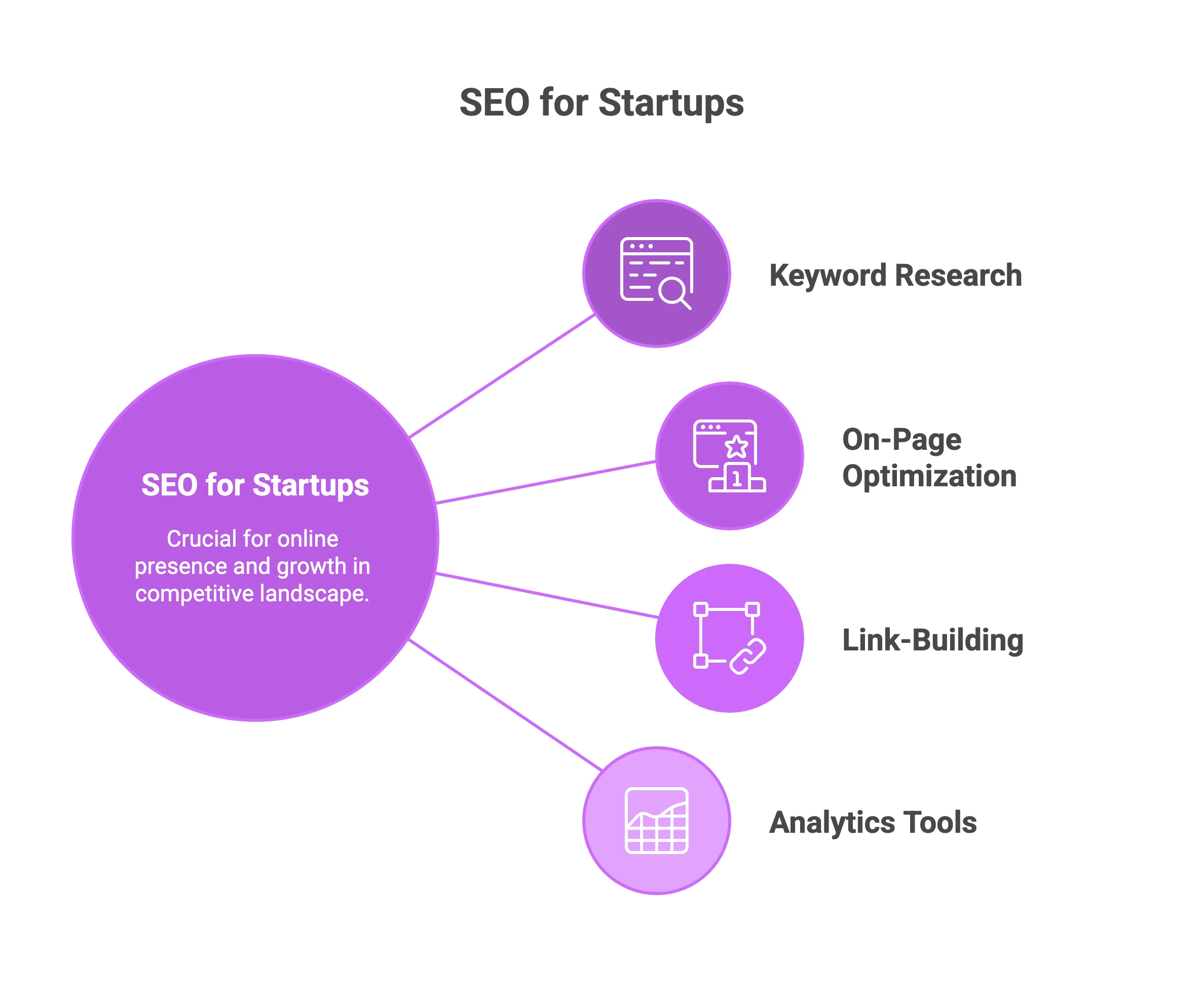
The startup SEO model: capture demand, not attention
Search rewards pages that match intent, stay useful over time, and earn signals from outside your site. Your advantage as a startup is focus: you can go narrow and specific while bigger competitors stay generic.
The 3 levers that matter early:
- Discoverability: Google can reliably find and index your important pages.
- Relevance: your site proves it belongs in a specific topic cluster.
- Trust: other credible sites link to you, mention you, or cite your assets.
Nail technical SEO early: indexation and crawl basics
Technical SEO for startups is mostly about removing silent blockers. Google’s own guidance is clear: pages must have crawlable links so Google can discover and understand content.
Build an indexation map (what should rank, what should not)
List every URL type your product generates, then decide:
- Index: homepage, product, features, pricing, use cases, comparisons, docs that can rank.
- Noindex: login, dashboards, duplicate templates, internal search results, UTM variations.
- Canonicalize: parameter-heavy pages and near-duplicates that must exist for users.
Common edge cases that stall rankings:
- A marketing site plus an app subdomain, where the app is accidentally crawlable.
- “Pricing” duplicated across locales or routes with inconsistent canonicals.
- Programmatic pages that are 90% identical.
If you only do one technical task this week, do this: ensure every revenue page is indexable, has a self-referencing canonical, and is reachable in 2-3 clicks from the homepage.
Internal linking that actually helps rankings
You want simple and consistent pathways:
- Link from homepage to your 3-6 core revenue pages.
- Link from each revenue page to related supporting pages.
- Use descriptive anchor text (not “click here”).
A practical rule: if a page is meant to rank, it should receive at least 5 internal links from relevant pages.
Keyword strategy for startups: pick fights you can win
The goal is not “high volume.” The goal is “high intent + winnable.”
A founder-friendly winnability score
For each keyword, score 1-5 on:
- Intent fit: will a buyer actually sign up from this query?
- Content fit: can you create the best page on the internet for this?
- Authority gap: do the top results have massive link profiles and brands?
Then prioritize keywords where the first two are high and the authority gap is manageable.
Early winners often look like:
- “[Competitor] alternative”
- “best [category] for [niche]”
- “[category] for [job to be done]”
- “how to [task] in [tool]” (especially if you integrate with that tool)
Map keywords to pages, not to blog posts
A clean keyword map avoids cannibalization:
- One primary keyword per page.
- A small cluster of close variants per page.
- Supporting posts only when they feed a revenue page.
Build pages that convert: your revenue page stack

The core stack for a SaaS or developer tool
Start with:
- Homepage
- Product / Features
- Pricing
- Use cases (1-5)
- Alternatives and comparisons
- Integrations (if relevant)
- Trust pages (security, privacy, compliance, migration)
You do not need all of these on day one. You need the first 5-8 pages that make your business easy to evaluate.
Alternatives and comparisons: why they work
These pages convert because the reader has already decided to buy something. They are deciding what.
A great “alternative” page includes:
- A clear positioning statement (who you are for).
- A short, honest comparison table.
- Proof points: screenshots, workflow examples, pricing clarity.
- A “choose us if” section that filters out bad-fit users.
Do not write a hit piece. If you misrepresent competitors, you lose trust.
Use cases: speak in outcomes, not features
A strong use case page:
- Defines the scenario.
- Shows the workflow (step by step).
- Quantifies the outcome (even with ranges).
- Addresses objections (setup time, security, migration).
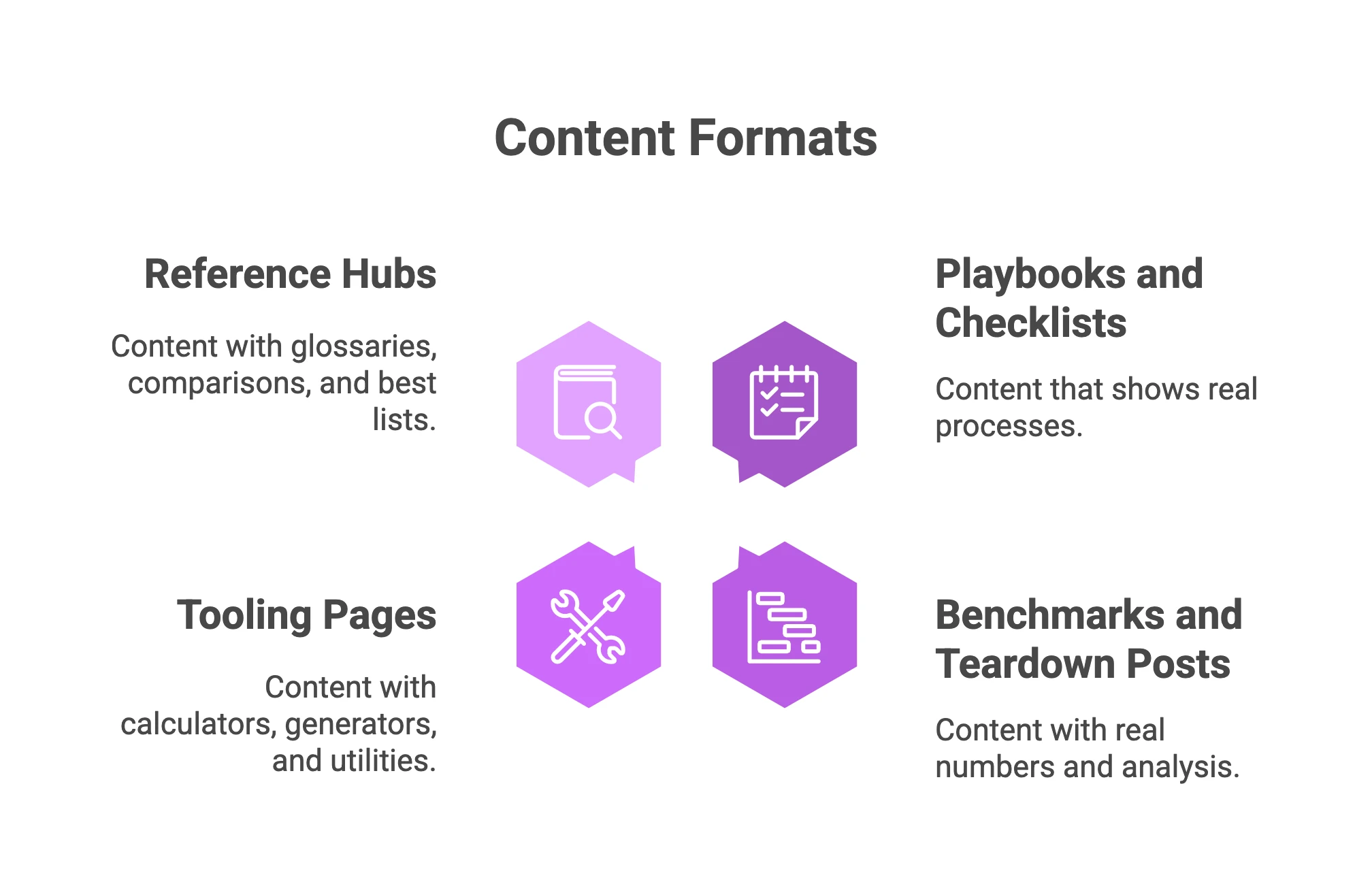
Content that earns trust without publishing nonstop
You do not need a content treadmill. You need content that earns trust and links.
Google’s guidance on creating helpful, people-first content aligns with what works: answer the question completely, prove expertise, and avoid writing for algorithms.
Programmatic content: high leverage, easy to mess up
Programmatic SEO works when each page is meaningfully unique. If you index thousands of thin combinations, you create crawl waste and quality risk. Start small and scale only after you see rankings and links.
Backlinks for startups: build authority safely
Backlinks matter because they are external trust signals. A safe early backlink plan is diversified, relevant, and paced.
The safest early link sources
Start here:
- Launch directories and review sites that get indexed and attract your audience.
- Founder communities where your launch story earns mentions and links.
- Partner pages and integration listings.
- Guest contributions where you add genuine expertise.
- Digital PR when you have a real milestone (data, product release, industry insight).
Directory submissions are underrated because they solve two early problems at once: discovery and the first wave of referring domains. The catch is quality. Many directories are dead, unindexed, or spammy. If you are unsure what a safe mix looks like for your niche and risk tolerance, a short backlink strategy consult can prevent expensive mistakes.
A searchable directory database like Launch Directories helps you filter by DR, traffic estimates, and link type (dofollow or nofollow) so you submit to the places that actually matter, not a random spreadsheet.
A clean directory submission workflow
Treat submissions like a reusable asset:
- One master description (short, medium, long).
- One screenshot pack and logo set.
- A tracking sheet: submitted, approved, live URL, dofollow or nofollow.
Measuring startup SEO: the metrics that matter in the first 90 days
Measure what predicts revenue.
Leading indicators vs lagging indicators
Leading indicators:
- Index coverage and crawl stats (Search Console).
- Impressions rising on revenue pages.
- More pages entering positions 20-50.
- Referring domains growing from relevant sites.
Lagging indicators:
- Clicks and conversions from organic.
- Trials, demos, and pipeline attributed to organic landing pages.
A simple 90-day scoreboard
| Timeframe | Goal | What to watch | What to ship |
|---|---|---|---|
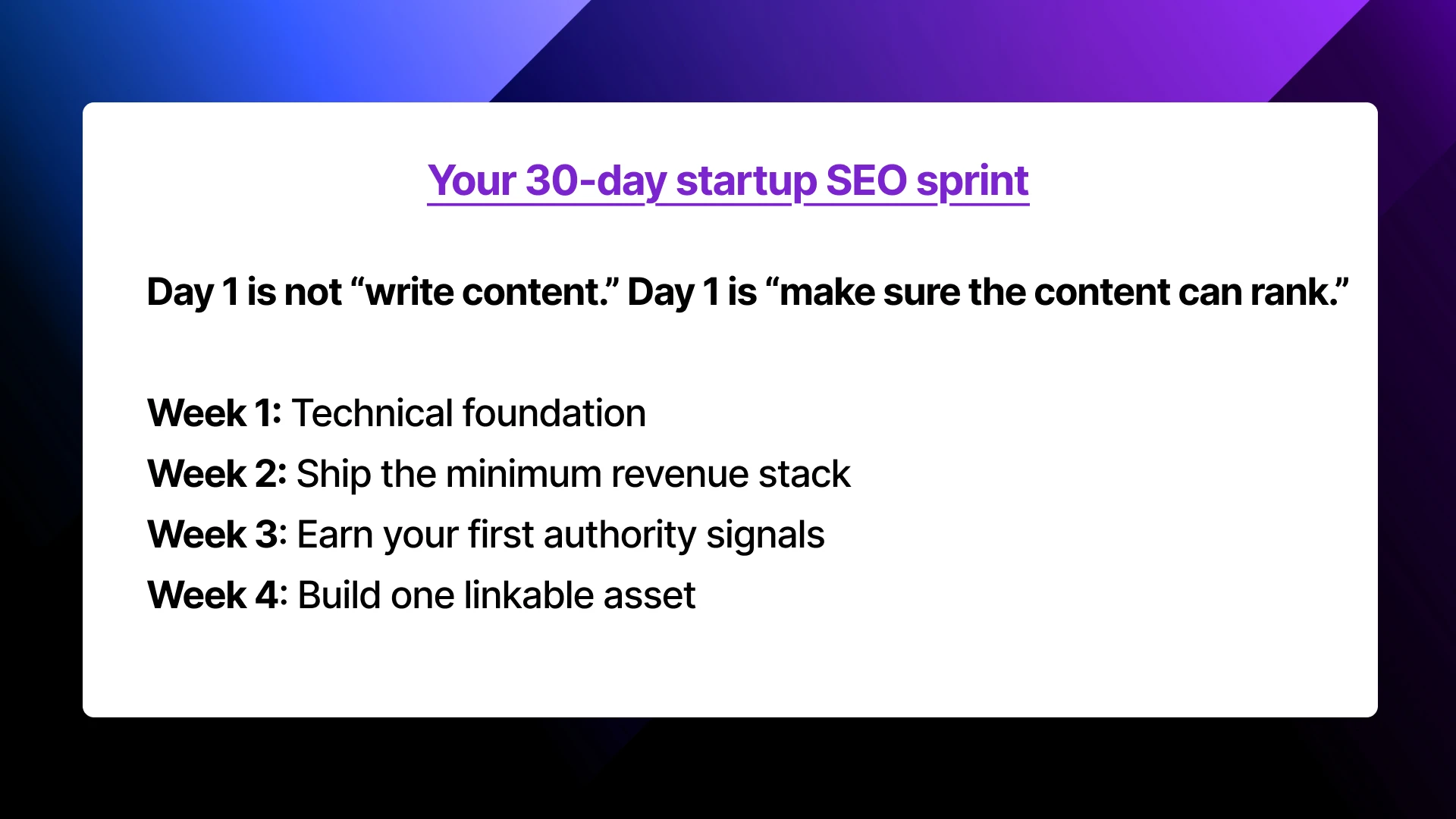
| Days 1-30 | Get indexed and remove blockers | Index coverage, crawl errors, brand impressions | Indexation map, internal linking, 5-8 revenue pages |
| Days 31-60 | Prove topical relevance | Impressions on target queries, early long-tail rankings | 3-6 supporting pages, 1-2 alternatives/comparisons |
| Days 61-90 | Earn trust signals | Referring domains, page movement into top 20 | First linkable asset, directory submissions, partnerships |
Conclusion
SEO for startups is a sequencing problem: get crawl and indexation right, publish pages that match buyer evaluation intent, then earn a first wave of credible backlinks so your site starts to look trustworthy. The work is front-loaded, but the payoff is compounding traffic that does not disappear when you stop paying.
If you want one next step today, audit your revenue page stack and your indexation map. Fix what blocks discovery, then publish the 5-8 pages that help a buyer choose you. Stack a handful of quality links, and SEO for startups becomes an engine that brings signups every week.

FAQ
How long does SEO take for a startup?
Most startups see early impressions and long-tail rankings within 30-90 days if indexing is clean, keywords are winnable, and you publish high-intent pages. Consistent traffic from competitive terms usually takes several months in most markets because trust and backlinks compound over time.
Should startups focus on content or backlinks first?
Start with technical health and a small set of revenue pages, then earn backlinks in parallel. Backlinks help discovery and trust, but they cannot compensate for thin pages or unclear positioning. Ship pages that convert first, then promote assets that deserve links.
What pages should every SaaS startup create for SEO?
At minimum: homepage, product/features, pricing, and 2-3 use case pages. Then add one “alternative” page and one “vs” comparison page for your closest competitor. These pages match evaluation intent, handle objections, and tend to convert far better than generic blog content.
Are directory submissions worth it for startup SEO?
Yes, if the directories are real, indexed, and relevant. Quality submissions can create your first wave of referring domains and help search engines discover your site. Avoid dead directories, spam networks, and anything that promises guaranteed results or unnatural link volume.
What is a good domain rating for a new startup?
For a new startup, DR 0-20 is normal. Reaching DR 20-35 often signals you have earned a base of unique referring domains and are building trust. Treat DR as a proxy metric, not a goal. A focused site can outrank higher-DR competitors on niche queries with better intent match.
Ready to build high-quality backlinks?
We'll submit your product to 100+ directories and build valuable backlinks for your SEO. Save hours of manual work so you can focus on what's important — selling and building, not submitting boring forms.