Creating a SEO Content Strategy for SaaS
Founders keep asking if cranking out more blog posts guarantees hitting their monthly recurring revenue targets. But they're usually asking a deeper question. It's really about proving product value and market understanding before anyone even considers a demo.
SaaS buyers are paranoid. They want concrete evidence you understand their niche and can solve their problems. Content marketing provides that proof; it builds trust and demonstrates expertise long before you ever ask for money.
A 2023 survey revealed that two-thirds of B2B decision-makers start their product search online. This makes a targeted SEO content strategy not just important, but non-negotiable for SaaS growth. You need to show up where they look.
The web gets crowded. Over 70 million new posts are created monthly on WordPress alone. Just adding to the noise doesn't cut it.
Your strategy shouldn't chase virality. We’ve found 50 helpful posts over six months drives significantly more consistent growth than one fleeting viral hit. It's about relevance and reliability.
This approach builds brand trust and directly contributes to customer acquisition, creating a pipeline that doesn't rely on cold calls or paid ads. For those serious about a practical approach to improving search rankings, understanding this content strategy is your next step.
Why SEO content is critical for growth in 2026
SEO content isn't just important, it's your always-on sales rep. Two-thirds of B2B decision-makers now look for products online before engaging with sales teams, according to recent data. Miss this, and you're invisible to a huge chunk of your potential market.
Organic content works overtime. It acts as both a demand capture hub and an education center.
- Demand Capture: Rank for keywords your ideal customers search when they're actively looking for solutions.
- Educational Hub: Provide in-depth resources that prove your expertise and build trust.
But how do you actually do that?
Forget generic blog posts. Focus on content that directly addresses your ideal customer's pain points and questions. And make sure it aligns with keyword research and content pillars. Because a solid brand strategy always informs the content strategy. Miss that and you're communicating irrelevantly.
Many companies struggle to rank high due to poor SaaS SEO.
To boost your SaaS growth, examine directory submissions. These provide relevant backlinks and increase your SEO visibility.
Now, what is the starting point? You need to define your Ideal Customer Profile, complete keyword research, and organize content pillars. Otherwise, it’s like navigating without a map.
How to build a strategy from scratch
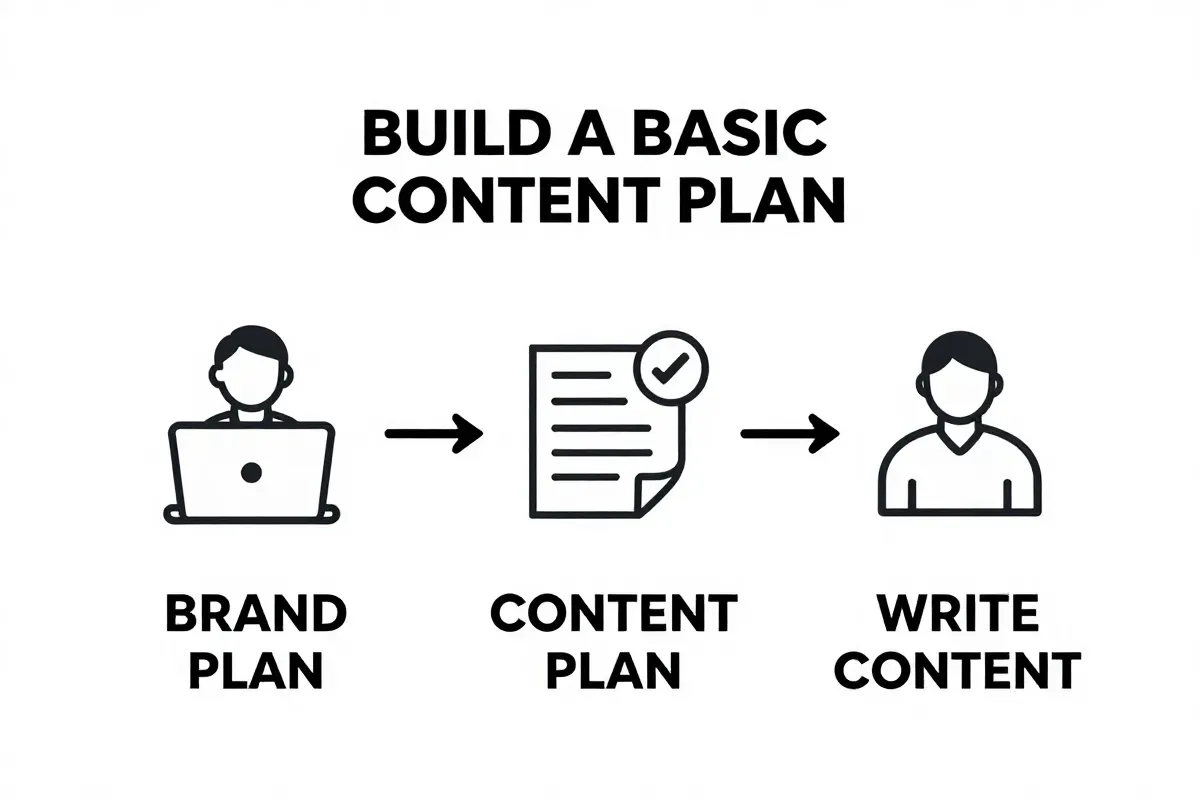
Documenting your plan helps tie content efforts to tangible business goals. Without a documented plan, content creation becomes a series of random acts, not a strategic asset.
Start with these components:
- Ideal Customer Profile (ICP): Know who you're talking to.
- Keyword Research: Identify what your ICP is searching for.
- Content Pillars: Create core topics that support your brand and address your ICP's needs.
But the solid brand strategy informs the content strategy, so don't skip this. Almost six in every 10 customers felt most brands’ communication were irrelevant (according to research).
It starts with knowing your audience. Define your ideal customer profile (ICP), not just demographics, but their pain points, aspirations, and where they spend their time online.
Next, conduct keyword research to uncover the specific terms and phrases your ICP uses when searching for solutions related to your SaaS offering. Focus on long-tail keywords that indicate a high level of intent.
Finally, structure your content around content pillars – broad themes that align with your brand and address key customer needs. These pillars will guide your content creation efforts and ensure a cohesive and relevant content experience. As we've seen, to boost SaaS growth, examine directory submissions.
Don't make the mistake of creating content in a vacuum. Make sure your brand and content strategies work together. Otherwise, it won’t connect with your target audience.
Ready to get more SEO visibility? Check out our guide to SaaS growth through directory submissions.
Defining your Ideal Customer Profile
Defining your Ideal Customer Profile isn't just about listing job titles; it's about understanding anxieties. SaaS buyers are hyper-concerned with workflow integration.
Go beyond demographics. Dig into psychographics:
- What keeps them up at night?
- What are their biggest frustrations with current solutions?
- Which conferences do they attend (or wish they could)?
They need assurance you grasp their daily reality. Your buyer personas should reflect this deep understanding.
For example, if you're selling a marketing automation tool to e-commerce businesses, don't just say your ICP is "marketing managers." Instead, understand that they're under immense pressure to increase conversion rates while dealing with shrinking ad budgets and constantly changing algorithms. They need a tool that's easy to implement, integrates with their existing Shopify setup, and provides actionable insights without requiring a data science degree. (Because, let's face it, most marketing managers don't have one.) This deeper understanding will ensure content actually resonates.
Instead of a generic demo request, you earn their trust by demonstrating you’ve anticipated their specific needs. Check out our blog on how a voice-first SaaS boosted SEO backlinks.
Next, we'll need to turn this understanding into actionable keywords.
Identifying content pillars and topical authority
Content pillars act as the foundation for your SaaS content strategy, covering broad, relevant topics that resonate with your ideal customer. Think of them as the main branches of a tree, with each branch representing a key area of interest for your target audience.
Now, consider how those branches connect to smaller twigs – those are your keywords. Grouping keywords into tightly-knit clusters signals "topical authority" to search algorithms. It proves you’re not just randomly blogging; you're comprehensively covering a subject.
But how do you actually do that?
Start by identifying 3-5 core themes relevant to your SaaS offering and target audience. If you sell project management software, your pillars might be:
- Agile Methodologies
- Remote Team Collaboration
- Time Tracking & Productivity
- Client Communication Strategies
Then, for each pillar, brainstorm 10-20 related keywords your ICP might search for. For "Remote Team Collaboration," this could include terms like "best remote collaboration tools," "asynchronous communication," or "managing remote teams effectively."
This fails because you're not just targeting individual keywords. You are demonstrating comprehensive knowledge. Search algorithms prioritize websites that demonstrate authority on a given topic. Don't treat keywords as isolated targets. Show the algorithm how they relate.
What's next? Take the time to learn more about choosing a SaaS SEO agency that can deliver results.
Mapping content to the SaaS buyer journey
Mapping content to the SaaS buyer journey means understanding when to educate, when to compare, and when to show proof. Content must align with what a potential customer needs at each stage.
Think of it like this:
- Awareness Stage: (Top of Funnel): Focus on educational content that addresses broad pain points and introduces potential solutions. Blog posts, infographics, and social media updates work well here.
- Consideration Stage: (Middle of Funnel): Position your SaaS as a viable solution by comparing features, benefits, and pricing. Case studies and webinars can sway prospects.
- Decision Stage: (Bottom of Funnel): Solidify your SaaS as the best choice by offering testimonials, demos, and free trials. Direct, targeted content seals the deal.
The problem is this doesn't happen magically. According to IBM, almost six in every 10 customers felt most brands’ communication were irrelevant, so map content to each stage to earn attention and trust.
Match the format to the stage. Video demos perform better in the decision stage, where seeing is believing. A whitepaper packed with statistics crushes it in the consideration phase. If potential customers are in the awareness stage, focus on high-level blog posts. It's about giving people what they need, when they need it.
What comes next? Get serious about defining your Ideal Customer Profile to ensure you are creating relevant content.
Top of funnel tactics for awareness
Top-of-funnel tactics should attract, not aggressively sell. Focus on educational content that provides immediate value.
Answer their burning questions without demanding a demo. Think "how-to guides" that solve a specific problem or offer a quick win. This builds goodwill.
Consider these approaches:
- Blog posts: Write detailed guides. Don't just skim the surface.
- Free tools: Offer a calculator or template that simplifies a task.
- Checklists: Provide actionable steps to achieve a goal.
Blogging continues to play a significant role in using content marketing as a tactic to grow businesses online (Omnius, 2025), so provide guides to teach them about the SaaS world. This demonstrates expertise. SaaS buyers are paranoid; they want proof you know what you are doing.
Don't write about your product directly. Write about the problems your product solves.
The goal isn't to convert readers on the spot, it's to earn their trust and establish your brand as a go-to resource. Then, when they're ready to consider a solution like yours, you'll be top of mind. You can also improve search rankings through a practical SEO playbook.
What's the catch? Top-of-funnel content requires patience. It's a long-term play, not a quick fix. It's about building a relationship, not closing a sale.
Next, let's talk about middle-of-funnel content.
Bottom of funnel content for conversion
Bottom-of-funnel content is where you turn "maybe" into "yes." Conversion rate optimization hinges on showing, not just telling.
Product-led content is your ace in the hole here. Stop selling and start showing how your SaaS solves real problems.
That means:
- Interactive Demos: Let prospects experience your product's core value firsthand (without a massive sales pitch).
- Free Trials: Offer a fully functional version of your SaaS for a limited time (with clear onboarding).
- Use Case Examples: Showcase how existing customers are achieving tangible results with your SaaS.
Don't underestimate the power of comparison pages. Potential customers are already weighing their options, so make it easy for them to see why you're the best choice. Create dedicated pages that directly compare your SaaS to leading competitors. But be honest. Point out the strengths and weaknesses.
And, don't bury the integration documentation. Make it prominent. Buyers want to know your tool plays nicely with their existing stack. Clear, comprehensive integration documentation builds confidence and reduces friction. The best SaaS content strategy starts with three things: Ideal Customer Profile, Keyword Research, & Content Pillars (TheAlien.design, 2025).
Backlink visibility matters too. Show prospects where you've earned authority. Because SaaS buyers are paranoid. So, show the backlink visibility that builds trust and credibility. They want evidence you understand their industry. To gain more SEO visibility, take a look at our blog on SaaS SEO agencies.
What's next? It's time to discuss top-of-funnel tactics.
Boosting visibility through directory submissions
Directory submissions give your SaaS a crucial early boost. They create initial backlinks that act as validation signals.
Think of them as "proof" for those paranoid buyers. Every listing is another data point confirming your existence and relevance.
Submitting manually is a grind. Every directory has different forms, categories, and submission rules. It’s easy to spend hours getting lost in the weeds (and CAPTCHAs).
We built LaunchDirectories to simplify this process - we do submissions to high-authority startup directories. We filter for relevance, ensuring your SaaS is listed in the right places.
with 100+ Directory Listings
Skip the grind. We'll submit your product to top directories so you get real users, feedback, and lifetime backlinks without lifting a finger.
This saves time and ensures you're getting backlinks that move the needle. Plus, backlinks boost SEO visibility. For instance, two-thirds of B2B decision-makers look for products online, according to a 2023 survey, making SEO critical for SaaS. Use automated submission tools to gain early visibility.
Implementing the Alignthority system for dominance
Alignthority is a system of aligning user intent with brand authority through comprehensive topical depth. If you can't tie your content directly to a user's search query and demonstrate deep knowledge, you're shouting into the void.
Here's how to put Alignthority into practice with a lean SaaS team:
- Intent Mapping. Don’t just guess what users want; verify. Use tools like Semrush or Ahrefs to analyze the SERP (Search Engine Results Page) for your target keywords. What types of content are already ranking? Is it how-to guides, listicles, or comparison pages? Match that format.
- Content Audits: Identify gaps in your existing content. Do you have superficial blog posts that only scratch the surface of a topic? Or are there entire content pillars missing altogether? Aim for comprehensive guides that address every possible question a user might have.
- Authority Building. Backlinks matter, but relevance matters more. Focus on earning backlinks from authoritative websites in your industry. This is where directory submissions can provide an early boost. But remember, quality over quantity.
- Topical Depth: This isn't about keyword stuffing. It's about genuinely understanding your subject matter inside and out. Create content that explores every facet of a topic, from beginner-friendly introductions to advanced techniques. Each piece should link to related content on your site, creating a web of interconnected resources.
The biggest issue is follow-through. Many teams start strong but lose momentum. Implement a content calendar and assign clear responsibilities.
- Week 1: Keyword research and intent mapping.
- Week 2: Content audit and gap analysis.
- Week 3: Content creation (focus on pillar content).
- Week 4: Promotion and link building.
Alignthority doesn't happen overnight. It's a long-term strategy that requires consistent effort and a willingness to adapt. To stay on track, follow a practical startup SEO playbook and consistently measure your results.
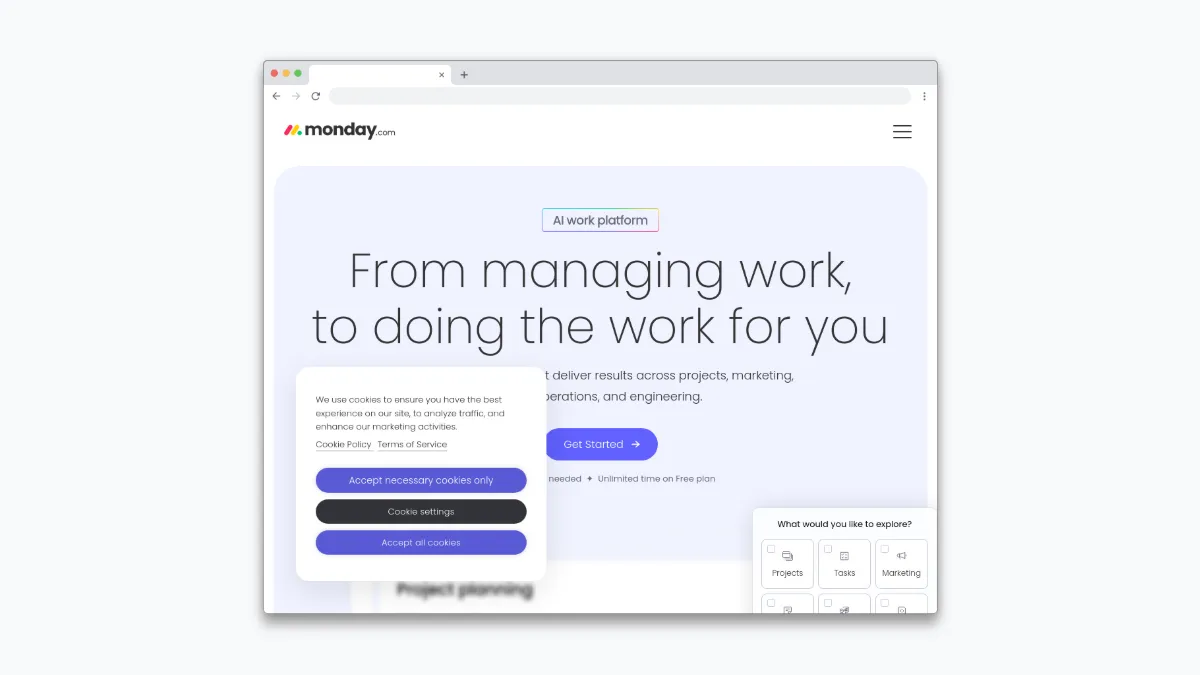
Niche strategies beyond Monday.com
Niche strategies are where SaaS SEO separates the winners from the also-rans. Look at what Monday.com does well, then go after the segments they ignore.
Consider these case studies:
- Zapier: Instead of trying to compete head-on with massive enterprise integration platforms, Zapier zeroed in on simple, point-to-point automation for SMBs. Their content targets specific "if this, then that" scenarios with clear, actionable guides.
- Canva: Canva didn't try to out-Adobe Adobe; they focused on drag-and-drop design templates for non-designers. Their content library is a massive collection of templates for every conceivable use case, from social media graphics to presentations.
The core trick? Competitive analysis uncovers content gaps. Don't just look at keywords; analyze the content itself.
What are competitors missing?
- Are they neglecting specific use cases or industries?
- Are their guides outdated or lacking detail?
- Are they failing to address common customer questions or pain points?
Craft content specifically to fill these gaps. And instead of generalizing and making a generic product, give your target audience what they want.
This focus will give you a niche SEO advantage, attracting a highly qualified audience. What's next? Implement the Alignthority system to become dominant in search rankings.
Measuring ROI and content performance
Measuring content ROI goes way beyond just counting clicks. You need to track leads, trials, and ultimately, customer retention to understand the true value of your efforts. Because a vanity metric is still just a vanity metric.
Conversion tracking is where the rubber meets the road. Set up goals in Google Analytics (or, better yet, a tool like Mixpanel or Amplitude) to monitor how your content drives sign-ups, demo requests, and purchases. Ensure your UTM parameters are pristine.
- Are you tracking landing page conversions?
- Are you tracking engagement of a customer before they convert?
But don't fall for short-term spikes. Remember that consistent effort beats chasing viral moments. The Teknon Group suggests 50 helpful posts over six months are far more effective than one fleeting viral hit. This long-term view shows your true content ROI.
Retention metrics paint the full picture. Track churn rate, customer lifetime value (CLTV), and repeat purchases to see how your content impacts long-term customer loyalty. This shows that your content makes a difference. A strong content strategy is essential for SaaS companies to drive brand awareness, customer acquisition, and retention (Sarah Moon, 2025).
The issue is most companies miss this vital component. Our team has seen many content plans that only focus on acquiring new customers. The companies forget to retain existing ones.
Then, what does this do for retention? Content marketing for SaaS proves value before asking for money, earning attention and trust (Teknon Group). You need content that does this effectively. To start, improve search rankings through a practical startup SEO playbook.
And what is the next step? Dive into top-of-funnel tactics to attract more leads.
How long does it take to see results?
Expect initial visibility within weeks, but sustained organic growth requires months. Getting listed in relevant directories can be surprisingly fast; some of our clients see their SaaS products appearing within 2-3 weeks.
But don't mistake this for long-term success. Think of directory submissions as planting seeds. They sprout quickly, but organic ranking is like growing a redwood.
Here's the SEO timeline breakdown:
- Weeks 1-4: Directory submissions yield quick wins in backlink authority and referral traffic.
- Months 2-6: Content starts to gain traction. Expect to see movement in keyword rankings, but don't panic if it's not #1 yet.
- Months 6+: Sustained organic growth kicks in as your website builds topical authority. This is where you start seeing significant, consistent traffic and leads.
The biggest mistake we see? Founders give up too soon. SEO is a long game. Stay consistent, track your metrics, and adjust your strategy as needed. Content marketing for SaaS proves value before asking for money, earning attention and trust, so stick with it.
What slows down organic growth? Thin content. Don't just aim to publish; aim to comprehensively cover your topics. It also is essential for SaaS companies to drive brand awareness, customer acquisition, and retention.
Common questions about SaaS SEO strategy
Common questions about SaaS SEO strategy? They usually boil down to two extremes. Either "Is SEO dead now that AI exists?" or "Do I need to post every day to rank #1?" Both miss the mark.
The rise of AI in SEO hasn’t killed SEO; it's raised the stakes. Search algorithms in 2026 heavily weigh user experience and topical authority. A shallow article written by a bot won't cut it.
- Forget daily posting quotas.
- Focus on delivering comprehensive, genuinely useful content.
- Quality always trumps quantity.
Consistency is key, but obsessing over content frequency is a distraction. Teknon Group's research suggests 50 helpful posts over six months drive more consistent growth than one viral hit. It's about building a library of high-value resources, not flooding the internet with noise.
Ready to build high-quality backlinks?
We'll submit your product to 100+ directories and build valuable backlinks for your SEO. Save hours of manual work so you can focus on what's important — selling and building, not submitting boring forms.